Plot 3 at Highbridge Community Farm has a new set of plants: edimentals. What are these? And why are we interested in growing them? Andrew Ross explains.
An edimental plant is a dual purpose plant: edible + ornamental. Some of them are short-lived perennials so they keep coming up year after year. We hope that growing edimentals might reduce the amount of labour that we need to grow a crop and, at the same time, increase the visual attractiveness of the plots.
It’s not just us showing interest in these plants. Garden designer Harry Holding created a whole show garden at Chelsea 20023 based around edimentals. He explains the concept like this: “Edimentals are in the sweet spot of plants that both look nice, are edible, and generally live for three years or longer (ie they are perennial). Traditional food growing is more of a seasonal annual cycle, but with edimentals, once you’ve planted it or sown seeds, they are resilient and have longevity.”
Getting started
We began the project in spring 2024 by planting several different species at the “Roman Road” end of Plot 3. The only one which was eaten by a number of Farm members last year was the purple-leaved tree spinach Chenopodium giganteum. We had high hopes for the Caucasian Spinach, Hablitsia tamnoides, but it was not able to cope with the bright sunlight and sadly, it died. We will try growing it again this year in more shade. It’s a great perennial leaf vegetable.
This year’s plants
We managed to collect seed from two single specimens of red flowered Love-lies-bleeding Amaranth varieties, Amaranthus caudatus and A. cruentos, that were grown in the plot last year as well as the seeds of several Tree Spinach plants. We’ve drift-sown these seeds in the edimental garden during March 2025. We have also already managed to plant a small area with seedlings of the Orache Atriplex hortensis, whose red leaves will work well cooked or make a great addition to a salad or cooked.
Four other plants survived last year’s winter: sea kale Crambe maritima, the cabbage thistle Cirsum oleraceum, Korean CeleryDystaenia takesimanaand borage Borago officinalis. The borage died back but has returned this spring. The Korean Celery stood strong through the winter cold and should bush up this year.
This year, we’re also putting in new plants, including cuttings of a very old variety of kale called Taunton Dene and another whose thick straight stem earned it the name of Jersey Walking Stick Kale. We’ve sown seeds of the legume Pigeon peas Cajanus cajan and the Siberian pea tree Caragena arborescens and we are waiting to see if they come up.
We plan to try to grow some of our interesting onion varieties in pots before we plant them out because they were rather swamped by weeds last year. Perhaps the most exciting of these is the Sicilian honey garlic, Allium siculum, which has attractive, pendulous mauve flowers.
Find out more
The edimentals look good on Plot 3 but they also give us a chance to learn about growing different plants and to include plants in our food that we can’t buy commercially. If you’d like to know more about our edimentals, find Andrew Ross at the Farm – and do let us know what you think about this new growing venture.
Over the last 10 years, the soft fruit crops have grown from a simple bed of rhubarb to a pretty sophisticated set-up with irrigation, cages, and a wide range of varieties producing around a staggering 1300lbs of fruit each year. Find out more from Soft Fruit Team Leader, Helen, about the work of the team.
Establishing soft fruit
Fruit started at the Farm very simply. A rhubarb patch was started where the Herb Garden is now, using spares from members’ allotments. The first fruit cage was just a part of the raspberry cage that we have today. It contained raspberries, gooseberries, redcurrants, blackcurrants, and whitecurrants and a few strawberries. We have still have plants today from cuttings of those original bushes, except the whitecurrants which didn’t produce.
In 2015, HCF took over the land where the soft fruit is now and Andrew Ross started the original Fruit team. This kicked off two years of preparing the ground, preparing cages, establishing a drip irrigation system, and planting bushes. In 2017, the original rhubarb patch moved to a new home in the Soft Fruit area and other fruit crops developed around it.
A devastating lightning strike in 2019 destroyed the shed and took the nearby fruit cage and bushes with it. Falling bits of burning debris made things even worse. The team was down but not out. They cleared the mess, a new shed opened in 2020 and, since then, the Soft Fruit team has gone from strength to strength.
Find your way to the Soft Fruit area from the plots. Photo: Steve Grundy
The team
The team is 11 people, led by Helen Ridley.
Unlike the vegetable plots where the crops rotate and teams learn about new crops with each new year, the Soft Fruit team is more specialist. Team members are encouraged to take ongoing responsibility for a crop and learn about that crop over time.
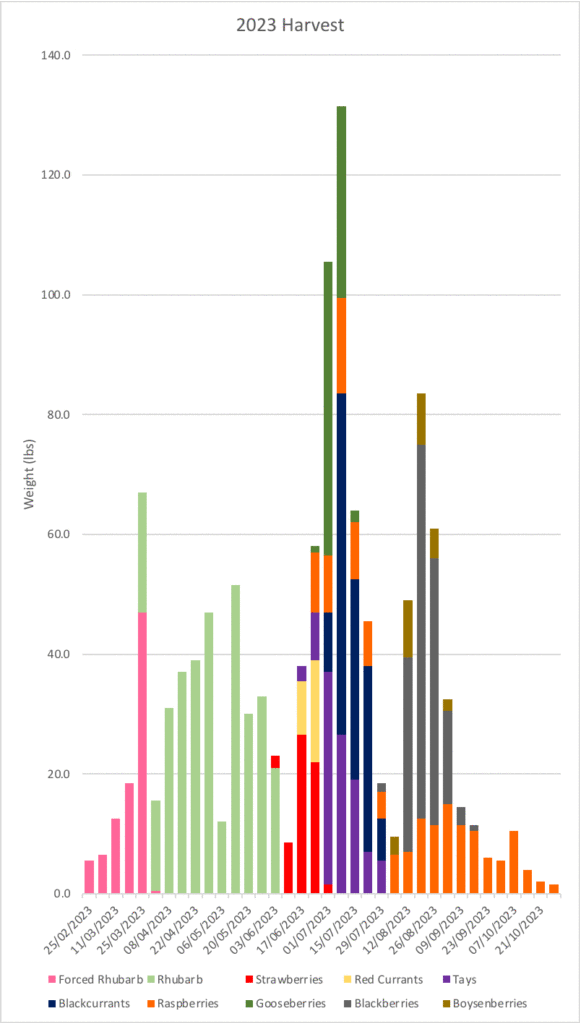
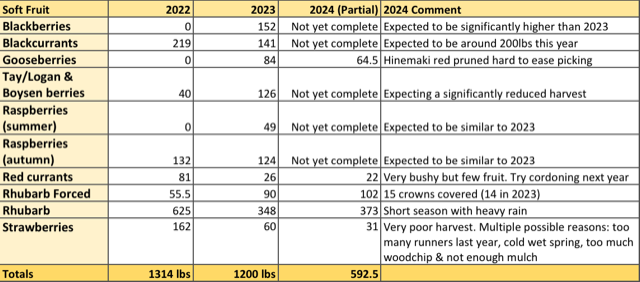
The team harvests non-stop between February and October – with July being a particularly critical month. They record the volume of fruit that they harvest so that they can see the performance of different crops, year-to-year. (You can see the summary from 2022 to now further on.) Between harvesting, the team maintains the fruit cages and internal plant supports, maintains paths around the cages, mulches the beds and deals with weeds.
The amazing volume of fruit harvested last year
The fruit
Let’s take a closer look at what the team produces. It’s well over a thousand pounds of fruit each year!
Blackberries
We’re all familiar with this hedgerow fruit. Even if you normally pick a good crop from local brambles, the Loch Ness variety produces large, sweet berries that are well worth a try. The team is expecting a good harvest this year from 9 new plants.
Blackcurrants
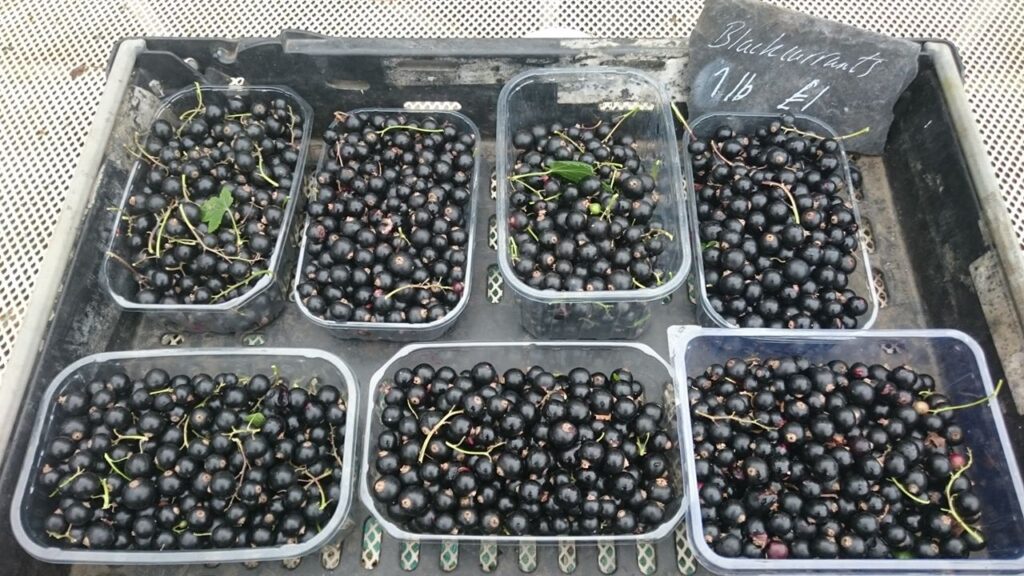
There are 25 blackcurrant bushes, 18 of which are the UK’s most popular variety of blackcurrants, Ben Hope. We’ve enjoyed a huge harvest from these – and thanks to people from other teams who joined in getting the bumper crop off the bushes.
Photo: Highbridge Community Farm
Boysenberries
You probably won’t find these in the shops. Their thin skins make them difficult to transport but you’ll enjoy their rich, jammy flavour.
They are a mix of a European raspberry, a European blackberry, American dewberry (a species of blackberry), and a loganberry and their name comes from the man who developed them – one Rudolph Boysen.
Gooseberries
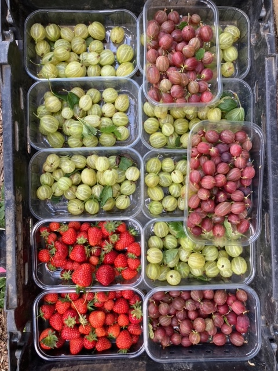
Thorny bushes don’t make it easy to get the fruit but we’re glad of the sharp green berries (Leveller and Invicta) and their slightly sweeter red variety (Hinomaki Red). They can be plagued by gooseberry sawfly that strips the bush of its leaves, leading to a poor crop.
Raspberries
We have Glen Ample summer and some unknown autumn varieties. Most patches are doing well, although there are a few stragglers.
Redcurrants
These tart little berries made a poor harvest this year. The bushes needed a heavy prune last year and we didn’t feed with manure which could possibly have contributed. We visited RHS Wisley and found that they cordon the redcurrants (pruning to one main stem with short, fruiting side-shoots). Redcurrants can grow on old wood for 10 years, we were told, so we will experiment with this.
Rhubarb
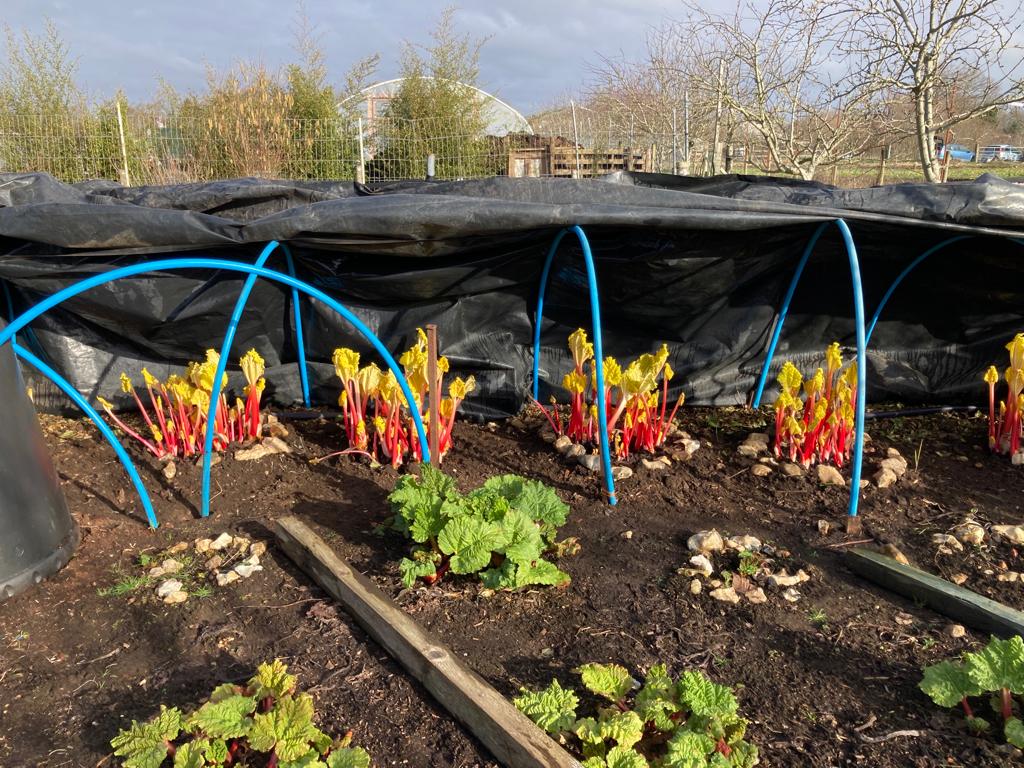
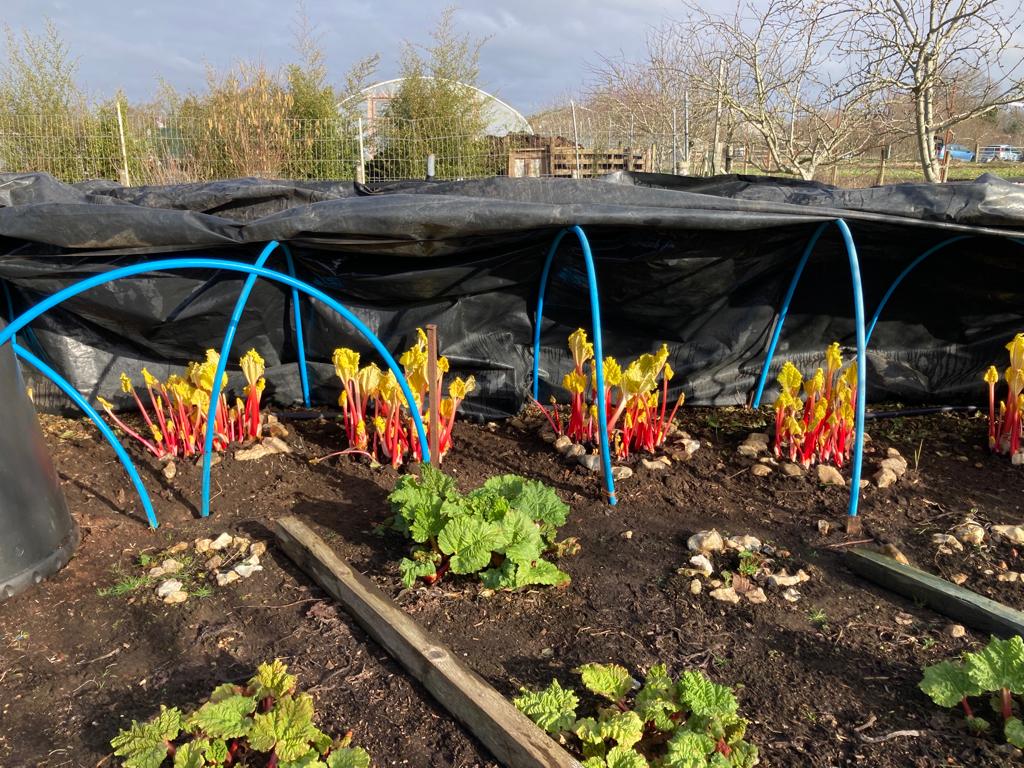
The plants are looking healthier now after a dip in June. The rhubarb is especially welcome in Spring when not many other fresh fruits and veg are available. We’ve had success in forcing the rhubarb , bringing us beautiful rosy spears early in the year. [Ed: we know that rhubarb is actually a vegetable but since most of us think of it with crumbles and fools rather than roast dinners or pasta, we’ll roll with its common association with fruit.]
Forced rhubarb!Photo: Highbridge Community Farm
Strawberries
We didn’t have a good harvest this year, possibly not enough feeding, too many runners last year, too much woodchip, or the cold wet Spring – but strawberries are very widely available outside the Farm so perhaps less missed than some of the more exclusive fruits.
Tayberries and loganberries
These are crosses between red raspberries and blackberries, with the loganberry crossing continents as a hybrid of North American blackberry and European raspberry. Like the boysenberry, the fruit is very soft and can only be harvested by hand so it’s not popular commercially. Both tayberry and loganberry have a fabulous aromatic flavour, with the loganberry being slightly sharper.
Raspberry cane spot is a fungal disease and we had to prune hard last year to try to eliminate it. As a result, it’s likely to be a poor harvest this year.
Adding it all up
Summary of soft fruit harvests 2022-now
Find out more
If you’re interested to know more about the HCF soft fruit, contact Helen. If you head over to the Soft Fruit area, there are team members working on different days and all will be happy to show you around
See how the crops that we grew in 2023 flourished (or didn’t!) and how the growing teams felt about the work and results.
Each team is familiar with how its own plots got on but not necessarily with the other parts of HCF. Find out how things went across the Farm – and what to think about for the crops that your team is growing in 2024. Thanks to all the Team Leaders for this feedback.
Plots 1 & 2
Carrots: sowed Early Nantes in March, a cold spring but much too early. Had to resow all March sowings as germination was very poor. This was not seed quality as April sowings germinated very well (Maestro sowed 29.04.2023) and grew very well. Enviromesh works very well to exclude carrot fly but as the carrot foliage fills the net it becomes harder to weed, though extensive weeding was carried out. Also, we found the netting + foliage provides habitat for field voles which nibble the top of the roots and sometimes the whole carrot. In September, we removed netting and by the next day a kestrel was hovering over the carrot plots!
We continued sowing carrots into mid- July (Autumn King). These germinated very well/grew well and seem to have avoided significant vole damage.
Carrots generally quite good but we need to emphasise THIN sowing. Everyone was too heavy handed with the seed, even though we used the seed dispenser.
Parsley, Basil and Coriander did well on plot 1. Parsley in particular, is robust and trouble free.
Turnip: relatively easy to grow but significant damage from flea beetle. Planted 21.03.2023 and repeated again in September.
Swede: as per turnip but seemed much less attractive to flea beetle.
Kohl Rabi: relatively easy to grow. 2nd sowing 11.06.2023
Mooli: very easy to grow direct-sown and plants are vigorous and appear trouble free, but on harvesting the roots a significant number had been hollowed out. Couldn’t find any obvious pest but some roots rotted off without obvious cause. Need to sow more thinly next time.
The above four root crops are not popular with stakeholders and were definitely a hard sell, particularly when competing with summer crops. I would question whether it is worth growing these four crops at all.
Kale, Cavolo Nero: relatively trouble free. Had to have a concerted effort to hand-pick cabbage white caterpillars off the plants June/July. Some significant damage but plants recovered well after caterpillar removal. Reasonably popular with stakeholders and a good crop still producing.
Pak Choi (actually sowed this on plot 1). Sowed in August to avoid bolting risk. With hindsight, this was too late as we had only a few small plants by early November, although these sold readily. Somewhat prone to slug damage. Tried sowing in 3” pots and in toilet roll tubes as an experiment. All toilet roll seedlings were small and weedy and never made significant growth. Having tried the same with sweet peas in the past and also failed, I suggest that toilet roll tubes appeal to our recycling instincts but are useless for raising plants.
Spinach – has done fantastically well, pest free and easy to maintain.
Plots 3 & 4
Feb and March, we prepared beds and paths.
Parsnips: Started sowing 8th April. 4 rows per bed. Better germination and growth on the Gladiator than the White Gem. We forgot to earth up the parsnips to reduce canker. Started harvesting in November.
Carrots: We sowed some carrots in the gaps where we had poor germination from the parsnips and these were affected by the carrot fly and gnawed by mice.
Tomatoes: Started planting out the tomatoes 16th May. We didn’t stake these to start with or start training them for several weeks. It was a great labour to get them back into some sort of order. We lost some plants due to blight. There were blighted potatoes on plot 6 so spores probably drifted from there to us. The other tomatoes on plot 19 were not affected at that time.
Winter squash: We sowed 200 butternut squash seeds and 50 each of the other 3 varieties. This a was an extra 20% in case of poor germination. We started sowing on 19th April. All were sown by 1st May. They were covered by perspex as advised. As they emerged, we swathed them in green netting. By 3rd May, the Crown Prince seeds had mainly been eaten by Mice. During the following week, Kabocha and Uchi Kuri had been eaten and some of the tops of the butternuts that were emerging had been grazed.
8th May: 75 butternuts survived and were covered in net and grown on in the Polytunnel and then in the hardening off area as it was very hot in the Polytunnel. We took all the remaining pots home to resow and germinate in our lounge and on the verandah/patio.
By the last Saturday in May, our plot was full of butternuts and Kabocha squash. 1st June, Matt and Claire took Uchikuri pots home to germinate. These ended up on Penny’s plot with more butternuts. In June, we were giving 5 litres water per plant per week and checking hydration mid week and topping up if necessary.
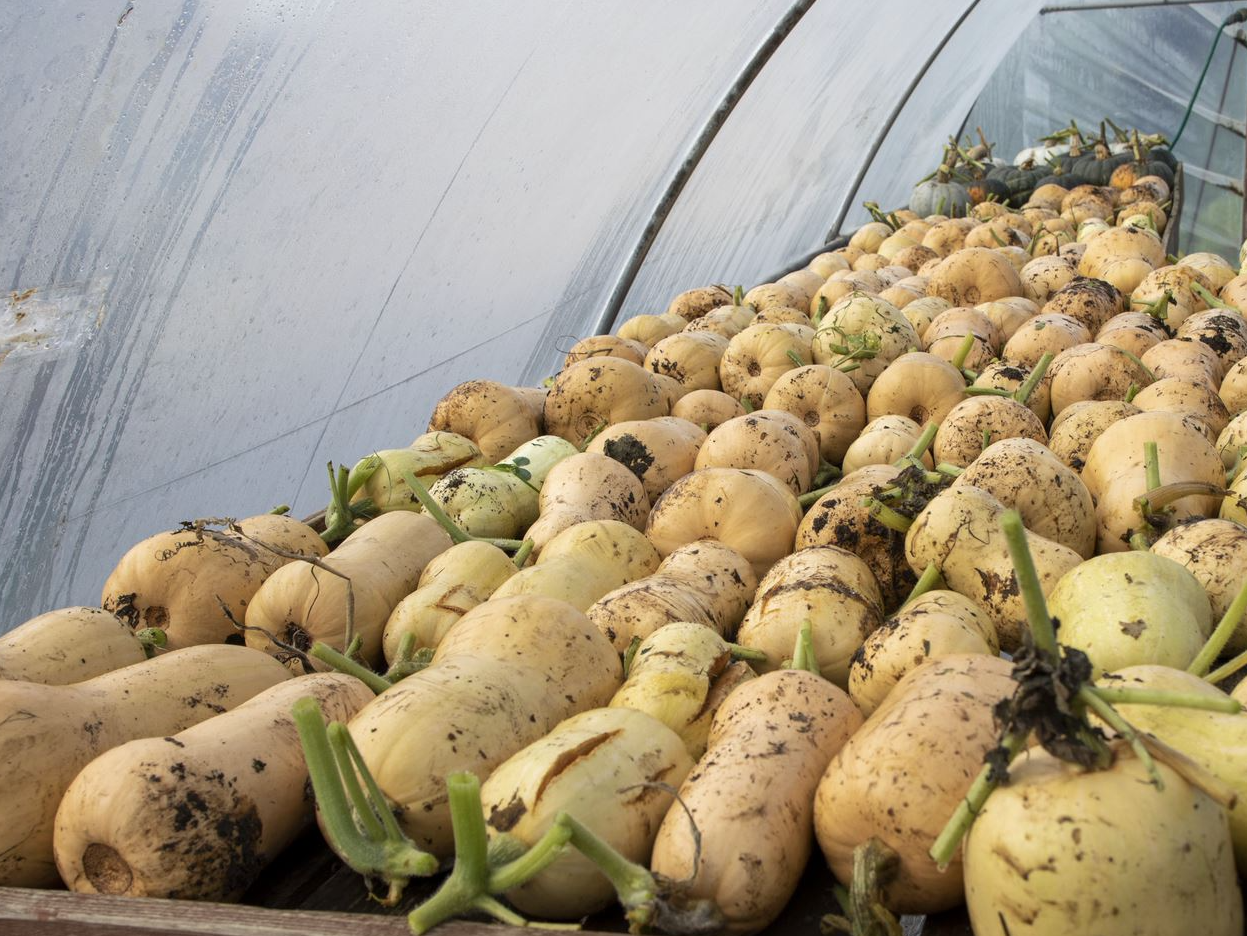
Excellent harvest in October.
Photo: Highbridge Community Farm (Steve Grundy)
Plots 5 & 6
The green manure we sowed last year had a lot of grass in it which was difficult to remove. All crops germinated and grew well.
Calabrese was very good, produced a lot, and lasted a long time.
Cabbages grew well but many split, probably should have harvested them earlier but were told to wait for other plots.
Potatoes: All potatoes grew well and produced a lot but half of them had wireworm. The spud mix didn’t work because, as we found out afterwards, we didn’t dig it in properly.
Plots 7 & 8
Autumn sown broad beans attacked by mice and weather, so just spring sown beans were cropped. I think the Crispus are a little better than the Doric (but Doric are still OK)
Hispi type summer cabbage, the Greyhound, a grew and sold better than the round type Golden acre/primo.
Cavolo nero always does well.
Plots 11 & 12
Potatoes: Acoustic performed very well – good sized potatoes, cropped well, relatively free from holes. Vivaldi potatoes were small, very tasty, but the harvest was poor. King Edwards disappointing. They developed blight quite early and we had to dehaulm them so the overall size of the potatoes was small. About a third of the crop had worm holes. Sarpo were big potatoes but we only grew 3 rows which got mixed with those from other plots. Seems there is a problem with star-shaped brown cavity in the middle of the potato. No info on number of holed potatoes as we were not around when the team dug them up.
Beetroot: some opened seed packets did not germinate at all well at the start of the season. Planting test pots early on was a good indicator of what seeds to throw away. We eventually had good crops from Detroit 2, Boltardy and Cylindra (pack supplied to us by Polytunnel Lin). Last bed sown in late August was a bit too late but we were harvesting plenty of good sized beetroot until the end of October with a few smaller beets in early November. A lot of rain helped and emphasised the need for a lot of regular watering when weather is dry.
Celeriac: really important to take leaves off once they drop and this task got away from us at times – along with the associated weeding. All celeriac were small but most of the early plants survived so we were able to plant out a lot. Once plants go to seed take them out immediately as the bulb will not develop and it is a waste of time later on when they have to be dug up anyway with no bulb developed underneath.
Both these crops continue to be harvested late into the year, which makes it very tight to get spud mix in if you’re going to grow potatoes afterwards
Plots 13 & 14
Cabbages: the smaller cabbages – Greyhound & Sunta, were generally the most productive of the brassicas. The success on quick germination of those Greyhound & Sunta that we started at home, in particular, was excellent. Some challenges with butterflies and caterpillars, (so nothing to with the seeds, obviously), but not too bad. Those smaller cabbages also seemed particularly popular with buyers. As we thought they would be, the Ormskirks have been slower to grow, & so, we haven’t harvested any yet. The January Kings, the seeds of which we disposed of because they weren’t cutting it, & the red cabbages, have been the only real under/non-performers
Potatoes: The Sarpo potatoes were superior to the Cara in as much as the Sarpo were a lot less prone to both wire worm and blight. With Cara, the damage from either wire worm or blight was about 50%. So, if Sarpo is not going to be available in 2024, we think that the closest comparable seed would make sense.
Plot maintenance has generally been quite manageable over the year. God put in a good, helpful watering shift overall, and we were generally able to cope with the weeding, including under the nets on P13.
Plots 15 & 16
Beans: The total weight of dried beans was just over 56 lbs and they are being sold as mixed bags of a half pound weight each. I attach a table giving, for each variety, the total yield, the length of row grown in feet and the yield in ounces per foot.
Borlotti were easily the most prolific followed by Blue Lake and Czar. We would have had quite a lot more but an additional half row was accidentally planted late with a dwarf bean of unknown variety that wasn’t very successful.
We had two types of black beans, one in a plastic bag handed on I think from Tudor and some Brazilian beans provided by Maria, to which we gave a row each. I think Tudor’s were more prolific but there was a bit of a mix-up and I couldn’t reliably distinguish them so have combined them for weighing. They were some way behind the best three in terms of weight per foot grown.
Plots 17 & 18
Onions: Sowed 3,000 onion seeds and germination was very good. Planting out was more difficult as we went into the dry period and it was difficult to give them enough water to put their roots down. Growth improved in July but downy mildew was a problem as we had so much rain. Harvest probably not as good as last year but not bad considering the growing conditions.
Chard and Perpetual spinach were also affected by the heat in May/June and many plants bolted.
Courgettes: Germination for the Tosca courgettes was zero – very disappointing but the patty pans did really well and gave us an early crop until the next sowing of courgettes was ready to go out. The team did a really good job of harvesting them 3 x a week so they never got to large.
The overflow squashes took off well and provided a good additional crop of butternuts and Uckiki Kuri.
Plots 19 & 20
The poor germination of a lot of seeds led to delays with all crops and the need to re plant. Lettuce – we had a steady supply of lettuce throughout the summer and still harvest lettuce leaves. We overestimated the demand and due to over sowing and difficult weather conditions, we lost quite a few as they bolted in the two dry periods.
Cucumbers – excellent crop from 19 plants. Spring onions – initial crop failed and re-plant of new seeds failed. Tomatoes – very successful after problems with seeds initially. Problems keeping up with tending them as they became bushes. We should have used stronger supports from the outset. Padron peppers – problems with germination and keeping them alive. Small crop eventually. Radishes – poor germination and stunted growth.
Onions: Our over-wintered onions started to grow again in March/April but they bolted later and became over run with weeds whilst we focussed on Plot 19 during the drought. The harvest was good but it was difficult to get the balance right of preparing the beds for the next crop (kale seedlings) and harvesting the onions, especially as the salad crops were so intensive and our team was depleted due to a departure and illness and spending so much time keeping the salad crops alive.
Kale: The kale seedlings were established but some were squashed by the hoops and netting and we are getting slug damage across the board plus heavy rain is causing leaves to droop and sometime snap off.
Polytunnels
We went a bit mad & tried a bit of variety this year including cucumbers, gherkins, padron peppers, loofah and 26 different tomatoes as well as chillies and herbs. Most produced good returns.
Germination in Spring was slow and several varieties of tomato were lost to frosty weather in March. Main harvesting began in July & continued until late October. By mid-August, we had picked 250 pounds of toms but had lost a similar quantity to blight. A different management will be needed next year to try and prevent wastage. Overall, the quantities were down on the previous year but not by much. A couple of varieties were more reliable than others. Maskotka produced an early moderate crop that kept going well, Orkado & Shirley produced good trusses of an average size fruit and cherry varieties always crop well. Sadly, the plum varieties suffered blossom end rot.
The padron peppers struggled in the tunnels, which was a surprise. Aubergines were late in and, although producing a few autumnal fruits, were not worth the space so I shall not bother next year. The sweet peppers appear popular so I shall try again but will have to watch the watering system & planting distance. Mildew hit them. Pam has done her best with chillies & had a good steady crop up until November.
The winter salad leaves did well at the beginning of the year and are just starting to provide small quantities now with winter lettuce to follow. Susan has, again, got a good lot of lettuce maturing.
Soft fruit
During 2023, we introduced 2 new fruit varieties, summer raspberries and blackberries. Both performed really well in their first years, with the blackberries being a particular highlight, although they were tricky to sell for some reason perhaps because people could pick them for free in the hedgerows. We finally had a decent harvest of gooseberries after tackling the sawfly for a number of years. We won the battle this year but have not yet won the war… We did not get so many strawberries this year, but are hoping for a bumper year in 2024 after the stock of new variety strawberry plants has been increased significantly. Other stars this year were the tays and forced rhubarb.
Photo: Highbridge Community Farm
Fruit trees
2023 for the top fruit team was a year of diversity. There was nowhere as many apples as the previous year due to a combination of factors including bi-annual behaviour but also recovery from the very high temperatures of last summer (loss of sugars) and the wet weather during the pollination window in spring. Altogether harvest was enough to feed the farm, but very modest compared to other bumper years where there has been more variety to offer and we could afford to do up to two bottling runs to juice. Many trees gave a single tray of fruit to harvest. On the positive side, the very wet summer has meant that the trees didn’t suffer from drought or heat stress and in return looked much healthier this season and had less signs of disease. The aphids on the growing tips seen during the hotter late spring spell disappeared as soon as the rains set in, and nothing much followed it. The outlook is that, given good conditions for next year, we will see the trees stronger and a bigger harvest.
The lack of apples was compensated by the huge bounty and variety in all the other fruits: 2023 was the year of the plum. the Mirabelles kicked the season off in an abundance of trays of red and yellow plums, followed by a very heavy and long crop of our two purple Pershore’s, ending with greengages and Victoria. The only plum trees that didn’t produce where the yellow Pershore’s in the shade.
Pears cropped fantastically and for the first time ever we harvested trays of very good quality fruit, the Comice tree giving some first class pears. The trees where healthy with no signs of leaf mite.
Last in season, we took a very good quality crop of quinces that didn’t suffer any brown rot like last year. Only one of the two cherry trees fruited, but the harvest was lost to wildlife. The peach trees turned out some lovely fruits for the first time, but not enough to feed the farm.
We harvest hundreds of winter squash every year. These squash are nutritious and delicious, good for eating within a couple of weeks or for storing for months. You can roast them, stuff them, puree them, grate them into cakes, and much more. Even the seeds are tasty and they are high in protein and healthy oils. Find out more about this splendid autumn crop.
Don’t squash the plants
We plant each winter squash seedling several metres apart. At the time, it seems incredible that the small plant will need so much space.
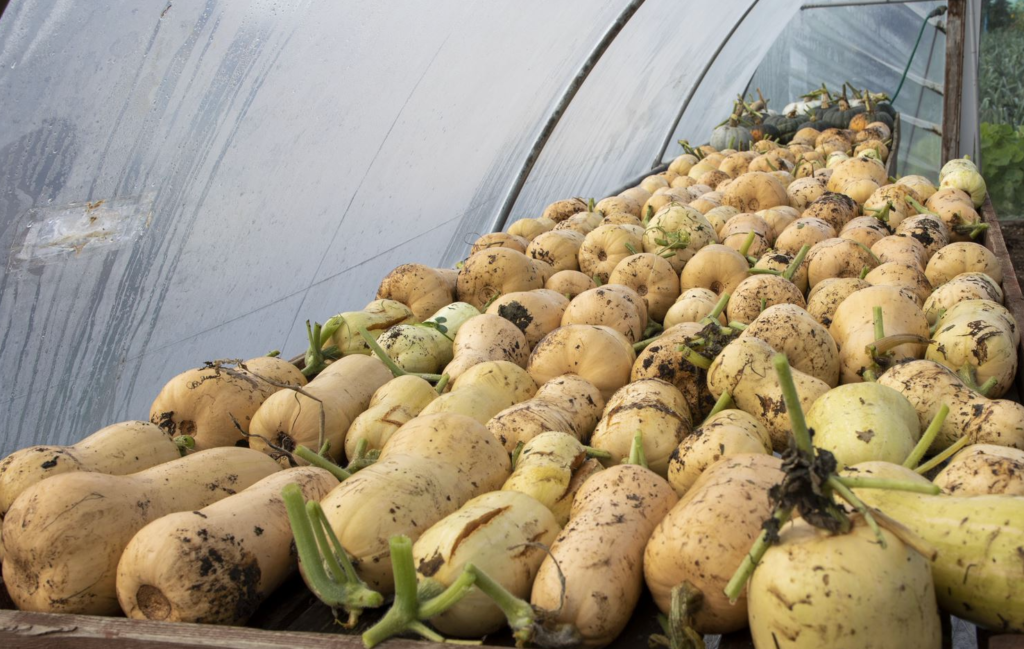
But over the growing months, it sprawls across the gaps and the squash start to be visible through the tangle of leaves. Before the autumn frosts hit, we call on as many hands as we can to get all the squash off the plot and safely into storage.
Photo: Steve Grundy
Kabocha, Uchi Kuri and Butternut
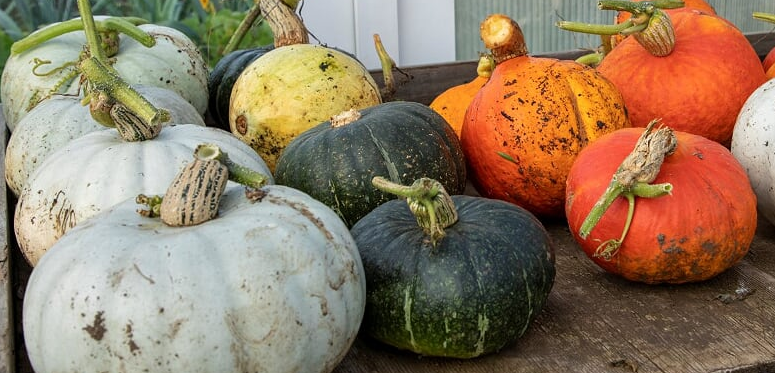
We grew three varieties this year. Usually, we have the superb Crown Prince (the large grey one) but the mice feasted on those. Let’s have a look at the ones that we do have:
Photo: Highbridge Community Farm (Steve Grundy)
The gloriously-coloured orange one is the Uchi Kuri or Red Onion squash, also known as orange hokkaido. Kuri translates to “chestnut” in Japanese, which indicates the flavour of its golden flesh. It has tender skin that becomes soft on cooking.
The Kabocha (Japanese pumpkin in the USA) has this deep green skin and bright orange flesh. It’s sweeter than butternut and it keeps its shape when cooked which makes it ideal for roasting, steaming or frying.
The butternut is the most recognisable of the three with its distinctive teardrop shape and pale colour. Botanically, the butternut squash is a fruit, specifically a berry.
A peduncle is not a handle
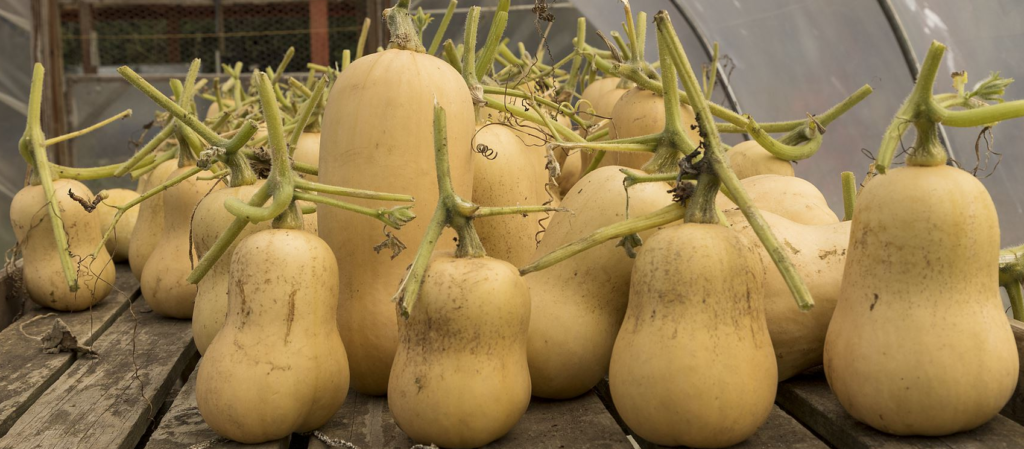
Tempting though it is to see the stalk of a squash as a handy carrying handle … don’t. The stalk – called the peduncle – seals the squash and helps to extend its shelf-life. If you snap off the peduncle, your squash won’t store as well. So, when you carry a squash, cradle it like a baby, support it underneath … any way that works for you. Except carrying it by the peduncle.
Curing the squash
Squash are best a few weeks after they’ve been harvested. Giving them time concentrates their natural sugars and enhances their flavour. Set them in a warm place, such as a sunny window sill, and rotate them periodically. Then store them in a cool, dark, dry place (one Expert Grower uses space under a bed) and they’ll be good through to late Spring.
What do you see?
Try this exercise in mindful creativity. Look at the stalk of a squash. Look at its shape. How does it curve and branch? What does it make you think of? A dancer? A wind turbine? A praying mantis? A molecule? Just let your imagination wander for a little while. What comes to your mind?
Photo: Steve Grundy
Do you grow (or enjoy eating) winter squash? Let us know which varieties you’ve grown, your tips, and recipes.
Plot 19 have a glut of cucumbers. so it’s a good time to make them into recipes for food and body and savour them for months to come.
Is it a fruit or is it a veg?
Before we go any further, let’s clear this one up. Botanically, a cucumber is classified as a fruit. This is because it contains tiny seeds in the middle and grows from the flower of the cucumber plant. But most of us recognise it as a vegetable.
Cucumbers are a member of the cucurbitaceae family (gourd family) which also includes courgettes, squash, melons, and pumpkins.
Cucumbers in history
The cucumber is one of the most ancient vegetables. It originated in India over 4000 years ago. It was extremely popular in the Roman Empire with Emperor Tiberius (14 – 16 AD) demanding cucumber to eat every day of the year.
Cucumbers arrived in England in 14th century but were not popular. They returned with more success in the mid-17th century. In the US, about the same time, a medical prejudice against uncooked fruit and vegetables meant that the cucumber fell out of favour.
Nowadays, cucumbers are used all around the world.
Growing cucumbers
Cucumbers are a fast-growing crop. They like fertile soil and warm temperatures. They do not tolerate frost. The main care requirement is consistent and generous watering (they need at least an inch of water a week (more, if it’s particularly hot) and they can become bitter if the watering is inconsistent. So, thanks to Team 19 & 20 for their efforts here.
In the UK, cucumber production is concentrated in parts of the North East and South East of England.
Cucumbers for health
Cucumbers are nutritious. They are low in calories and high in fibre and, at 96% water, cucumbers can help keep you hydrated. Cucumbers aren’t a stand out source of vitamins and minerals but they wins with their antioxidant and anti-inflammatory properties.
As well as taking their nourishment internally through food and drink, you can use cucumbers to soothe your skin. Place cucumber slices on your closed eyes to cool the sensitive skin around the eyes and reduce puffiness. Or try this recipe for a cucumber face mask:
Mash up half a cucumber in a blender or with a fork. It’s fine as it is but, to ring the changes, add a tablespoon of natural yogurt or a tablespoon of oats and another of honey.
Spread over your face and neck and leave for 15 mins.
Rinse off with lukewarm water.
Cooking with cucumbers
A raw cucumber lasts about a week in the fridge but you can make the most of a glut by cooking the cucumbers. Try these ideas.
Cucumber ice cubes. Slice cucumber thinly into an ice cube tray before you fill it with water. (You could also add some mint from the HCF Herb Garden.) Use the cucumber ice cubes to add a refreshing flavour to summer drinks.
Find lots more recipes for cucumbers here. Which is your favourite?
Three regular HCF summer crops burst onto our list of available produce this week. Find out more about the broad beans, pattypans, and fenneland let us know if you’ve got a favourite seasonal recipe.
Broad beans
These beans are on Pick Your Own. Their season is short so fill a bag or two now and enjoy them fresh or freeze them for the months to come.
Gently peel the pods away from the stems of the plant. (If you yank them, you risk breaking the stem or even uprooting the plant.)
To prepare them, slit the fat outer pod and run your thumb along the furry inside to pop out the broad beans. You can use them like this but they are even better if you go on to double-pod them – removing the thick skin that encases each individual bean. Blanch the beans for a couple of minutes, let them cool slightly, then remove the outer skin to reveal the tender, bright green bean below. Smaller beans are more faff to pod but they’ll pay you back in sweetness; the bigger beans can get mealy over time.
Broad beans are a good source of protein and vitamins A & B and super versatile. You can eat them in salads, crushed into dips, stirred into risotto or summer casseroles… You’ll find dozens of recipes online; here are a couple to get you started:
Every part of this plant is edible, from the thick, crisp bulb to the feathery leaves. It has a fresh anise flavour – very present if you eat it raw, fading to a mellow backnote if it’s cooked. To have fennel through the winter, blanch and freeze it. It won’t keep the crisp texture of fresh raw fennel but it’ll do just fine in a cooked meal. Fennel is high in fibre, potassium and vitamin C.
Simply slice raw fennel into salads or prepare slices or chunks for cooking. You can grill it, fry it, roast it, blend it into soups … try these ideas:
These odd-looking vegetables are summer squash. Their scalloped edge and slightly flattened shape get them comparisons to flying saucers or flattened brioche.
Their taste is similar to courgettes, perhaps a little sweeter. Unlike their winter cousins, you don’t need to peel them – eat the skin as you would with a grilled or roasted pepper. They are super versatile, working well grilled, stuffed and baked, and roasted.
Pattypans are loaded with fibre and a great source of vitamins A and C. Here are a couple of ideas: