Andrew Ross reflects on the challenges we’re facing in trying to grow food through the summer that we just experienced and how we can respond as a Farm.
I think that all of us who have been associated with the Farm for a few years will remember 2026 as the summer where the heat and drought went on for weeks – from June 11th to August 18th, to be precise. Many of us found the constant need to be watering quite tiring, as well as being an inefficient use of an increasingly scarce resource.
We knew we had to do something about tackling the situation. It seems highly possible that we will have similar summers going forward and we need to be better prepared. A small Water Group was set up to consider changes that we could make and the group provided suggestions to the Farm leaders,
Climate change is happening
Summers are warmer and drier. Winters can be variable but wetter. A super El Nino is developing. We can expect a wet windy winter, mild in early months, cold in late winter and early Spring, followed by heat and drought conditions in Summer 2027,
Our soil is responding to the changes:
- Soils are getting much drier, as evidenced by falling earthworm numbers (read more about our regular earthworm surveys here). Organic matter is being oxidised faster in dry soil.
- Soil compaction is increasing. A textbook plough pan (or traffic pan) compaction layer is developing at the typical depth (15–25 cm) where historic cultivation tools or repetitive walking/rotovating compresses the subsoil. Our silty loam is highly vulnerable to subsoil compaction. When silty soils dry out completely—as they have during recent hot, dry summers—the fine silt and clay particles lock together, turning that compressed layer into a concrete-like barrier. Our excellent organic matter content of 10–12% is likely concentrated in the top 10–15 cm, which keeps the topsoil good but it hasn’t reached deep enough to protect the subsoil from forming a hard pan.
- The period for soil water recharging is increasing. We estimage that we’ll need 7 months of 120 % average rainfall for a full recharge.
- Daily evapotranspiration is greater than precipitation over a longer period of the year. This means that the atmosphere and plants take more water from the land than comes down on it.
- The period of soil moisture deficit is getting longer.
Changing how we treat our soil
Now that we know what’s happening to our soil, we can respond by improving and protecting it.
- Ensure that the soil is not covered in winter with sheet plastic. The plastic prevents water entering and is very harmful to soil fauna. We need to maximise the water retention of winter rain.
- Ensure that the soil is not bare in winter, which causes runoff and leaching.
- Keep the soil covered with crops, green manure or mulch over winter to produce food or increase soil organic material. For example, we can grow leeks, parsnips, kales and brassicas for winter harvesting rather than early Autumn when other crops are available.
- Grow a 2:1 mix of Phacelia and Crimson Clover as a green cover crop, planting in September or early October. In the Spring, chop and drop the foliage on the surface to breakdown and provide a mulch a couple of weeks before planting the next crop.
- Mulch whereever possible. Apply a 7-8 cm layer of organic matter, such as woodchip or dried weeds, straw or composted weeds and other crop waste, over the beds between plants. This can reduce direct soil surface evaporation by up to 70%. We can collect materials over winter and add them in Spring.
- If the weather is hot and dry when weeds are dug up, they can be placed on cardboard and will die in an hour or two. Providing they don’t have flowers/seeds, they can then be placed back on the bed or path as a mulch.
- Mulching also helps to raise soil organic matter. At the time of the most recent soil tests in October 2025, the soil organic matter ranged from 11% to 14.7% with only Plots 1&2 at 14.7%. Soil organic matter can be raised to 15% with mulches. (But we need to caution on raising it too high, which leads to nutrient imbalances and toxicity, oxygen depletion, rapid nitrogen locking, poor structural stability and shrinkage and environmental pollution.)
- Where the soil is compacted, broad fork in Autumn and Spring when the soil is neither too moist nor too dry. Insert the tines straight down into the bed until they hit the hard pan (15 to 25cm). Pull the handles back gently just to crack and heave the pan layer, then pull the fork out. Doing this before planting radish or parsnips is ideal.
- Plant Daubentons radish as a winter cover crop after or before brassicas (as radish are brassicas). These have thick deep taproots which drive down 30-50 cm to break up the hard pan and bring up deep-lying nutrients into the leaves. Chop and drop the leaves before the plants flower.
- Isolate the growing areas from foot traffic. We can adopt a semi-permanent, deep bed system to confine foot traffic to a woodchip and cardboard or straw path. This does take out an area of cultivation and is not possible with crops like potatoes, sweetcorn, squashes and courgettes, but can help in growing tomatoes, salads, and legumes. Walking on a path of cardboard and woodchip reduces compaction.
- Produce as much leaf mould as possible as the carbon to nitrogen ratio is typically around 60:1 (carbon rich) with a NPK (Nitrogen, Phosphorus, Potassium) ratio of 0.5:0.1:0.5. The trees pull most of their mobile nutrients and nitrogen back before they drop their leaves. Leaf mould can used primarily as a soil conditioner to improve soil organic matter, moisture retention and structure rather than as a fertiliser or mulch. It may be dug into the soil when partially broken down to raise the humus content of the soil without adding too many phosphates.
Facing water restrictions
Our water is not unlimited. We might be limited to 10 cu m water extraction per day, or less, next year. We need to use it wisely! We can change our approach to watering, improve our systems, and protect plants from the heat.
- Water the soil thoroughly from the time that evapo-transpiration exceeds precipitation to ensure that a dry root free zone does not develop in the soil. This might be as early as April, depending on the temperature and the state of the plot.
- Watering is a challenge for teams. Consider team watering rotation to water 20% of a crop each day for 5 days. This saturates plants every few days, instead of giving everything a relative dribble every day.
- The solar panels, batteries and pipework to IBCs seem to be working well but we have issues with pumps so we need to look at ways of supporting these.
- Ensure that each team understands the term crop co-efficient Kc to ensure that crops are not overwatered or underwatered at any stage in the life cycle. Crop coefficient is a number used to estimate how much water a specific crop needs at different times in its growth, compared to a standard reference plant, which is usually grass.
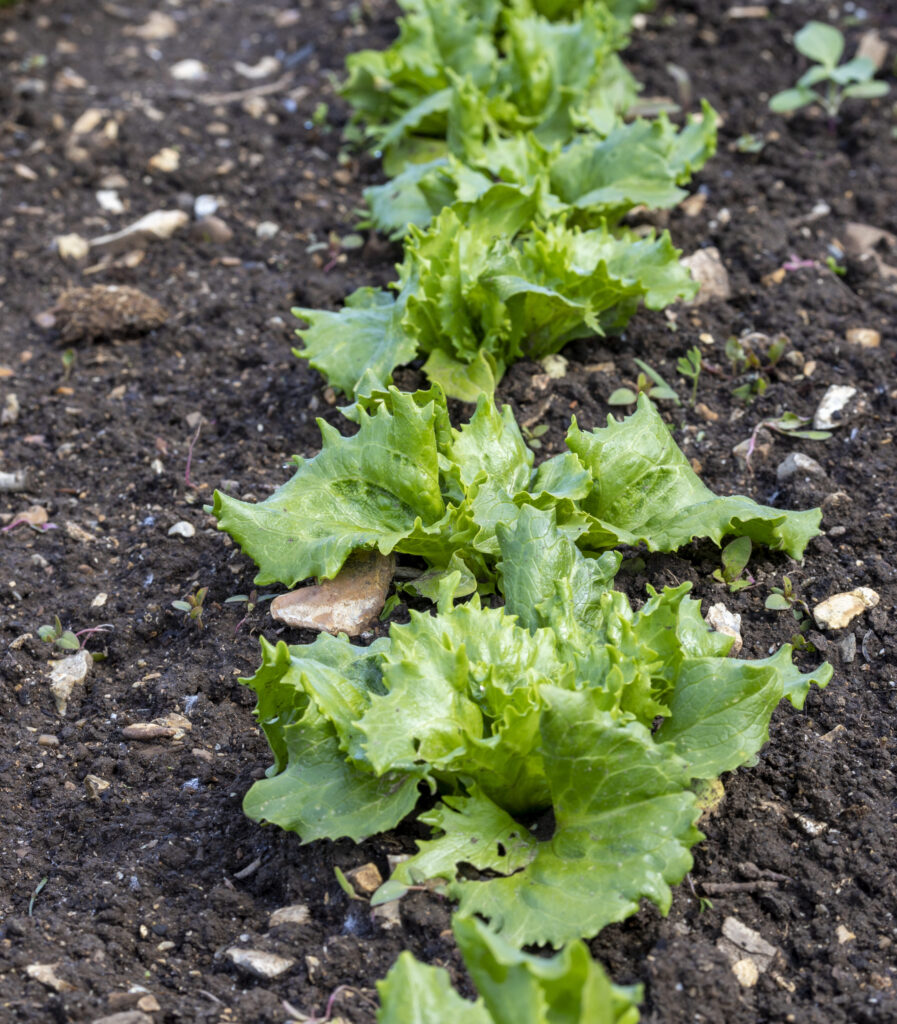
- Develop underground drip irrigation for some crops, such as salads. Overhead watering evaporates instantly and scorches leaves. Instead, subsurface drip irrigation lines deliver water directly to the root zones.
- Try to avoid using the petrol driven pump and the fire hoses. The fire hoses were donated many years ago and they leak, which wastes water. Also, we’ve seen damage to crops from the high pressure of water landing on them.
- Grow delicate crops like lettuce and dwarf beans under pergolas with woven shade cloths, which block 40–60% of harsh UV rays.
- Suspend shade netting over polytunnel 4 and consider replacing the plastic with a tunnel where the sides roll up.
- Consider a dedicated container (like the cool shed) where seeds could be germinated under artificial light in controlled conditions.
Helping with cultivation
As well as optimizing soil and water, we can make small changes to the way we grow:
- Directly plant sweetcorn when ground is warm enough. Production has been found to be much better over 3 seasons than growing pots in the Polytunnel.
- It works well to plant potatoes through a mulch of cardboard and woodchip which has lain on the plot since late winter. The potatoes can be planted with a bulb planter through the cardboard and covered lightly with soil. Ridging up doesn’t seem to be necessary, which saves the increase in the surface area of the soil.
- Plants like tomatoes, beetroot, carrots can be planted in rows with cardboard laid between the rows to reduce evapotranspiration.
- Brassicas can be interplanted with sunflowers, phacelia or crimson clover. The brassicas do not form a symbiotic relationship with mycorrhizal fungi and actually release root compounds that suppress fungal populations. The interplanted row will support mycorrhiza.
- Peas appear to fail most years in hot weather and we probably should take them out of our plans.
- Small leeks can be transplanted into land recently vacated by onions to obtain a second crop, rather than leaving the land bare.
- Plant in depressions: shape the beds with shallow basins, or provide soil “ramparts” around individual plants as appropriate to form a moat when watered and reduce water loss from soils.
- Install windbreaks: Use hedges, fences, or tall shelter crops to block drying winds that increase plant transpiration.
- Early starts: Vegetables like tomatoes, peppers, and aubergines can be planted exceptionally early (late winter to early spring) so they bloom and set fruit before the extreme heat of July and August arrives.
- Autumn (October–November) brings a second planting wave for leafy greens, legumes, brassicas, and root vegetables as rains return and temperatures cool.
What next?
The Farm leaders are evaluating the recommendations and agreeing a plan. Some actions simply need information and education for members. Others would require investment, work, and approval from our landlord. We’ll keep our community up-to-date as things develop. If you’re interested to get more involved, let Andrew know. (Find him on Plots 3 & 4.)
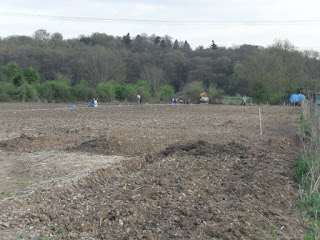
Highbridge Community Farm began as a response to changing times (see Transition Network). We’ve already come a long way in building resilience – just look at where we started, below! Now it’s time for our next shift.