We use the money from stakeholder subscriptions and the sale of produce to buy most of what the Farm needs. We usually plan infrastructure projects in stages, according to what we can afford . This year, one of our projects is getting a boost from a local grant.
Southampton Airport Spitfire Wellbeing Fund
The recently-established Southampton Airport Community Health and Wellbeing Fund provides financial support to certain types of local community organisation, charities and groups. These groups must support initiatives that reduce health inequalities and improve health and wellbeing. The fund focuses on three areas:
Physical activity
Mental wellbeing
Access to open spaces, including green space.
Highbridge Community Farm meets the criteria. We’re just a few miles from Southampton Airport and we aim to give our members benefits in all three of the Fund focus areas. So, a small group of HCF members put together an application for funding to upgrade our irrigation system .
Our watering challenge
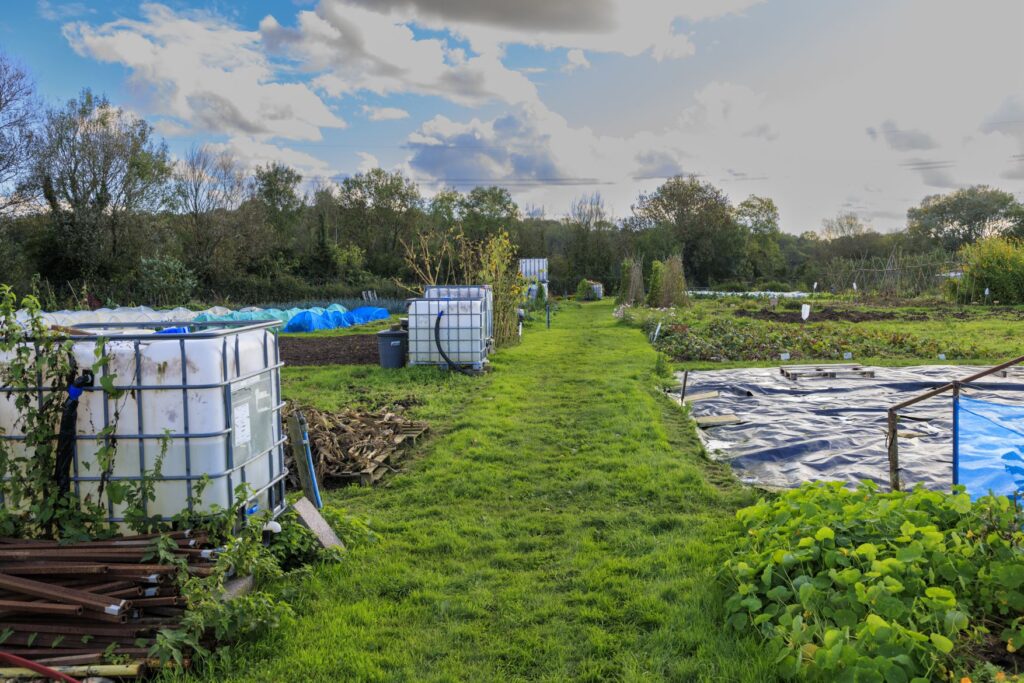
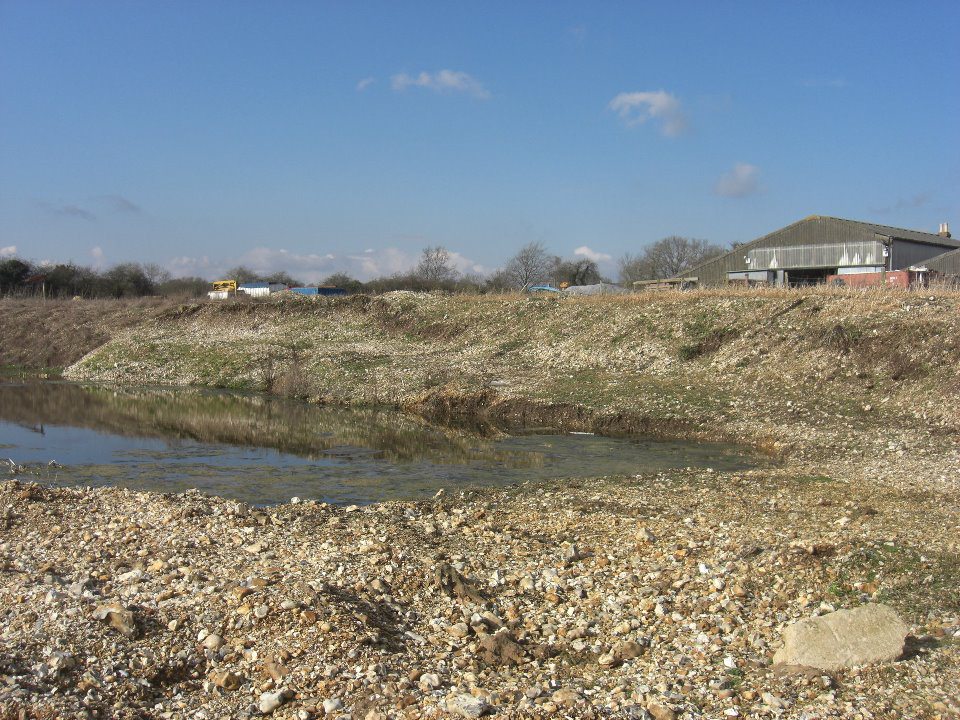
We have 20 vegetable plots, four orchards, and a Soft Fruit area – and they all need water for the crops to thrive. We’re lucky to have access to a balancing pond on site but getting the water from there to the plots has been a long-standing challenge. Any HCF member with at least one summer of experience will recognise the work involved!
When the Farm project first started, the team had to lug watering cans from the pond to the plots. The first evolution of our system brought a petrol pump in the pond to pump water through donated fire hoses into ten Intermediate Bulk Containers (IBCs) situated at each pair of plots. This made water accessible to the plots without the long trek to the pond for each watering can – but it was still tough. Some areas were still a fair way from an IBC and, without careful coordination, teams could find the IBCs empty of water.
In line with our commitment to reduce chemical and fossil fuel use, in 2022, we installed an electric pump in the pond. The pump is powered by two second-hand batteries and charged by a second-hand solar system. This drip-fills the 10 IBCs through permanent, underground piping.
In mid-2023, the irrigation system was expanded to include additional IBCs and to reach the tree orchards and the Soft Fruit area, bringing the total number of IBCs to 21. The Soft Fruit area is furthest from the pond so we installed a separate drip feed system with an independent solar panel and battery kit.
While we’ve made great strides from those early days of lugging individual watering cans from the pond, it’s become clear that the our current pumps, batteries, and solar panels are struggling.
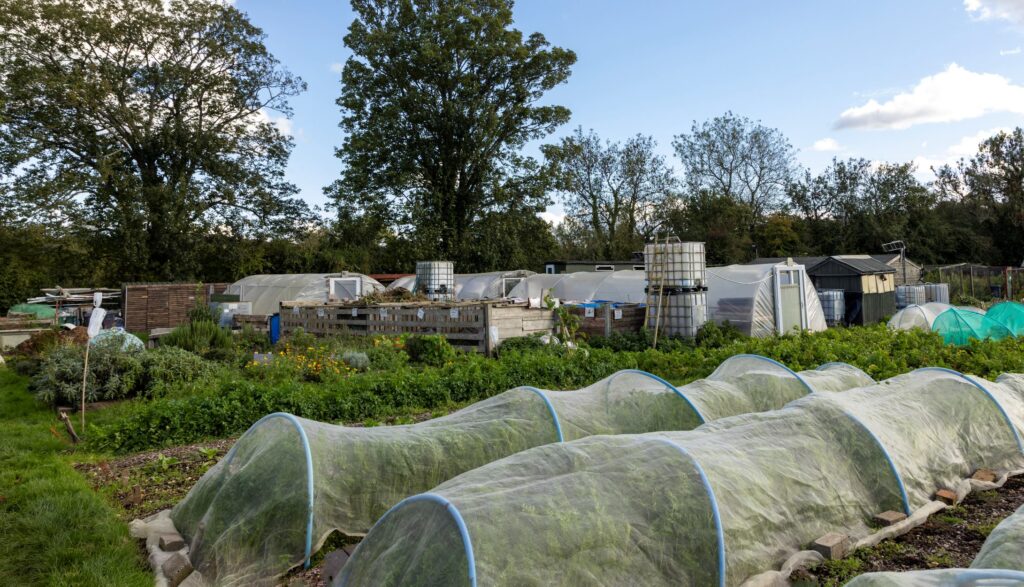
IBCs on the Farm today (photo credit: Steve Grundy)
Our grant
Our application to the Airport Community Health and Wellbeing Fund to upgrade our irrigation system was successful. We’ll be able to purchase new batteries, solar panels, and cabling for the pond and the Soft Fruit area extension. New IBCs will bring water even closer to the plots. Our Infrastructure (“A’) Team will do the installation, meaning that our application maximised our needs for equipment instead of labour.
The next phase of irrigation
The upgrade will make it possible to irrigate at night and in the early morning. This prevents the rapid evaporation that is currently experienced during daytime watering, particularly during very hot weather. Climate change events cause ever-more frequent and unpredictable heat waves which stress our crops and orchard trees so it’s important that we can water when and how it’s most effective.
Using solar for the system makes us less dependable on burning fossil fuels, making it more sustainable for Highbridge Community Farm and the environment, in line with our ethos.
The upgraded irrigation system will help our members too. All teams can rely on having access to IBCs that are reliably full of water, no matter when they come to the Farm to do their watering work. We’re not hanging up our watering cans just yet but more IBCs means that we can fill them closer to where the water is needed. We won’t have to carry them as far.
It takes a village …
Thanks to the HCF members who designed the irrigation system, to those who identified the funding opportunity and put the application together, to those who will manage the funding and procurement, and those who will work on site to make it happen. We really are a community working together.
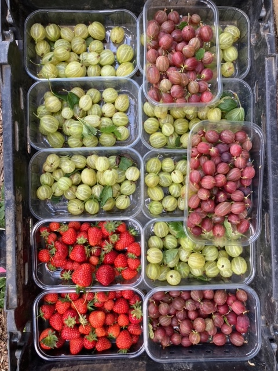
Over the last 10 years, the soft fruit crops have grown from a simple bed of rhubarb to a pretty sophisticated set-up with irrigation, cages, and a wide range of varieties producing around a staggering 1300lbs of fruit each year. Find out more from Soft Fruit Team Leader, Helen, about the work of the team.
Establishing soft fruit
Fruit started at the Farm very simply. A rhubarb patch was started where the Herb Garden is now, using spares from members’ allotments. The first fruit cage was just a part of the raspberry cage that we have today. It contained raspberries, gooseberries, redcurrants, blackcurrants, and whitecurrants and a few strawberries. We have still have plants today from cuttings of those original bushes, except the whitecurrants which didn’t produce.
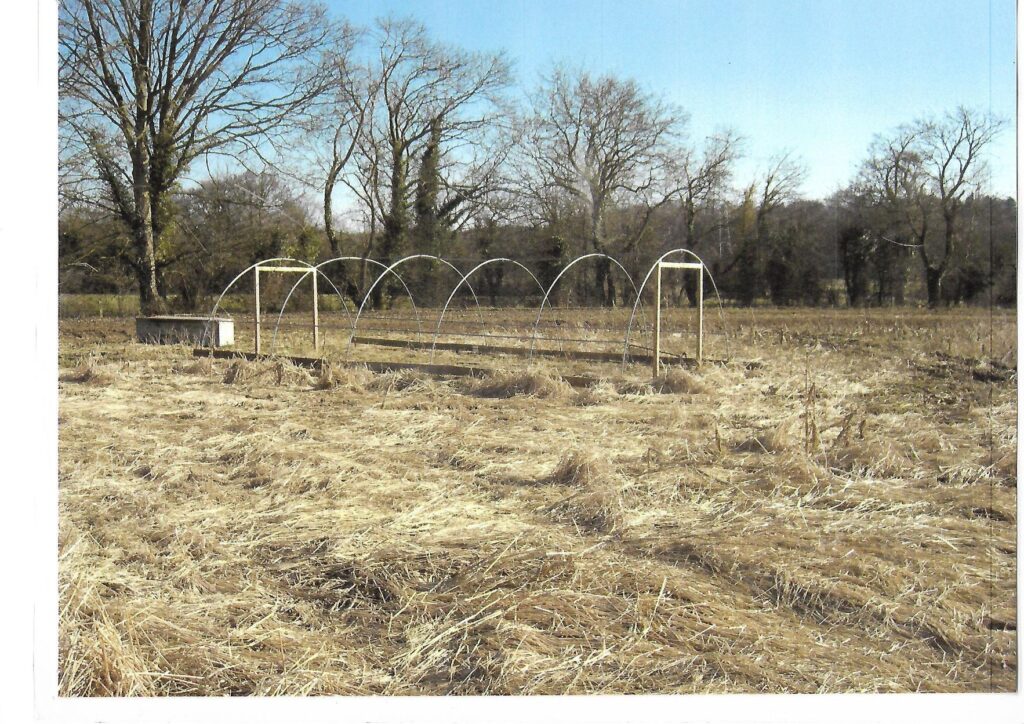
In 2015, HCF took over the land where the soft fruit is now and Andrew Ross started the original Fruit team. This kicked off two years of preparing the ground, preparing cages, establishing a drip irrigation system, and planting bushes. In 2017, the original rhubarb patch moved to a new home in the Soft Fruit area and other fruit crops developed around it.
A devastating lightning strike in 2019 destroyed the shed and took the nearby fruit cage and bushes with it. Falling bits of burning debris made things even worse. The team was down but not out. They cleared the mess, a new shed opened in 2020 and, since then, the Soft Fruit team has gone from strength to strength.
Find your way to the Soft Fruit area from the plots. Photo: Steve Grundy
The team
The team is 11 people, led by Helen Ridley.
Unlike the vegetable plots where the crops rotate and teams learn about new crops with each new year, the Soft Fruit team is more specialist. Team members are encouraged to take ongoing responsibility for a crop and learn about that crop over time.
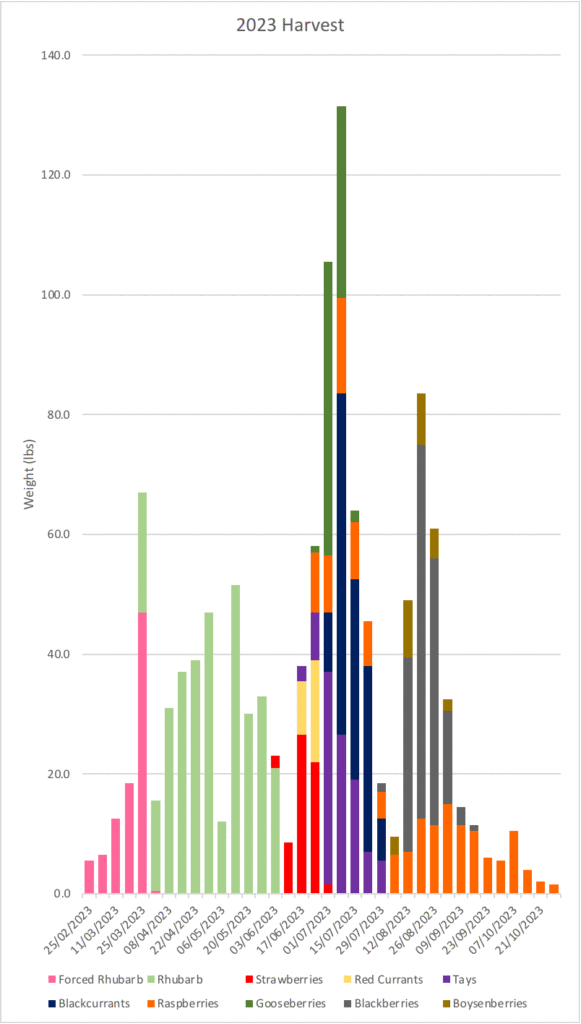
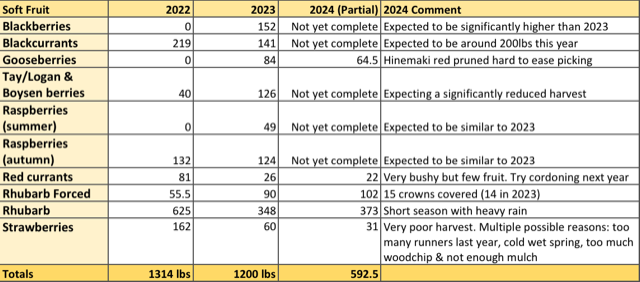
The team harvests non-stop between February and October – with July being a particularly critical month. They record the volume of fruit that they harvest so that they can see the performance of different crops, year-to-year. (You can see the summary from 2022 to now further on.) Between harvesting, the team maintains the fruit cages and internal plant supports, maintains paths around the cages, mulches the beds and deals with weeds.
The amazing volume of fruit harvested last year
The fruit
Let’s take a closer look at what the team produces. It’s well over a thousand pounds of fruit each year!
Blackberries
We’re all familiar with this hedgerow fruit. Even if you normally pick a good crop from local brambles, the Loch Ness variety produces large, sweet berries that are well worth a try. The team is expecting a good harvest this year from 9 new plants.
Blackcurrants
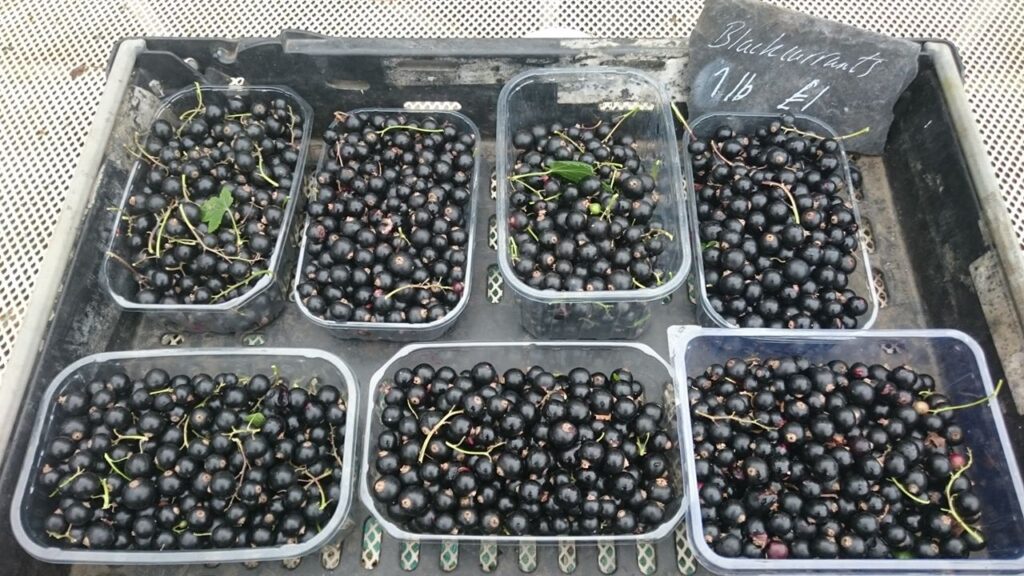
There are 25 blackcurrant bushes, 18 of which are the UK’s most popular variety of blackcurrants, Ben Hope. We’ve enjoyed a huge harvest from these – and thanks to people from other teams who joined in getting the bumper crop off the bushes.
Photo: Highbridge Community Farm
Boysenberries
You probably won’t find these in the shops. Their thin skins make them difficult to transport but you’ll enjoy their rich, jammy flavour.
They are a mix of a European raspberry, a European blackberry, American dewberry (a species of blackberry), and a loganberry and their name comes from the man who developed them – one Rudolph Boysen.
Gooseberries
Thorny bushes don’t make it easy to get the fruit but we’re glad of the sharp green berries (Leveller and Invicta) and their slightly sweeter red variety (Hinomaki Red). They can be plagued by gooseberry sawfly that strips the bush of its leaves, leading to a poor crop.
Raspberries
We have Glen Ample summer and some unknown autumn varieties. Most patches are doing well, although there are a few stragglers.
Redcurrants
These tart little berries made a poor harvest this year. The bushes needed a heavy prune last year and we didn’t feed with manure which could possibly have contributed. We visited RHS Wisley and found that they cordon the redcurrants (pruning to one main stem with short, fruiting side-shoots). Redcurrants can grow on old wood for 10 years, we were told, so we will experiment with this.
Rhubarb
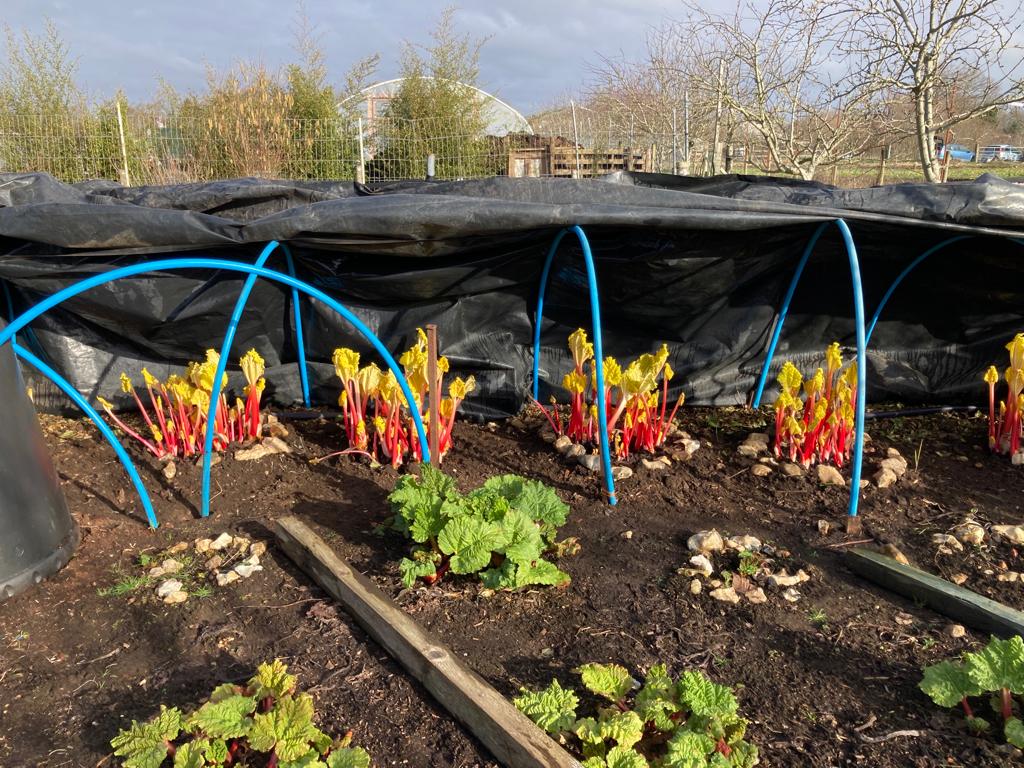
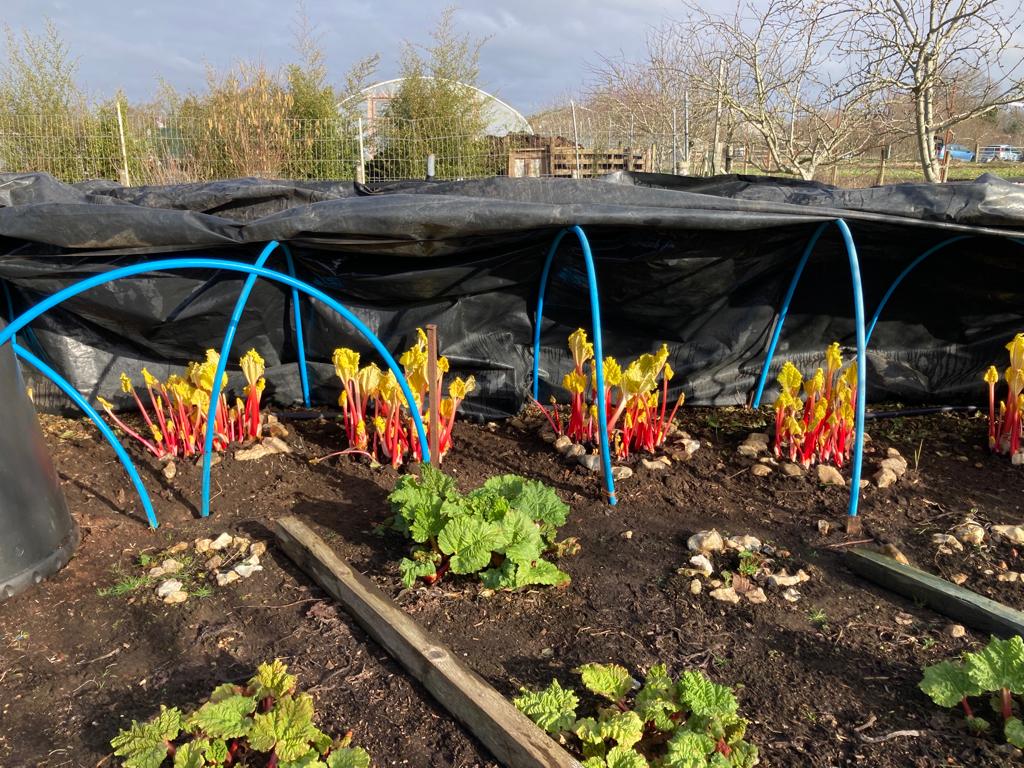
The plants are looking healthier now after a dip in June. The rhubarb is especially welcome in Spring when not many other fresh fruits and veg are available. We’ve had success in forcing the rhubarb , bringing us beautiful rosy spears early in the year. [Ed: we know that rhubarb is actually a vegetable but since most of us think of it with crumbles and fools rather than roast dinners or pasta, we’ll roll with its common association with fruit.]
Forced rhubarb!Photo: Highbridge Community Farm
Strawberries
We didn’t have a good harvest this year, possibly not enough feeding, too many runners last year, too much woodchip, or the cold wet Spring – but strawberries are very widely available outside the Farm so perhaps less missed than some of the more exclusive fruits.
Tayberries and loganberries
These are crosses between red raspberries and blackberries, with the loganberry crossing continents as a hybrid of North American blackberry and European raspberry. Like the boysenberry, the fruit is very soft and can only be harvested by hand so it’s not popular commercially. Both tayberry and loganberry have a fabulous aromatic flavour, with the loganberry being slightly sharper.
Raspberry cane spot is a fungal disease and we had to prune hard last year to try to eliminate it. As a result, it’s likely to be a poor harvest this year.
Adding it all up
Summary of soft fruit harvests 2022-now
Find out more
If you’re interested to know more about the HCF soft fruit, contact Helen. If you head over to the Soft Fruit area, there are team members working on different days and all will be happy to show you around
Can you imagine Highbridge Community Farm without sheds, water, polytunnels, fruit cages, tools, compost bins, cups of tea, somewhere to sit …? These are just a few of the things that our Infrastructure (“A”) Team take care of.
Initially, the guys worked on maintenance and construction alongside other responsibilities on the plots. Over time, Infrastructure became a team in its own right, acknowledging how important this aspect is to a successful farm project.
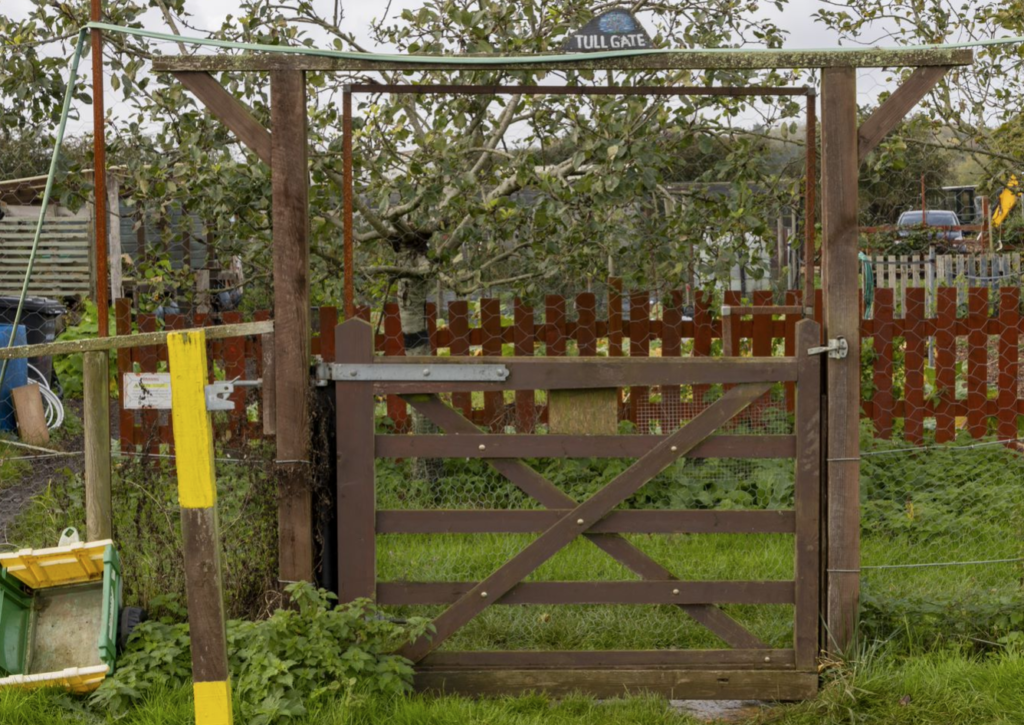
Brian Tull and Mike Lucas have documented the A Team story here. It describes how the team designed and built the structures that HCF needed to get started and then to keep pace as it grew and evolved.
They’ve come a very long way since the first days of an empty, rough field!
Photo: Highbridge Community Farm
Photo: Highbridge Community Farm
They’ve built polytunnels, storage for all manner of farm paraphenalia, fences, and communal areas. They’ve given us water pumps and IBCs, electricity, and a loo. They work within constraints determined by our landlord and they reuse where they can.
Their story reminds us how much work has gone into the infrastructure that we rely on. For members who’ve been here a while, you’ll be reminded of the old yellow marquee, tea breaks along the fence line, and the construction of the Big Green Shed.
Photo: Highbridge Community Farm
Find the A Team story, with plenty of photographs, on the “Our history” page of our website. While you’re there, take a look at the e-book that Andrew Ross put together.
We truly have a history and a community to be proud of.
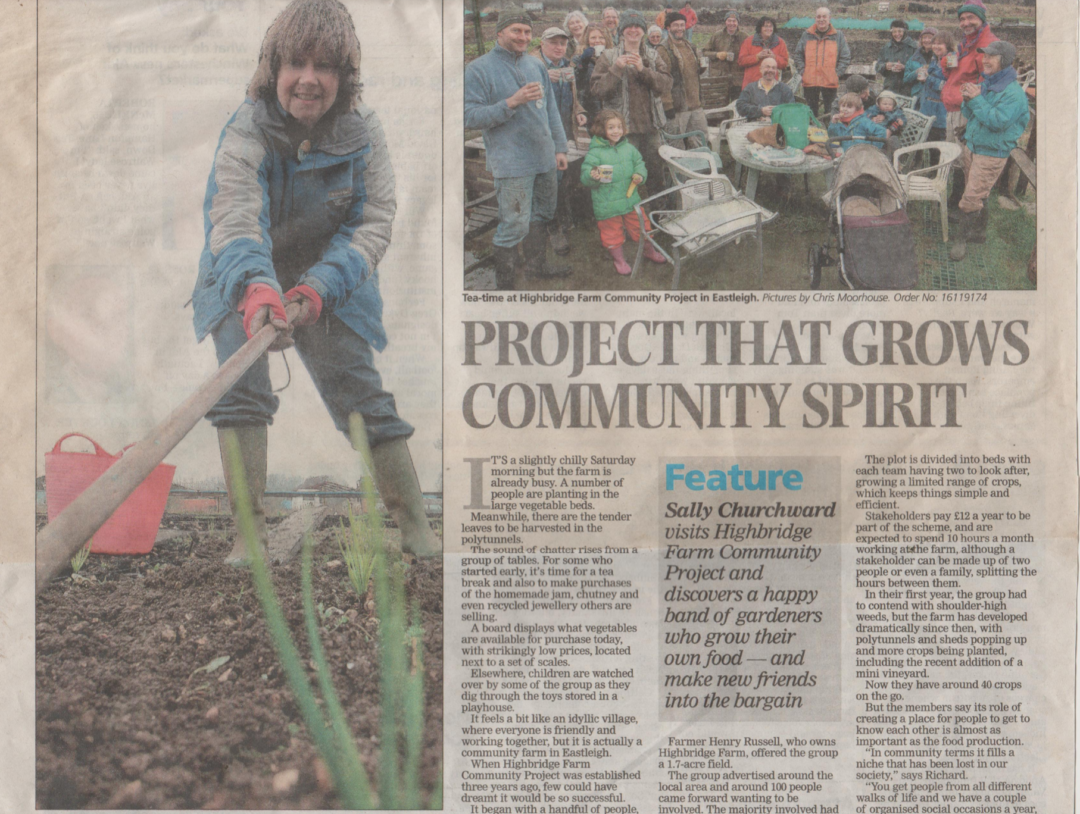
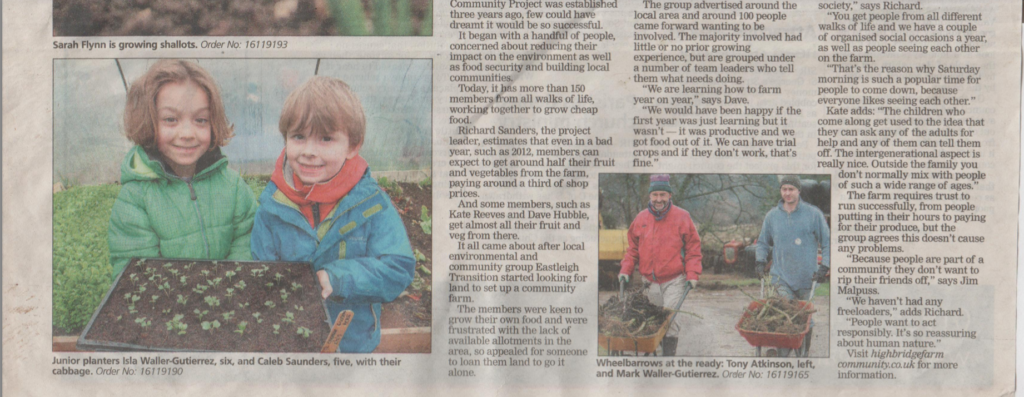
Check out this clipping from May 2013 as a lovely reminder of just how long our community farm has been thriving.
You’ll see some familiar faces and, if you look beyond the group in the photo, you’ll get a glimpse of the site. See how much it’s evolved!
To find out more about how HCF started and grew, have a look at Our history – and stand by for even more reflections. We’ll soon be adding Brian Tull’s history of the Infrastructure Team.
Thanks to Sarah and Brian for sharing this archive article – and here’s to our next decade!
There’s more than you think to getting strong edges around each plot. Alister ran some workshops to show how it’s done.
This time of year is perfect for housekeeping jobs, such as tidying up the edges of the plots. Tidy edges help to demarcate the plots and the paths, to reduce the spread of weeds at the edges and, importantly, to avoid accidents when long edge grass hides a dip between the soil and the path.
Thanks to Alister for his expert advice. Talk to your TL if you’re interested in learning more.
You’ll need:
Edging iron
Sharp pair of edging shears
Decking board
String line – long enough to run the full length of the plot
2 bricks
A small-ish fork – not a large digging fork but not a handheld one either
Small soil rake
Wheelbarrow
Bucket
All of these are available at the Farm.
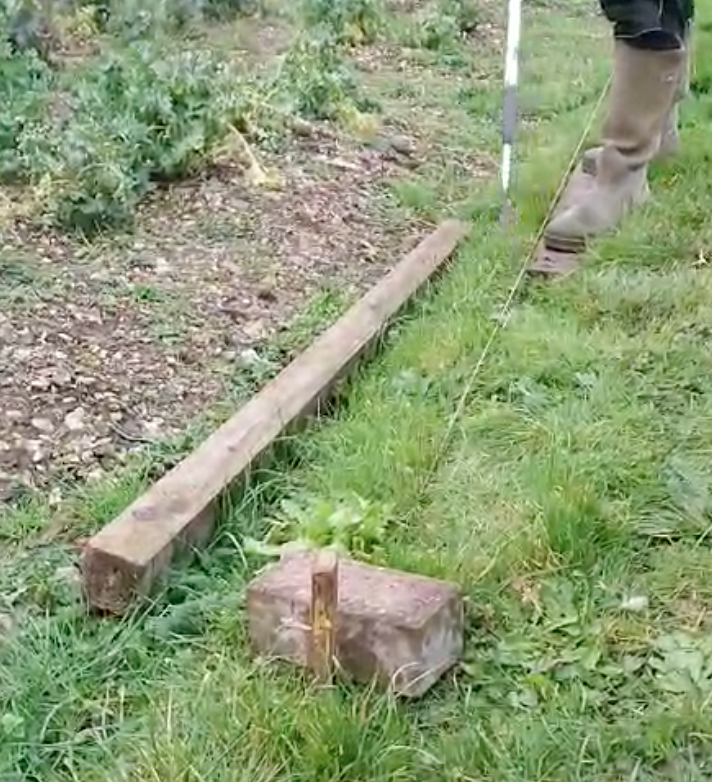
Start by laying the guide line straight and tight. Anchor it with the bricks and lay the decking board against it. The bricks help to weigh down the line; for example, to get it to ground level when you’re aligning with an existing edge.
Use a shortish board that you can spread your feet across it. Too long and it can move on our uneven ground. It can also move if your feet aren’t anchoring it.
Photo: Highbridge Community Farm (Alister)
Cut against the line with your edging iron. Make sure your edging iron is the correct way round (some have a bulge on one side).
When you continue the edge, such as after you have to move the line because it wasn’t long enough, start cutting from where you left off rather than starting from the far end and meeting in the middle. This helps to avoid a dog-leg.
Getting started
Dig out the weeds and grass up to your line. Shake off surplus soil so that we keep that on the plots. Cut some depth into the edge with your edging iron (don’t stand on your cut line!). Try to keep the edging iron vertical as you cut some depth into the edge and don’t use your feet to push it into the soil because you’ll start to become inaccurate. Flick surplus soil away from your cut edge onto the plot. You’re looking for a nice clean slope away from your line.
Digging out the edge
Clip the grass edges . Be careful to use the edging shears vertically (it can be easy to start cutting at an angle) and let one arm do the work while the other stays steady.
Keep your edges in good shape with a trim every other week. When the edges are tidy, people don’t tread on them which, in turn, helps to keep them in good shape.
Clipping the edges
Any more tips for strong edges? Let us know in a comment.
See how the crops that we grew in 2023 flourished (or didn’t!) and how the growing teams felt about the work and results.
Each team is familiar with how its own plots got on but not necessarily with the other parts of HCF. Find out how things went across the Farm – and what to think about for the crops that your team is growing in 2024. Thanks to all the Team Leaders for this feedback.
Plots 1 & 2
Carrots: sowed Early Nantes in March, a cold spring but much too early. Had to resow all March sowings as germination was very poor. This was not seed quality as April sowings germinated very well (Maestro sowed 29.04.2023) and grew very well. Enviromesh works very well to exclude carrot fly but as the carrot foliage fills the net it becomes harder to weed, though extensive weeding was carried out. Also, we found the netting + foliage provides habitat for field voles which nibble the top of the roots and sometimes the whole carrot. In September, we removed netting and by the next day a kestrel was hovering over the carrot plots!
We continued sowing carrots into mid- July (Autumn King). These germinated very well/grew well and seem to have avoided significant vole damage.
Carrots generally quite good but we need to emphasise THIN sowing. Everyone was too heavy handed with the seed, even though we used the seed dispenser.
Parsley, Basil and Coriander did well on plot 1. Parsley in particular, is robust and trouble free.
Turnip: relatively easy to grow but significant damage from flea beetle. Planted 21.03.2023 and repeated again in September.
Swede: as per turnip but seemed much less attractive to flea beetle.
Kohl Rabi: relatively easy to grow. 2nd sowing 11.06.2023
Mooli: very easy to grow direct-sown and plants are vigorous and appear trouble free, but on harvesting the roots a significant number had been hollowed out. Couldn’t find any obvious pest but some roots rotted off without obvious cause. Need to sow more thinly next time.
The above four root crops are not popular with stakeholders and were definitely a hard sell, particularly when competing with summer crops. I would question whether it is worth growing these four crops at all.
Kale, Cavolo Nero: relatively trouble free. Had to have a concerted effort to hand-pick cabbage white caterpillars off the plants June/July. Some significant damage but plants recovered well after caterpillar removal. Reasonably popular with stakeholders and a good crop still producing.
Pak Choi (actually sowed this on plot 1). Sowed in August to avoid bolting risk. With hindsight, this was too late as we had only a few small plants by early November, although these sold readily. Somewhat prone to slug damage. Tried sowing in 3” pots and in toilet roll tubes as an experiment. All toilet roll seedlings were small and weedy and never made significant growth. Having tried the same with sweet peas in the past and also failed, I suggest that toilet roll tubes appeal to our recycling instincts but are useless for raising plants.
Spinach – has done fantastically well, pest free and easy to maintain.
Plots 3 & 4
Feb and March, we prepared beds and paths.
Parsnips: Started sowing 8th April. 4 rows per bed. Better germination and growth on the Gladiator than the White Gem. We forgot to earth up the parsnips to reduce canker. Started harvesting in November.
Carrots: We sowed some carrots in the gaps where we had poor germination from the parsnips and these were affected by the carrot fly and gnawed by mice.
Tomatoes: Started planting out the tomatoes 16th May. We didn’t stake these to start with or start training them for several weeks. It was a great labour to get them back into some sort of order. We lost some plants due to blight. There were blighted potatoes on plot 6 so spores probably drifted from there to us. The other tomatoes on plot 19 were not affected at that time.
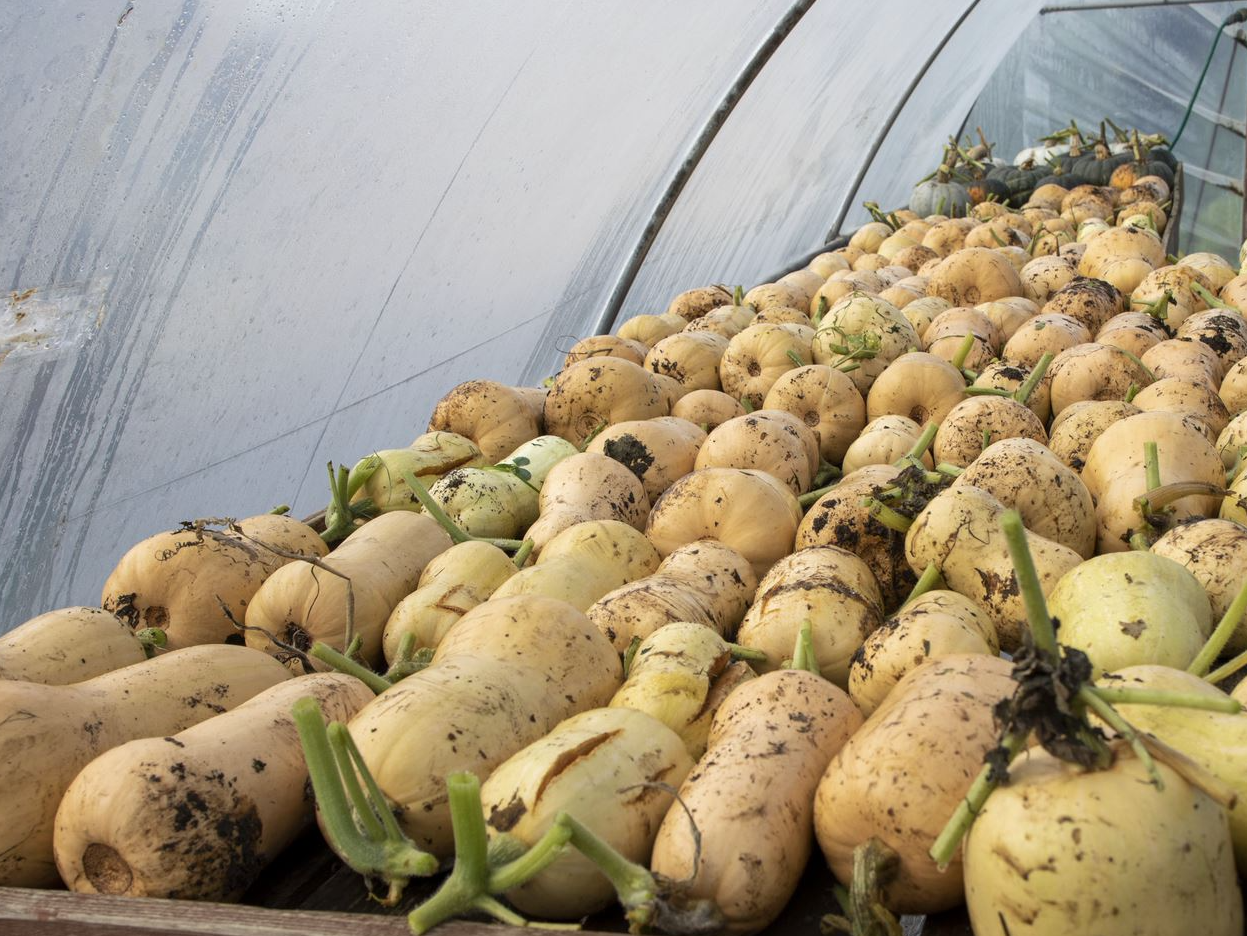
Winter squash: We sowed 200 butternut squash seeds and 50 each of the other 3 varieties. This a was an extra 20% in case of poor germination. We started sowing on 19th April. All were sown by 1st May. They were covered by perspex as advised. As they emerged, we swathed them in green netting. By 3rd May, the Crown Prince seeds had mainly been eaten by Mice. During the following week, Kabocha and Uchi Kuri had been eaten and some of the tops of the butternuts that were emerging had been grazed.
8th May: 75 butternuts survived and were covered in net and grown on in the Polytunnel and then in the hardening off area as it was very hot in the Polytunnel. We took all the remaining pots home to resow and germinate in our lounge and on the verandah/patio.
By the last Saturday in May, our plot was full of butternuts and Kabocha squash. 1st June, Matt and Claire took Uchikuri pots home to germinate. These ended up on Penny’s plot with more butternuts. In June, we were giving 5 litres water per plant per week and checking hydration mid week and topping up if necessary.
Excellent harvest in October.
Photo: Highbridge Community Farm (Steve Grundy)
Plots 5 & 6
The green manure we sowed last year had a lot of grass in it which was difficult to remove. All crops germinated and grew well.
Calabrese was very good, produced a lot, and lasted a long time.
Cabbages grew well but many split, probably should have harvested them earlier but were told to wait for other plots.
Potatoes: All potatoes grew well and produced a lot but half of them had wireworm. The spud mix didn’t work because, as we found out afterwards, we didn’t dig it in properly.
Plots 7 & 8
Autumn sown broad beans attacked by mice and weather, so just spring sown beans were cropped. I think the Crispus are a little better than the Doric (but Doric are still OK)
Hispi type summer cabbage, the Greyhound, a grew and sold better than the round type Golden acre/primo.
Cavolo nero always does well.
Plots 11 & 12
Potatoes: Acoustic performed very well – good sized potatoes, cropped well, relatively free from holes. Vivaldi potatoes were small, very tasty, but the harvest was poor. King Edwards disappointing. They developed blight quite early and we had to dehaulm them so the overall size of the potatoes was small. About a third of the crop had worm holes. Sarpo were big potatoes but we only grew 3 rows which got mixed with those from other plots. Seems there is a problem with star-shaped brown cavity in the middle of the potato. No info on number of holed potatoes as we were not around when the team dug them up.
Beetroot: some opened seed packets did not germinate at all well at the start of the season. Planting test pots early on was a good indicator of what seeds to throw away. We eventually had good crops from Detroit 2, Boltardy and Cylindra (pack supplied to us by Polytunnel Lin). Last bed sown in late August was a bit too late but we were harvesting plenty of good sized beetroot until the end of October with a few smaller beets in early November. A lot of rain helped and emphasised the need for a lot of regular watering when weather is dry.
Celeriac: really important to take leaves off once they drop and this task got away from us at times – along with the associated weeding. All celeriac were small but most of the early plants survived so we were able to plant out a lot. Once plants go to seed take them out immediately as the bulb will not develop and it is a waste of time later on when they have to be dug up anyway with no bulb developed underneath.
Both these crops continue to be harvested late into the year, which makes it very tight to get spud mix in if you’re going to grow potatoes afterwards
Plots 13 & 14
Cabbages: the smaller cabbages – Greyhound & Sunta, were generally the most productive of the brassicas. The success on quick germination of those Greyhound & Sunta that we started at home, in particular, was excellent. Some challenges with butterflies and caterpillars, (so nothing to with the seeds, obviously), but not too bad. Those smaller cabbages also seemed particularly popular with buyers. As we thought they would be, the Ormskirks have been slower to grow, & so, we haven’t harvested any yet. The January Kings, the seeds of which we disposed of because they weren’t cutting it, & the red cabbages, have been the only real under/non-performers
Potatoes: The Sarpo potatoes were superior to the Cara in as much as the Sarpo were a lot less prone to both wire worm and blight. With Cara, the damage from either wire worm or blight was about 50%. So, if Sarpo is not going to be available in 2024, we think that the closest comparable seed would make sense.
Plot maintenance has generally been quite manageable over the year. God put in a good, helpful watering shift overall, and we were generally able to cope with the weeding, including under the nets on P13.
Plots 15 & 16
Beans: The total weight of dried beans was just over 56 lbs and they are being sold as mixed bags of a half pound weight each. I attach a table giving, for each variety, the total yield, the length of row grown in feet and the yield in ounces per foot.
Borlotti were easily the most prolific followed by Blue Lake and Czar. We would have had quite a lot more but an additional half row was accidentally planted late with a dwarf bean of unknown variety that wasn’t very successful.
We had two types of black beans, one in a plastic bag handed on I think from Tudor and some Brazilian beans provided by Maria, to which we gave a row each. I think Tudor’s were more prolific but there was a bit of a mix-up and I couldn’t reliably distinguish them so have combined them for weighing. They were some way behind the best three in terms of weight per foot grown.
Plots 17 & 18
Onions: Sowed 3,000 onion seeds and germination was very good. Planting out was more difficult as we went into the dry period and it was difficult to give them enough water to put their roots down. Growth improved in July but downy mildew was a problem as we had so much rain. Harvest probably not as good as last year but not bad considering the growing conditions.
Chard and Perpetual spinach were also affected by the heat in May/June and many plants bolted.
Courgettes: Germination for the Tosca courgettes was zero – very disappointing but the patty pans did really well and gave us an early crop until the next sowing of courgettes was ready to go out. The team did a really good job of harvesting them 3 x a week so they never got to large.
The overflow squashes took off well and provided a good additional crop of butternuts and Uckiki Kuri.
Plots 19 & 20
The poor germination of a lot of seeds led to delays with all crops and the need to re plant. Lettuce – we had a steady supply of lettuce throughout the summer and still harvest lettuce leaves. We overestimated the demand and due to over sowing and difficult weather conditions, we lost quite a few as they bolted in the two dry periods.
Cucumbers – excellent crop from 19 plants. Spring onions – initial crop failed and re-plant of new seeds failed. Tomatoes – very successful after problems with seeds initially. Problems keeping up with tending them as they became bushes. We should have used stronger supports from the outset. Padron peppers – problems with germination and keeping them alive. Small crop eventually. Radishes – poor germination and stunted growth.
Onions: Our over-wintered onions started to grow again in March/April but they bolted later and became over run with weeds whilst we focussed on Plot 19 during the drought. The harvest was good but it was difficult to get the balance right of preparing the beds for the next crop (kale seedlings) and harvesting the onions, especially as the salad crops were so intensive and our team was depleted due to a departure and illness and spending so much time keeping the salad crops alive.
Kale: The kale seedlings were established but some were squashed by the hoops and netting and we are getting slug damage across the board plus heavy rain is causing leaves to droop and sometime snap off.
Polytunnels
We went a bit mad & tried a bit of variety this year including cucumbers, gherkins, padron peppers, loofah and 26 different tomatoes as well as chillies and herbs. Most produced good returns.
Germination in Spring was slow and several varieties of tomato were lost to frosty weather in March. Main harvesting began in July & continued until late October. By mid-August, we had picked 250 pounds of toms but had lost a similar quantity to blight. A different management will be needed next year to try and prevent wastage. Overall, the quantities were down on the previous year but not by much. A couple of varieties were more reliable than others. Maskotka produced an early moderate crop that kept going well, Orkado & Shirley produced good trusses of an average size fruit and cherry varieties always crop well. Sadly, the plum varieties suffered blossom end rot.
The padron peppers struggled in the tunnels, which was a surprise. Aubergines were late in and, although producing a few autumnal fruits, were not worth the space so I shall not bother next year. The sweet peppers appear popular so I shall try again but will have to watch the watering system & planting distance. Mildew hit them. Pam has done her best with chillies & had a good steady crop up until November.
The winter salad leaves did well at the beginning of the year and are just starting to provide small quantities now with winter lettuce to follow. Susan has, again, got a good lot of lettuce maturing.
Soft fruit
During 2023, we introduced 2 new fruit varieties, summer raspberries and blackberries. Both performed really well in their first years, with the blackberries being a particular highlight, although they were tricky to sell for some reason perhaps because people could pick them for free in the hedgerows. We finally had a decent harvest of gooseberries after tackling the sawfly for a number of years. We won the battle this year but have not yet won the war… We did not get so many strawberries this year, but are hoping for a bumper year in 2024 after the stock of new variety strawberry plants has been increased significantly. Other stars this year were the tays and forced rhubarb.
Photo: Highbridge Community Farm
Fruit trees
2023 for the top fruit team was a year of diversity. There was nowhere as many apples as the previous year due to a combination of factors including bi-annual behaviour but also recovery from the very high temperatures of last summer (loss of sugars) and the wet weather during the pollination window in spring. Altogether harvest was enough to feed the farm, but very modest compared to other bumper years where there has been more variety to offer and we could afford to do up to two bottling runs to juice. Many trees gave a single tray of fruit to harvest. On the positive side, the very wet summer has meant that the trees didn’t suffer from drought or heat stress and in return looked much healthier this season and had less signs of disease. The aphids on the growing tips seen during the hotter late spring spell disappeared as soon as the rains set in, and nothing much followed it. The outlook is that, given good conditions for next year, we will see the trees stronger and a bigger harvest.
The lack of apples was compensated by the huge bounty and variety in all the other fruits: 2023 was the year of the plum. the Mirabelles kicked the season off in an abundance of trays of red and yellow plums, followed by a very heavy and long crop of our two purple Pershore’s, ending with greengages and Victoria. The only plum trees that didn’t produce where the yellow Pershore’s in the shade.
Pears cropped fantastically and for the first time ever we harvested trays of very good quality fruit, the Comice tree giving some first class pears. The trees where healthy with no signs of leaf mite.
Last in season, we took a very good quality crop of quinces that didn’t suffer any brown rot like last year. Only one of the two cherry trees fruited, but the harvest was lost to wildlife. The peach trees turned out some lovely fruits for the first time, but not enough to feed the farm.
It has been about four weeks since we had our heat pump switched on and since then we have had a houseful of people in the house over Christmas and we have experienced some cold weather. So I think it a good time to let you know how it has performed.
The heat pump is designed to provide all our hot water needs as well as run the central heating. The management of the system is very different from our previous gas system in that it is switched on at all times. With the old system in the winter we would generally put the water and central heating on twice a day and top it up when necessary. Now we have continuous hot water and we can control the house temperature using an app on our phones. This means we can control the house temperature in blocks of time of our design.
The system is much less responsive compared to a gas system. This is because the temperature of the radiators is about 50 degrees compared to about 70 degrees in our old gas system. With cooler radiators the rate at which the house changes temperature is quite a lot slower and so we tend to keep the house at between 15 (at night) and 17 degrees. We have noticed that we are getting a more even temperature in the house. We have also noticed that with the cold weather the heat pump is working much harder and increasing the temperature of the radiators slightly allowing the house to reach the set temperature. During cold weather the heat pump becomes less efficient as it takes heat from cold air. However, we have been told that averaged over the year the pump should have a seasonal coefficient of performance (SCOP) of 3.59 – that means for every 1kWh of electricity used to power the pump 3.59kWh of heat will be produced.
The sound level of the pump varies according to how hard it is working. When working at its maximum, we can hear the pump – it is outside our kitchen window. The noise is well within tolerable limits and not much louder compared to a gas boiler. It is worth noting that from Spring to Autumn the pump will be operating for short periods of time and at well below maximum effort.
Any snags? The hot water system is now pressurised and as the system was switched on a hot water pipe to a basin sprung a leak. This was easily fixed but it is worth noting that old pipework could be susceptible to leaks if it is pressurised. We have also found that we will need to replace a couple more radiators for larger ones in rooms where we feel that a higher temperature is needed. The cost of running the system is a bit more expensive (about 10%) compared to our old gas boiler but the advantage is having the house continually at a comfortable temperature.
Are we pleased with the heat pump? Yes we are. Just looking at the machine as it takes heat from the air and pumps it into our house is awesome! We are also confident that if we have problems, the company that fitted it will deal with it. Please do talk to Christine or me if you have any questions. You are very welcome to pop round to have a look at the system.
HCF is about getting to know each other as well growing. We recently held an Art, Craft, and Produce Fayre for HCF members to share their work with each other. Here are some of our inspiring creators.
Esther (Plots 3 & 4)
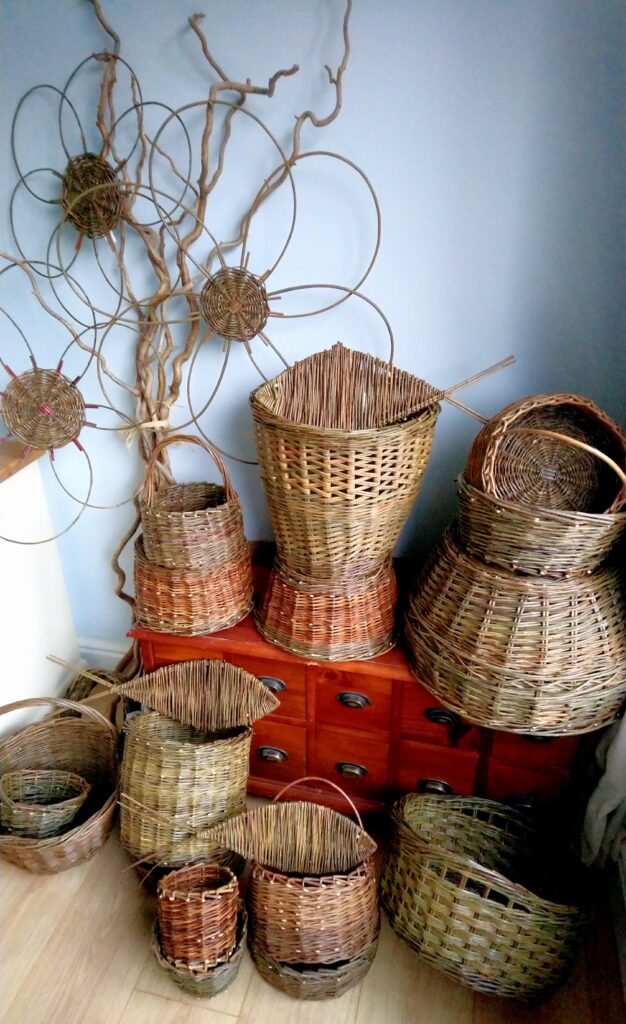
Basketmaking
I did a couple of workshops at Hillier Gardens then embarked on a beginner’s course in willow basketry with https://www.louisebrownbasketmaker.co.uk/. I love that you can make useful objects just by bending sticks!
Photo: Esther Dovey (member)
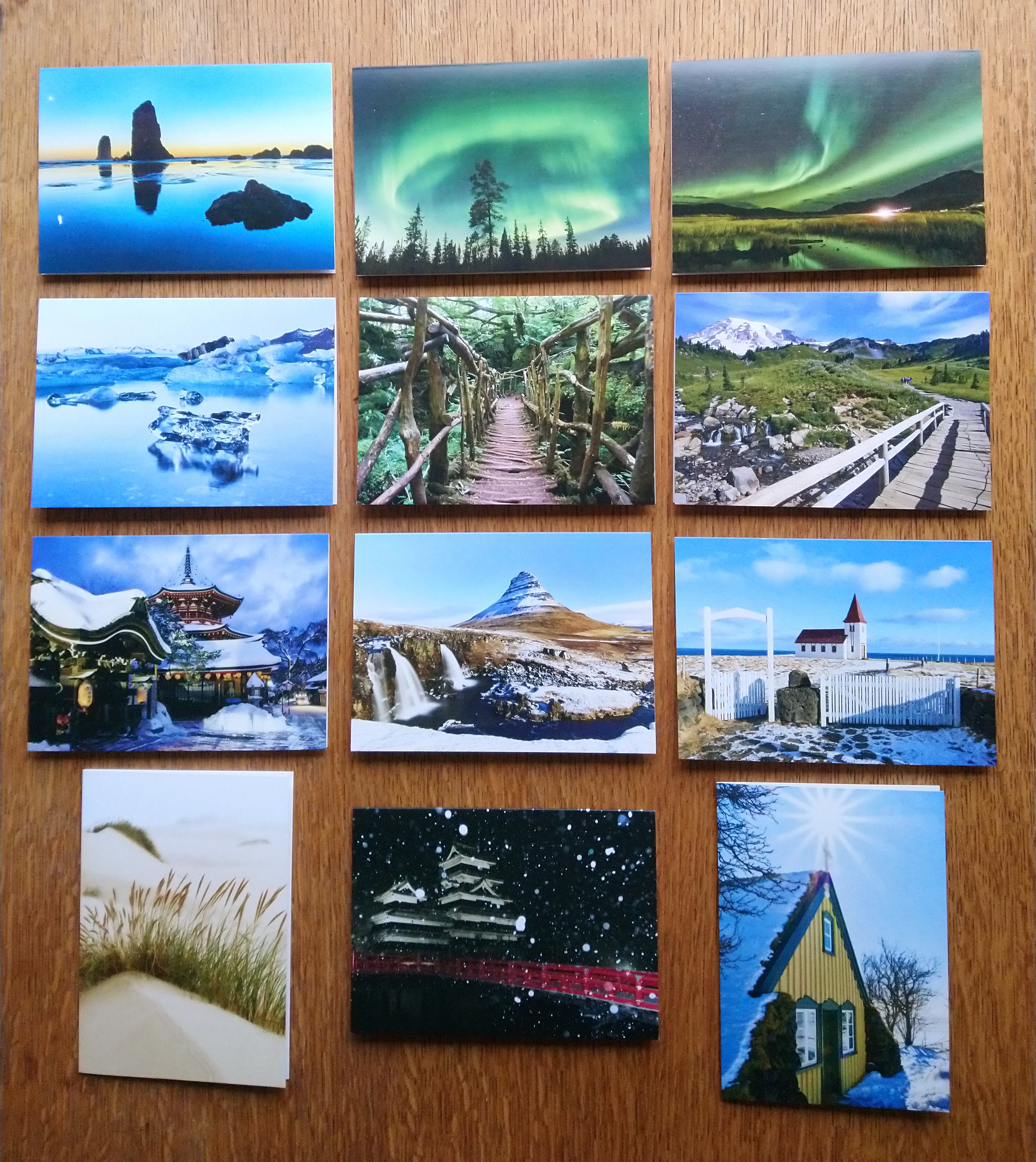
Photocards
I took up photography so I could do better justice to the places I was visiting (before I more-or-less stopped flying because of climate breakdown). Especially the aurora. If anyone wants any advice on how to spot the northern lights, just ask (if you dare – I could talk about them for some time!)
Photo: Esther Dovey (member)
Gillian (Plots 1 & 2)
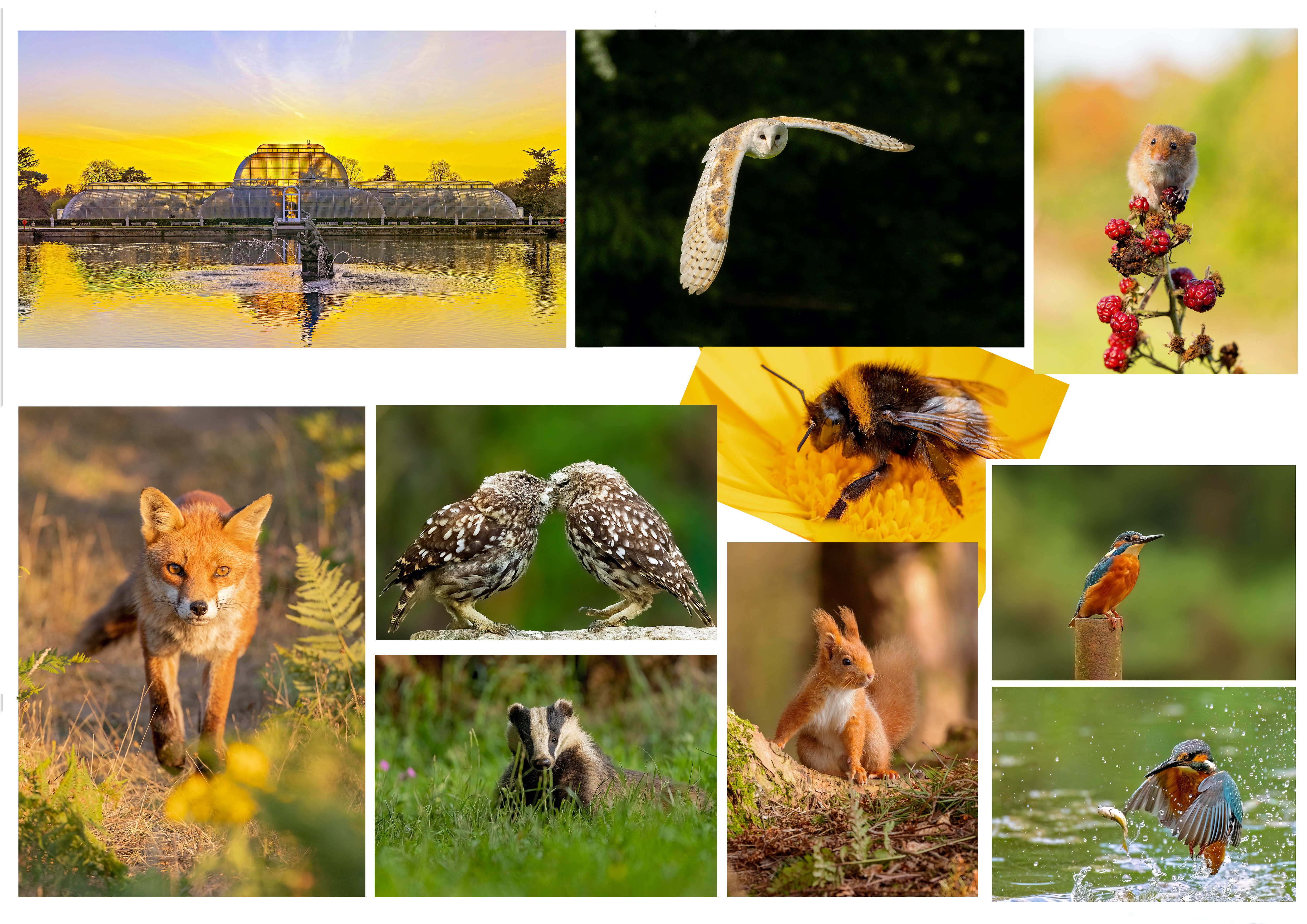
Stained glass
I have been producing stained glass for about twelve years. I produce colourful stained glass items mainly featuring flora and fauna alongside Christmas decorations. Outside HCF, find me at gillanddiky@aol.com.
Photo: Gillian (member)
Loki and Jo (Plots 3 & 4)
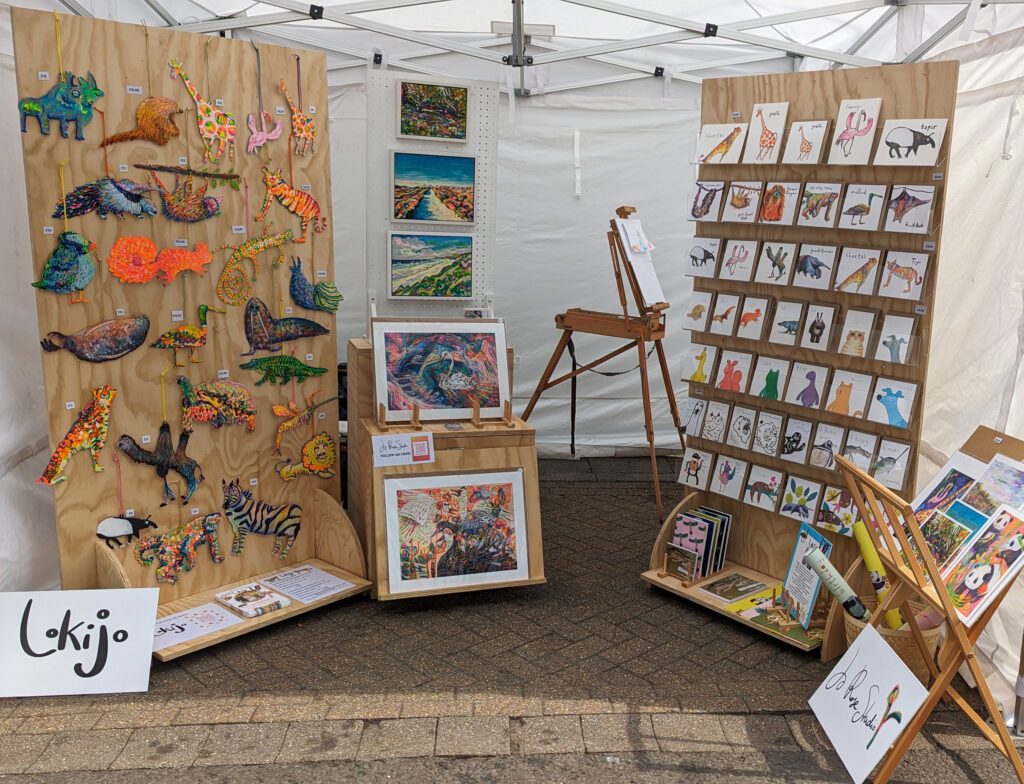
LOKIJO Greeting Cards and Handcrafted Decorations
LOKIJO is a small, family-run-business based in Winchester which was created by 12-year-old Loki and artist mum Jo in 2020. Inspired by his love of animals and his funny, fluffy whippet Wolfy, Loki illustrates his unique animal designs using pencil and ink and then Mum, Jo decorates them using colourful acrylic and gouache paint and oil pastels.
I focus on birds, mammals and insects from around the local area, the farm, Dorset and southern Scotland. Prints on high quality photographic paper, any size up to A3 (42cm X 29.7cm), can be provided to bring nature and wildlife into your home.
We are a week into the installation process and today the pump should be switched on. More on that later.
Getting to this point has taken about a year. Our house is detached and has 4/5 bedrooms. The main part of the house was built in 1954 and had various extensions in the 1970s, 1990s, early 2000s and 2020. It had double glazed windows and cavity wall insulation. We knew that we had to increase the insulation in our house in order to be eligible for an air source heat pump. We had previously emptied our loft so it was straightforward and relatively cheap to to double the depth of insulation. The house has a large integral garage with a bedroom above which was always difficult to heat so we got a local builder to add insulation into the roof of the garage.
Once we had done this, we decided to to have an energy performance survey carried out hoping that the house would fall into the C category. Luckily it did which indicated to us that we could realistically have a heat pump.
About 8 months ago, we received an email from Good Energy, our energy supplier, saying that the company had just bought Igloo Works, the heat pump provider attached to Igloo, one of the failed energy providers. We filled in a simple questionnaire on line and it was followed up by a visit from an Igloo (now Good Energy) surveyor. He spent a couple of hours measuring each room and calculating heat loss – from the data collected he produced a report that confirmed that our house would be suitable for a heat pump. The report stated that some of our radiators would have to be changed for larger ones – the heat pump produces cooler radiators compared to a gas boiler so they have to have larger surface areas.
Over the next few months, we had a lot of discussion about the location of the heat pump. We had wanted it at the side of the house but unfortunately the distance between our wall and our neighbours’ was 20cm too short to allow for maximum efficiency of the pump. We found a position at the front of the house which meant obtaining planning permission which we eventually got. So by October this year, we were ready to go. In the meantime, the Government had increased the grant for a heat pump from £5000 to £7500. This meant that it would be costing us about £11,000 as opposed to £18,500. But still a lot of money!
In the next instalment – does it work?! Find out here.
Martin shares his family’s decisions and experience of switching to an air source heat pump.
Over the last few years, we have been thinking about reducing our carbon footprint as have a lot of other people. The key changes that would have the most impact are moving to a more plant based diet, reducing the amount of travel fuelled by fossil fuels and replace our gas central heating system with an electric system.
Being farm members and choosing local food wherever possible helps with the first one. The second one is more difficult – we cycle as much as possible and I suppose at some point we will buy an electric car. But it is the third one that we have decided to tackle head on. We already buy our gas and electricity from Good Energy – they generate their electricity from their own wind farms and solar arrays. Our carbon footprint would reduce by about 60% if we move away from burning gas.
As I write this, we have heating engineers in the house taking out our gas boiler and replacing it with an air source heat pump. It is probably the wrong time of year to do it as we will be without heating for a few days this week!
The purpose of this blog is to share how we have got to this point and to let you know how the system operates. There has been a lot of negative press about heat pumps – they are said to be noisy and do not generate sufficient heat. We will soon find out if these claims are true or not. Watch this space!