The power of seaweed

UK coastal communities have a long tradition of wild harvesting of seaweed for food. But its potential reaches far further than this.

The World Wildlife Fund supports a project of regenerative ocean farming. Regenerative ocean farming is a climate-friendly model where seaweeds and shellfish grow in a way that doesn’t require fresh water, feed, or fertilizer.

This ocean farming involves the growing and harvesting of kelp, which requires none of the chemical inputs of farming on land. Seaweed farming has been done off the coast of the UK for hundreds of years. In Wales, it is made into laverbread and in Scotland, it is made into dulse.

But farming of kelp has way more potential than this. For example, it has been proved that if cattle are fed feed made from kelp, it reduces significantly their production of methane.

Instead of stripping habitats of nutrients and biodiversity, seaweed farms have the power to sequester carbon on land and sea and produce livestock feed and fertiliser that can enrich the soil. Seaweed farms also create water conditions that allow marine ecosystems to thrive.

WWF is working with ocean farms to explore the exciting role that seaweed can play in helping us to tackle the crises in climate and nature. To find out more about this project, click here.

There is a short YouTube video showing a regenerative ocean farm in action which you can watch if you click here.

With thanks to Martin Benning

Drowning the Highbridge water meadows

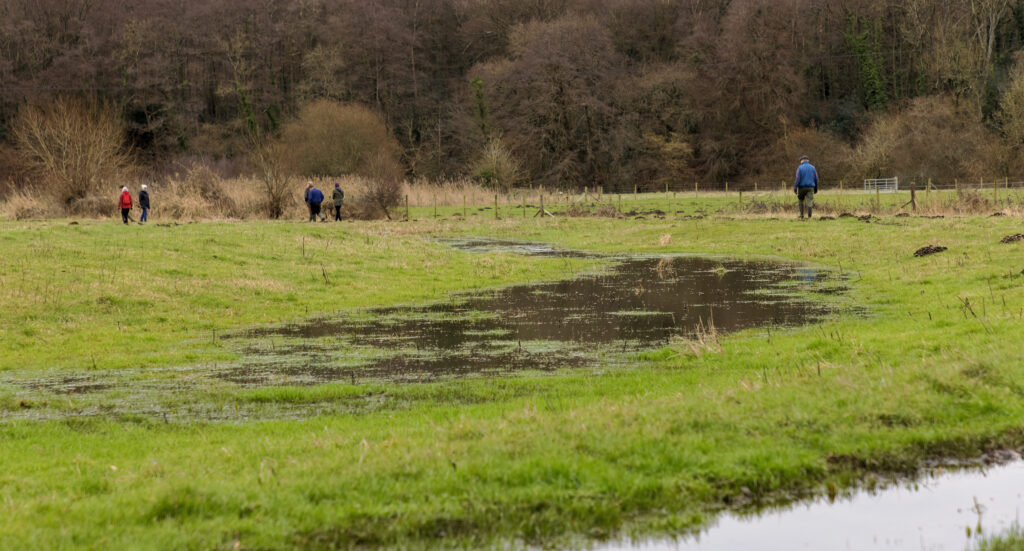
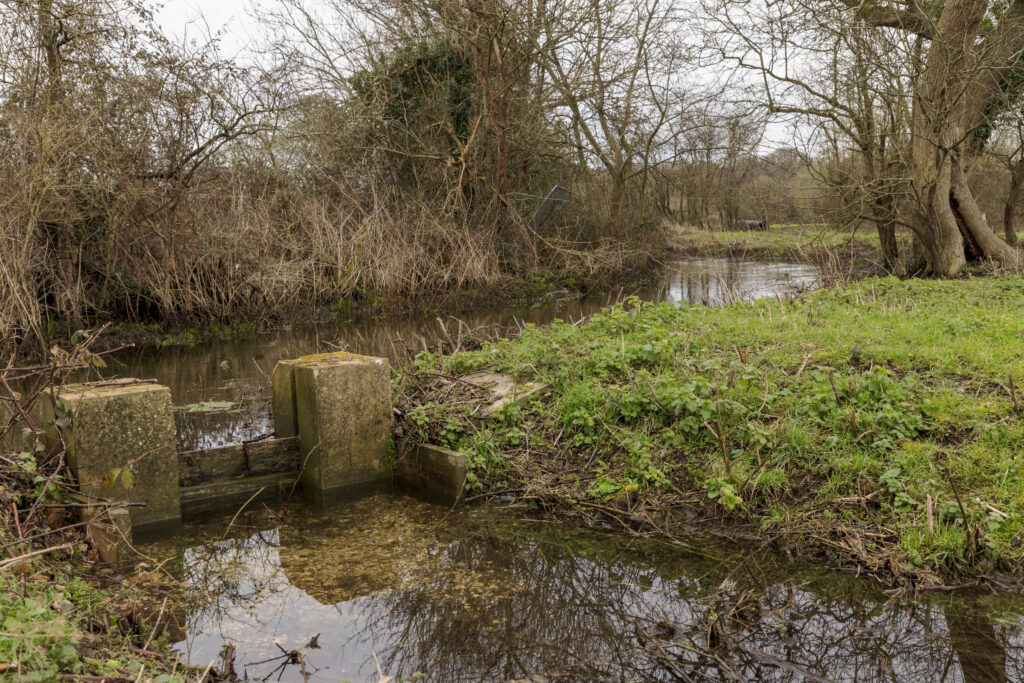
We were delighted to be invited by Highbridge Conservation Group to see them removing the boards to divert water onto the meadows. This is another step in the restoration of this scientifically-important water meadow.

Water meadows are areas of land that used to be flooded deliberately, under carefully controlled conditions, the timing being at the discretion of the farmer or landowner. They have been described as “one of the greatest achievements of English agriculture” so it’s wonderful to see Highbridge Conservation Group helping to preserve the land for future generations.

Historic England explains that water meadows had three main purposes: to force early growth of grass in the Spring, to improve the quality of the grass sward and to increase the summer hay crop. Controlled flooding, known as “drowning”, moves water across the surface of the meadow.

As well as being important for wildlife and the historic environment, water meadows provide even wider environmental benefits. They can contain flood water, trap silt and help to reduce the nutrient load in water that is returned to rivers.

Find out more about Highbridge Community Group in this post. Steve Grundy from HCF photographed the work on the water meadows:

Getting to know our neighbours: Highbridge Conservation Group

The fields that we use for Highbridge Community Farm are next to some historic water meadows and a Site of Special Scientific Interest, also owned by our landlord, Mr Henry Russell. Lyndsey runs Highbridge Conservation Group. Here, she explains how it came about and how you can find out more.

By Lyndsey Rowe

I run Highbridge Conservation Group. I ran the Legacy Festival at the farm from 2016 to 2021. (Sorry for all the noise and disruption but we raised 40 thousand pounds to support people with brain cancer!) Henry was so kind and helpful and over that time and I saw how much he does for so many people as well as running the farm.

Late in 2021, we were chatting and he told me about the meadows and the SSSI and that he didn’t have the time to maintain it as he would like and that other similar sites have groups of volunteers to help. He had been so kind helping me raise funds for my late son’s charity that I thought I would do something to help and say thank you and Highbridge Conservation Group was started in January 2022.

We started by clearing the banks of the stream to provide better habitat for the endangered Southern Damsel Fly, the reason that the meadows are designated as a Site of Special Scientific Interest (SSSI), and began work on the 17th century water meadows clearing channels and flooding them to provide early grass for the cattle and a better habitat for wetland birds. You may have also seen us conducting surveys of the flora and fauna, working in the woodland and in January 2023 we planted a British native hedgerow of one thousand trees across the river.

We have some great plans for the future including a visitor centre, facilities for local school groups, bird watching and day workshops. I hope you can join us.

Find more about Highbridge Conservation Group on their Facebook page or contact them at HighbridgeConservationGroup@btinternet.com.

A round up of eco tips

The HCF Plastics group provide regular tips to help us all to live more sustainably. Here’s a round-up of the tips from 2020. For a list of businesses that help us reduce, reuse, and recycle, see Related Organisations.

Remembering what you have before you shop

This was on the BBC Good Food website, in an article about reducing food waste. It suggested taking photos of your fridge and food cupboard contents before you go shopping, to remind yourself of what you already have. This is particularly useful for foods that don’t have a long shelf life.

Avoid peat

Peatlands are endangered habitats that absorb greenhouse gases and support plants and animals that can’t survive elsewhere. It makes no sense to destroy them just so people can use peat in the garden. Public concern about peat loss led to government action: in 2011 the UK government set voluntary targets to phase out peat use in gardens by 2020 and by the professional horticulture industry by 2030.

Since 2012, however, progress on ending peat use has stalled. Peat consumption has been rising despite government targets to phase it out.

When you are buying compost, make sure that it really is peat free – even if it costs a bit more.

Sign to stop deforestation

Have a look at Greenpeace’s website. They have started an important petition to try to get Tesco and other mainstream supermarkets to stop buying meat that is linked to the deforestation on rain forests.

A plastic-free business

One of our HCF members has a friend who has started an online business selling plastic-free products. Do have a look: https://www.lifeunplastic.co.uk/

Avoid acrylic

Following on from last week about washing clothes, recent research from Plymouth University has shown that pure acrylic clothing releases the most microfibres compared to other fabrics. Researchers found that an average washing load could release approximately 14,000 fibres from polyester-cotton blend fabric, 500,000 fibres from polyester and 730,000 from acrylic.

It appears from this research that avoiding acrylic is good but if it is washed, it is best to wash the clothes in a special bag to catch the fibres.

(For those interested, acrylic is a plastic made from acetylene (from oil) and cyanide. These react to make acrylonitrile, an extremely poisonous liquid linked to birth defects. Acrylonitrile is then polymerised to make acrylic. Cotton, on the other hand, is grown in a field – although there are environmental concerns around cotton.)

Prevent the release of microfibres during washing

Did you know that a normal washing machine wash can release a massive 700,000 microfibres of synthetic material?

Here are 8 easy ways to reduce microfibre pollution:

  • Wash less
  • Fill your machine
  • Wash at 30 degrees
  • Ditch the tumbledryer
  • Choose natural fibres
  • Avoid microfibre cleaning cloths
  • Avoid using the delicate wash
  • Investigate microfibre capture. There are special bags on the market that you can use to contain synthetic clothes in a washing machine and stop microfibres leaving the washing machine.

Watch out for plastic in teabags

Are you aware that some tea bags actually contain plastic? Several tea bag brands use polypropolene, a sealing plastic, to keep their bags from falling apart. This plastic is not recyclable or biodegradable. There is also research that has found that tea bags contain plastic release millions of microbits when used to make a nice cup of tea.

Tea bags from these manufacturers contain plastic:

  • ❗️PG Tips
  • ❗️Tetley
  • ❗️Twinings ‘heat-sealed’ and ‘string and tag’ ranges
  • ❗️Yorkshire Tea
  • ❗️Lidl own brand

 These do not:

  • ✅ Abel & Cole
  • ✅ Clipper
  • ✅ Co-op own brand 99
  • ✅ Pukka Herbs
  • ✅ Teapigs
  • ✅ Twinings pyramid range
  • ✅ Waitrose Duchy range

This information came from an article written in July 2019.

Calculate and adjust your carbon footprint

You can calculate your carbon footprint by doing the survey at https://footprint.wwf.org.uk/#/. It offers lots of suggestions of how we can reduce our carbon footprint further. 

Support your local greengrocer

Your local greengrocer usually sells fruit and veg loose and often uses paper bags in place of plastic. You also have the bonus of supporting a local business.

Only flush when it’s really needed

Only flush toilets if really needed. The Australians have a characteristically down-to-earth maxim for this: “if it’s yellow, that’s mellow. If it’s brown, flush it down.”