Blog

A round up of eco tips

The HCF Plastics group provide regular tips to help us all to live more sustainably. Here’s a round-up of the tips from 2020. For a list of businesses that help us reduce, reuse, and recycle, see Related Organisations.

Remembering what you have before you shop

This was on the BBC Good Food website, in an article about reducing food waste. It suggested taking photos of your fridge and food cupboard contents before you go shopping, to remind yourself of what you already have. This is particularly useful for foods that don’t have a long shelf life.

Avoid peat

Peatlands are endangered habitats that absorb greenhouse gases and support plants and animals that can’t survive elsewhere. It makes no sense to destroy them just so people can use peat in the garden. Public concern about peat loss led to government action: in 2011 the UK government set voluntary targets to phase out peat use in gardens by 2020 and by the professional horticulture industry by 2030.

Since 2012, however, progress on ending peat use has stalled. Peat consumption has been rising despite government targets to phase it out.

When you are buying compost, make sure that it really is peat free – even if it costs a bit more.

Sign to stop deforestation

Have a look at Greenpeace’s website. They have started an important petition to try to get Tesco and other mainstream supermarkets to stop buying meat that is linked to the deforestation on rain forests.

A plastic-free business

One of our HCF members has a friend who has started an online business selling plastic-free products. Do have a look: https://www.lifeunplastic.co.uk/

Avoid acrylic

Following on from last week about washing clothes, recent research from Plymouth University has shown that pure acrylic clothing releases the most microfibres compared to other fabrics. Researchers found that an average washing load could release approximately 14,000 fibres from polyester-cotton blend fabric, 500,000 fibres from polyester and 730,000 from acrylic.

It appears from this research that avoiding acrylic is good but if it is washed, it is best to wash the clothes in a special bag to catch the fibres.

(For those interested, acrylic is a plastic made from acetylene (from oil) and cyanide. These react to make acrylonitrile, an extremely poisonous liquid linked to birth defects. Acrylonitrile is then polymerised to make acrylic. Cotton, on the other hand, is grown in a field – although there are environmental concerns around cotton.)

Prevent the release of microfibres during washing

Did you know that a normal washing machine wash can release a massive 700,000 microfibres of synthetic material?

Here are 8 easy ways to reduce microfibre pollution:

  • Wash less
  • Fill your machine
  • Wash at 30 degrees
  • Ditch the tumbledryer
  • Choose natural fibres
  • Avoid microfibre cleaning cloths
  • Avoid using the delicate wash
  • Investigate microfibre capture. There are special bags on the market that you can use to contain synthetic clothes in a washing machine and stop microfibres leaving the washing machine.

Watch out for plastic in teabags

Are you aware that some tea bags actually contain plastic? Several tea bag brands use polypropolene, a sealing plastic, to keep their bags from falling apart. This plastic is not recyclable or biodegradable. There is also research that has found that tea bags contain plastic release millions of microbits when used to make a nice cup of tea.

Tea bags from these manufacturers contain plastic:

  • ❗️PG Tips
  • ❗️Tetley
  • ❗️Twinings ‘heat-sealed’ and ‘string and tag’ ranges
  • ❗️Yorkshire Tea
  • ❗️Lidl own brand

 These do not:

  • ✅ Abel & Cole
  • ✅ Clipper
  • ✅ Co-op own brand 99
  • ✅ Pukka Herbs
  • ✅ Teapigs
  • ✅ Twinings pyramid range
  • ✅ Waitrose Duchy range

This information came from an article written in July 2019.

Calculate and adjust your carbon footprint

You can calculate your carbon footprint by doing the survey at https://footprint.wwf.org.uk/#/. It offers lots of suggestions of how we can reduce our carbon footprint further. 

Support your local greengrocer

Your local greengrocer usually sells fruit and veg loose and often uses paper bags in place of plastic. You also have the bonus of supporting a local business.

Only flush when it’s really needed

Only flush toilets if really needed. The Australians have a characteristically down-to-earth maxim for this: “if it’s yellow, that’s mellow. If it’s brown, flush it down.”
The Forager’s Hedge

This article is written by Andrew Ross.

Anyone who has been out and about in the last two months can’t have failed to notice the abundance of blackberries in the hedgerows and the number of people picking them! Blackberries and most soft fruit at the farm are over now. At home we’ve just been picking our olives, but the medlars will remain on our tree for several more weeks yet.

However the Forager’s hedge is looking wonderful at present and all its produce is available for free to HCF members. It was planted by our members in November 2010 after gifts of 450 40 cm tall whips by the Woodland Trust and some recently grafted apple trees from my allotment. It is on your left as you come into HCF, behind the pond and the Pondside orchard.  

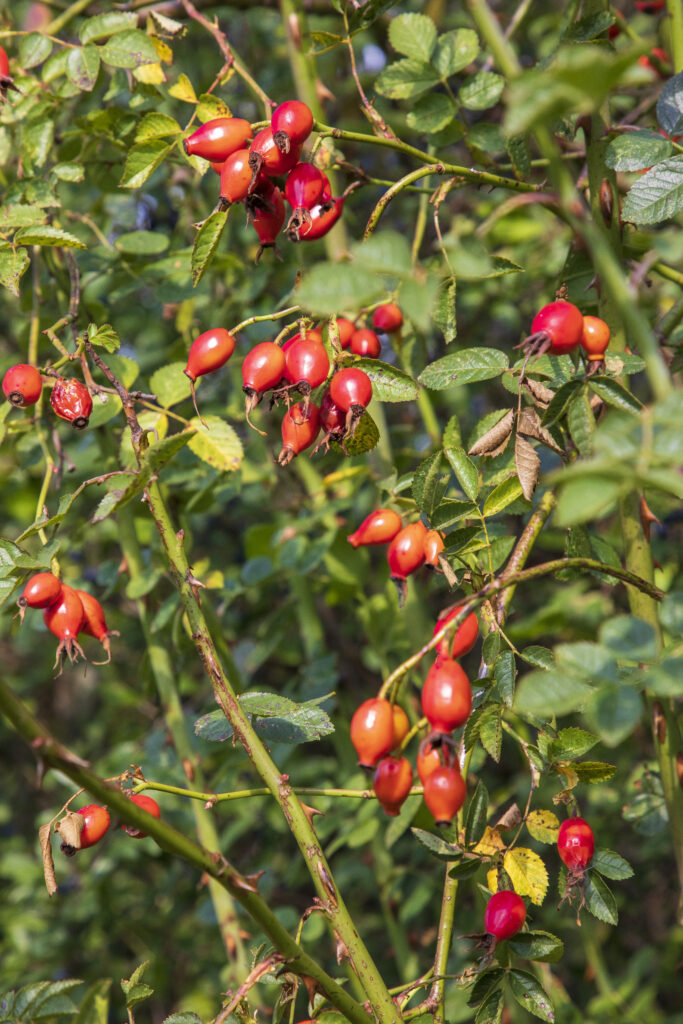
This year Kate has already made four bottles of rose hip syrup which apparently contains 65 mg Vitamin C per fluid ounce, four times as much as blackcurrants and 20 times as much as oranges (Richard Mabey: Food for Free). Rose hips were collected by school children during WW2 who were paid 2p a pound for their efforts! By 1943 the harvest averaged 450 tons.  If you might need a Vitamin C tonic this winter you know where to look. 

If you need something stronger how about Sloe Gin? Sloes are mixed with gin and sugar and shaken or stirred every two days for 3 months until it becomes sloe gin.

There are several different types of crab apples and apples abundantly available at present.  I believe Kate has scheduled me to make Apple Pie Curd later this afternoon.

The power of soil organic carbon

This is the first in a series of articles written by Andrew Ross to get us thinking about the quality and impact of the soil at Highbridge Community Farm.

Soil with high organic carbon isn’t just a good growing medium. It can help reduce atmospheric CO2 on a worldwide basis – a win for farming and a win for the planet. So, is there more we can do to increase the organic carbon levels of the soil at HCF? 

Most of us are familiar with the broad issues of climate change:

  • An increase in atmospheric carbon dioxide (CO2) concentration from 278 ppm in the pre-Industrial period (circa 1750) to 405.5 ppm in 2017
  • An increase of the greenhouse gas, methane, from 722 ppb to 1859 ppb in the same period.
  • An increase in nitrous oxide from 270 ppb to 330 ppb in the same period. (Lal, 2019)

This has already raised global temperatures by over 1⁰C since the Industrial Revolution with dire consequences, as exemplified by the increase in frequency of extreme events throughout the world. Furthermore there is the real likelihood that we will miss the target set at the Paris Climate Conference (COP21) in 2015 of limiting global warming to 1.5⁰C. (IPCC (Intergovernmental Panel on Climate Change, 2018).

The Highbridge Community Farm ethos statement says “We have evolved from the Transition Movement and retain their founding principles – a community-led response to the pressures of fossil fuel depletion and climate change, supporting local economies and moving towards a more viable and sustainable future. Now a mutual benefit co-operative society in our own right, we work together to produce food for ourselves with minimum use of fossil fuels and chemicals. We support growing techniques that maintain the natural balance of the soil, preserve wildlife and their habitats, and encourage biodiversity.”

Over our time as a community, our aim has been to grow good organic food. We have managed the soil to obtain good crops, without ever really addressing the issue of how to improve the health, fertility and productivity of our soil in an environmentally sustainable way. Ideally, this soil should be resilient to be able to cope with whatever crop is planted in it and cope with whatever combination of weather events that is thrown at it. Probably the best measure of soil health and resilience is one with a high organic carbon content.

Farmers Weekly provides a simple chart for farmers to score the quality of their soil according to the percentage of organic carbon that it contains:

  • Less than 1% – very low
  • Less than 2% – low
  • Less than 4% – medium
  • Less than 8% – high
  • Over 8% – very high

The IPCC Climate Accord, proposed in Paris in 2015, initiated the “4 per 1000 programme“. This aims to raise Soil organic carbon in world soils to a depth of 40 cm at the annual rate of 0.4% per year. The UK signed up to this initiative and Environment Secretary Michael Gove has undertaken to deliver on this ambitious goal by supporting soil health improvements in the UK.

Natural soils in Britain once contained 30-40% more organic matter than they now contain under cultivation. Most farmed soils in southern England now have less than 2% organic matter, but in the rest of the British Isles 2-6% may be found. Once organic matter levels fall to below 2% the impact can be severe. A fall in soil organic matter of 0.5% can reduce nutrient holding capacity by 4% of even fertile soils. Growers manage the levels of soil organic matter to get acceptable plant growth, which will typically mean that organic matter levels should be 3-6%. For us it should be at least 6%, preferably 8%.

There is an added benefit of raising soil organic carbon (SOC); the potential lowering of atmospheric CO2 on a worldwide basis by raising SOC is approximately 84 ppm of CO2. This burying of SOC in the soil in the form of humus is called sequestration.

So, raising SOC at Highbridge Community Farm will be a win:win. We can play our part at HCF to produce a better, more resilient and productive soil and our efforts will benefit everyone if global CO2 levels fall!

We’re going on a worm hunt.

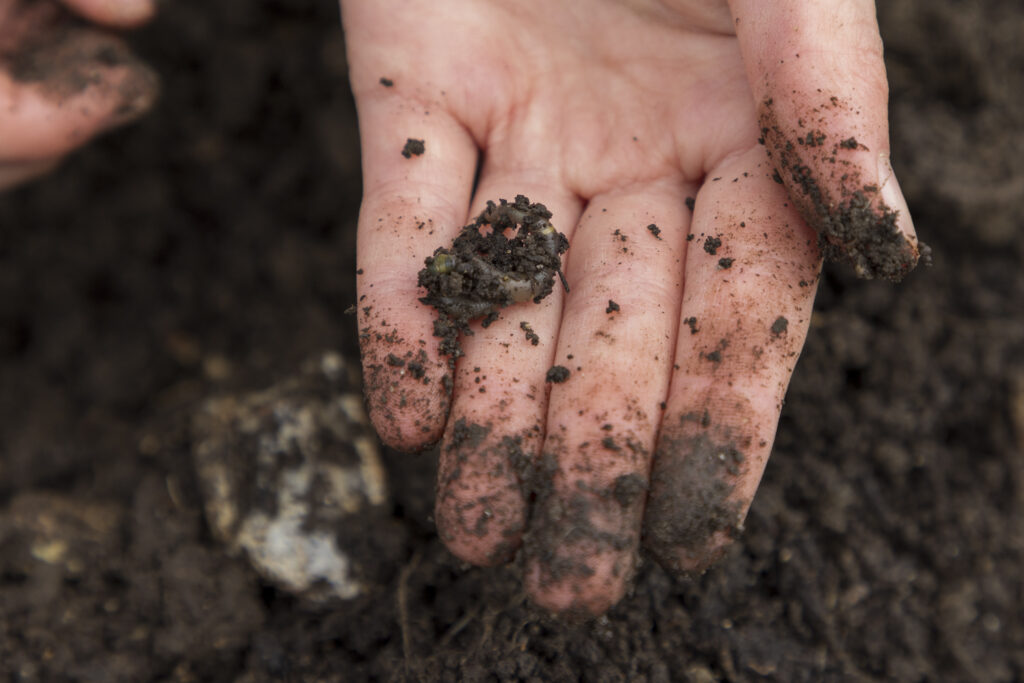
In early February and March 2018, Dr Jackie Stroud, a Natural Environment Research Council Soil Security Fellow at Rothamsted Research, led a project to study the worms in farm soils. 126 farmers took part. They dug 10 pits in one field, each 20 cm x 20 cm x 20 cm, in one field. They counted the number of adult worms in the sample (adults are identified as those having a saddle on their bodies) and allocated them to one of three main types of earthworm. Each of these worm groups has a different function.

  • Epigeic surface worms (the small, surface, red ones) break down surface litter and are a good source of food for native birds, such as thrushes and blackbirds.
  • Endogeic topsoil worms (the medium, pale ones which are grey, pink or a darker green) mix soil and mobilise nutrients for plant uptake and so support crop productivity.
  • Anecic, deep-burrowing large worms (larger pencil-sized ones which are heavily pigmented red or black) are the drainage worms which can form vertical burrows of up to 2m deep. These help with water infiltration and deep plant burrowing.

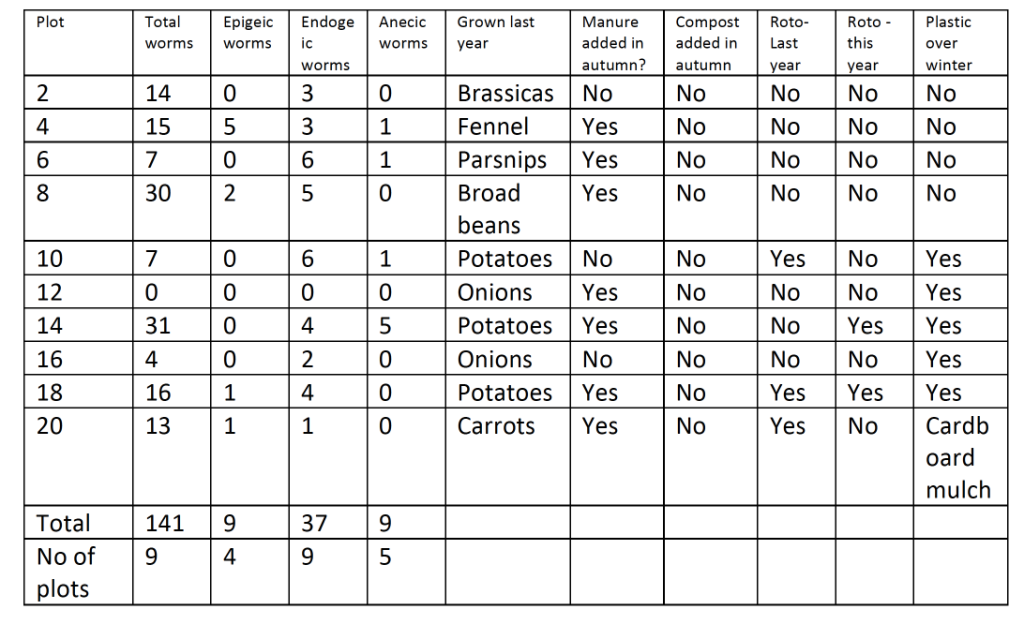
In April 2019, we conducted the same experiment over our ten plots, with a few teams adding a second count. Our results are below and make interesting reading. They are just a snapshot but they give us a baseline for further monitoring and discussion.

Photo: Steve Grundy

Mason bees: no sting in the tail!

You are probably aware of bug hotels with drilled wooden blocks and bee nesting tubes with bamboo bundles or narrow cardboard tubes, but what uses them?

There are several bee species – mason bees (genus Osmia), leaf-cutter bees (genus Megachile) and a few others, but the commonest is the Red Mason Bee (Osmia bicornis) which is active in spring, and is the one that tube manufacturers mention. If you’ve seen the nest tube on the small tool shed recently, it’s been very busy with bees coming and going. It can look like a small swarm but they are solitary (close neighbours rather than a hive) and they don’t sting. So, what are they doing?

Unlike social species like honey bees, each mason bee has its nest in a single tube. The female produces cells in a line, like a tube of sweets, using mud or other materials to build partitions and then seal the entrance. She even has little blunt horns to tamp the mud in place and sometimes you can see the marks these leave when the mud dried. In the absence of artificial nests (preferably south-facing, approx 1-2m above the ground), they use existing holes, and may expand them, including in soft mortar which hasn’t always been popular with householders; however, modern mortar is harder, hence the need for tubes – just like bird boxes. There are a few Osmia species that use empty snail shells instead, sealing up the entrance in just the same way.

Like many insects, they are useful pollinators, especially of fruit trees and can even be bought commercially for this purpose. So, enjoy them, thank them for helping grow fruit, and don’t worry when walking past them, however much they are buzzing about!

If you enjoyed this, read more from Dave Hubble:

Find more from Dave Hubble here: http://davehubbleecology.blogspot.com/

HCF and Covid

To reinforce the government guidance restricting movement and to keep the farm productive, the Board developed guidelines for stakeholders. A copy is attached and is also pinned on the farm gates.

The farm is operating well within these guidelines. Members are successfully staggering their visits and managing the distance requirements while they are there. Teams are connecting well through WhatsApp and email, and the monthly Team Leaders meeting is working on Zoom. As a result, we’re able to continue to care for and harvest our crops, to enjoy our natural environment, and to support each other.

Update 3rd September 2021

The advice is updated to align with current Government guidelines, with a focus on not coming to the farm if you are symptomatic, advised to isolate, or returning from certain types of travel. Masks must be worn in the Polytunnels and enclosed areas, such as sheds or Tea Hut, and no more than 2 people should be in those areas at any time. Copies of the advice have been attached to the farm gate and the door of the Big Green Shed, and below. Please make sure that you are familiar with this latest advice.

Update 19th January 2021

The advice is updated to be more rigorous, for example, requiring masks in confined areas such as the Polytunnels and sheds, gloves, and remembering not to congregate in communal areas. Additional signage has been posted around the farm to remind members of the requirements. The advice has also been reviewed by Winchester City Council COVID Support Officer to confirm that we are sharing and following best practices. Please make sure you are familiar with the latest advice, attached below.

Update 6th January 2021

The advice issued previously still applies. All members are expected to follow this advice.

UPDATE 3rd November 2020

With the new restrictions coming in this week, it is worth reminding ourselves that the guidelines issued by the Board in April and updated in July still apply. The July guidelines are attached to this newsletter.

Visiting the farm is regarded as essential work so travelling to the farm is regarded as an essential journey. We must continue to keep at least 2m away from other people – it is so easy to forget this when chatting. Members who are vulnerable or are over 60 should consider visiting the farm during the week or on Sundays in order to reduce the numbers on Saturday mornings. Visiting the market (sales area) on Saturdays should be staggered, again to reduce crowding.

If you have any questions, please do talk to or contact a member of the Board.

Update 30th September

Attendance at the farm is compliant with new COVID-19 government guidelines and legislation.That latest government guidelines and legislation does not affect your right to attend and work at the farm; and we encourage you to attend on your normal days. HCF remains an exempt place of work, so far as Covid restrictions are concerned.  In addition, the new rules do not change any of the protocols that HCF needs to comply with, and we will continue to operate as per the HCF protocols that are published below.