For many centuries, it has been traditional for country folk in Britain to light fires, sing songs and drink cider in the orchards on the Twelfth Night after Christmas, to wish the apple trees Good Health and New Year, as well as to each other. This ancient tradition is called wassailing.
Wassail means ” Good Health”. (The response, by the way, to the toast of “Wassail!” is “Drink Hail!” ). There was much merriment and cider drinking on Twelfth Night, as villagers lit fires in the orchards, sang traditional songs, and toasted the trees.
On this day, villagers also anointed with cider their chickens and other animals and brought the village plough into the church to be blessed by the priest. Peasants visited “the big house” to toast the landowner and his family. In return, servants filled the large two-handled “wassail cup” with cider and distributed food to the singers.
The wassail typically starts with a procession to the orchard, led by a wassail King or Queen. Pieces of toast are placed in the branches to attract robins, which are believed to be guardians of the orchard. The revellers bang pots and pans to wake the tree spirits and to drive away any bad spirits from the land and they enjoy a wassail drink of spiced cider or ale.
Wassailing at HCF
We have three orchards at Highbridge Community Farm and we’ve honoured this ancient tradition of blessing the trees with singing and food and drink. For the wassail, the team nominated one tree in each of our orchards to represent The Green Man, to bring fertility and good harvests to the whole Farm.
Photo: Highbridge Community Farm
Beating the bounds
This is another ancient custom. When maps were rare, a community would periodically walk around its boundaries, beating the boundary markers with a pole as a way of maintaining the memory of the location of these boundaries. We combine this into our wassail ceremony by walking around our three orchards, “beating” the trees with a bean pole.
Wassail songs
Here are a couple of the traditional songs for the wassail. The first is more general for the celebration. The second is specifically for the apple trees.
Here we come a-wassailing
Here we come a-wassailing, among the trees so green.
Here we come a-wandering so fair to be seen.

Chorus
Love and joy come to you
And to your Wassail too.
And God bless you and send you a Happy New Year,
And God send you a Happy New Year.

We are not daily beggars that beg from door to door,
But we are your neighbours children, whom you have seen before.

Chorus

Good Master and good mistress too, às you sit beside the fire,
Pray think of us poor children, who wander in the mire.

Chorus

Bring us a table and spread it with a cloth.
Bring us out, some mouldy cheese and some of your Christmas Loaf.

Chorus

God Bless the Master of this house likewise his mistress too
And all the little children that round the table go.

Chorus
Apple tree wassail
Old apple tree, we wassail thee Hoping that thou will bear For the Lord know where we shall be To be merry another year
Chorus For to bloom well and to bear well And merrily shall we be. Let everyone drink up their glass And health to the apple tree For to bloom well and to bear well And merrily shall we be. Let everyone one drink up their glass And health to the apple trees, brave boys Here’s health to the apple tree
Oh, apple tree, we Wassail thee, Hoping thou wilt bear Hatfuls, cap-fuls, three bushel bag-fulls Many more under the stairs.
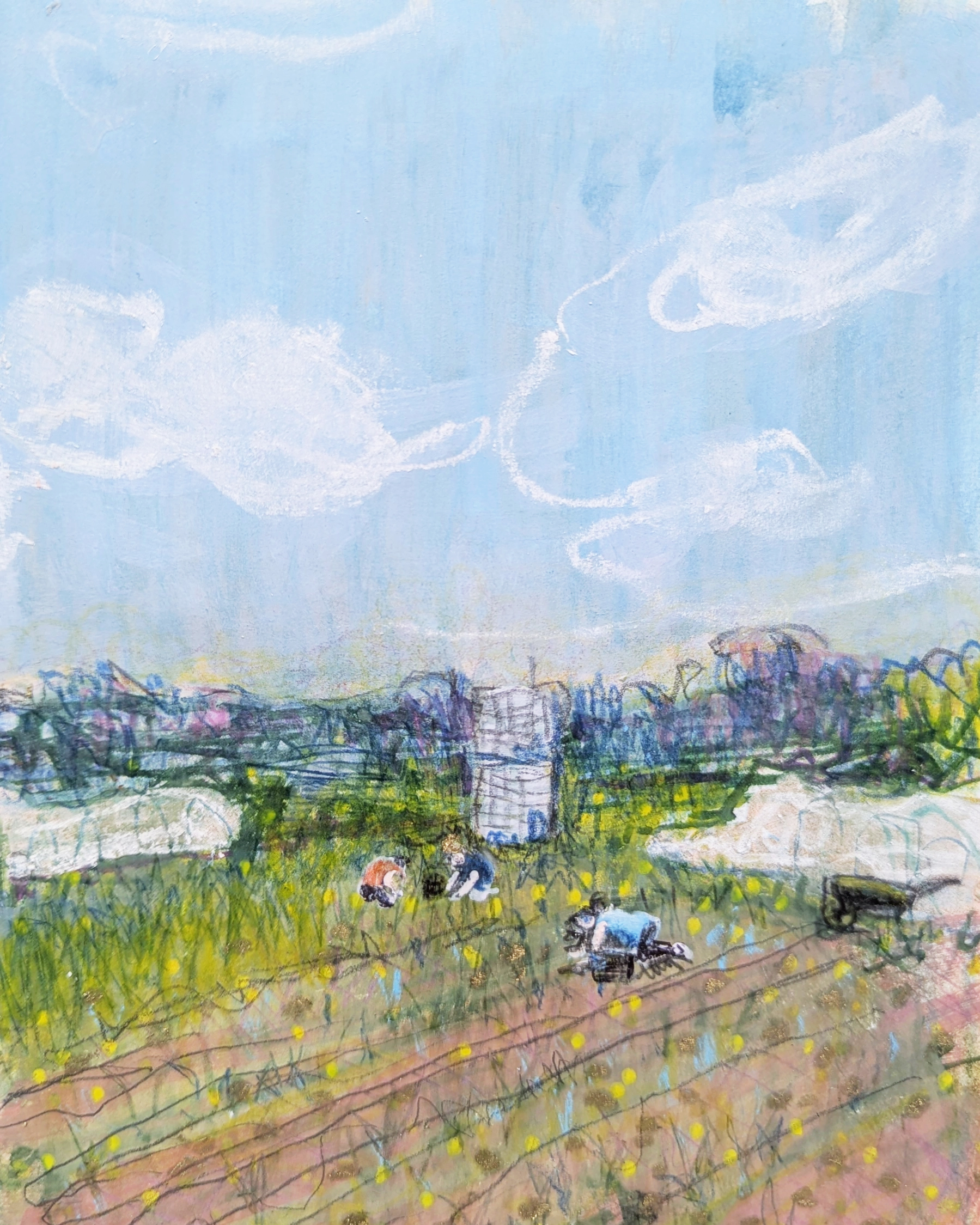
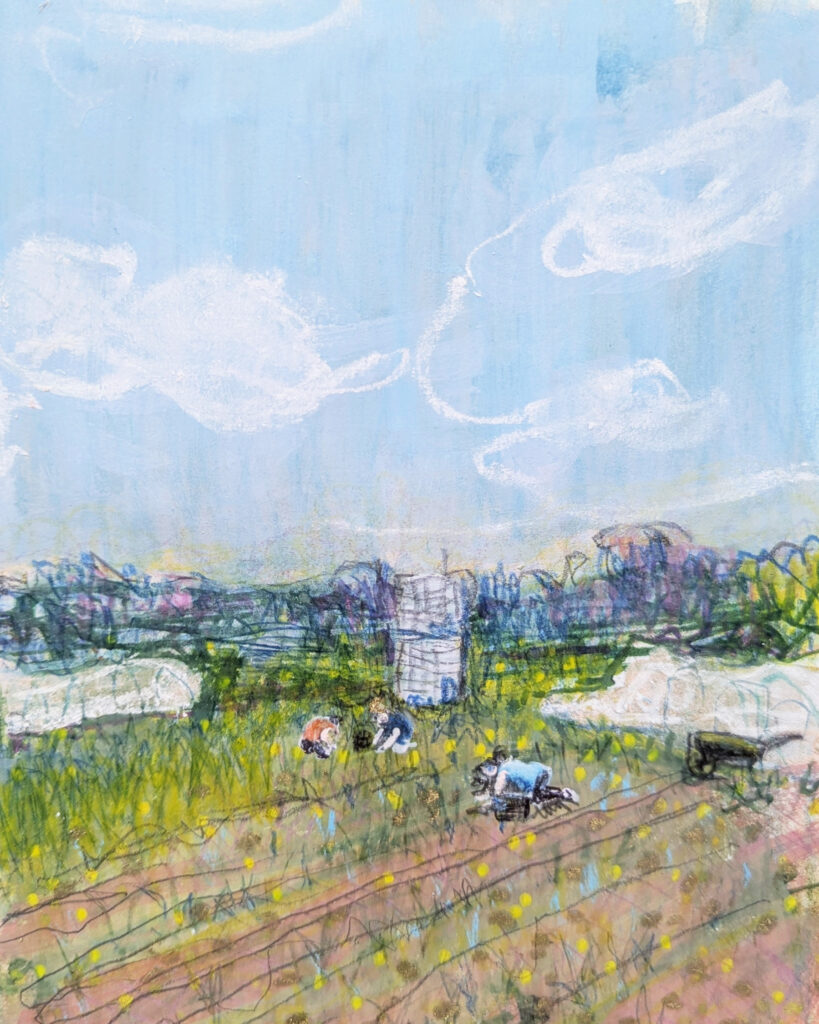
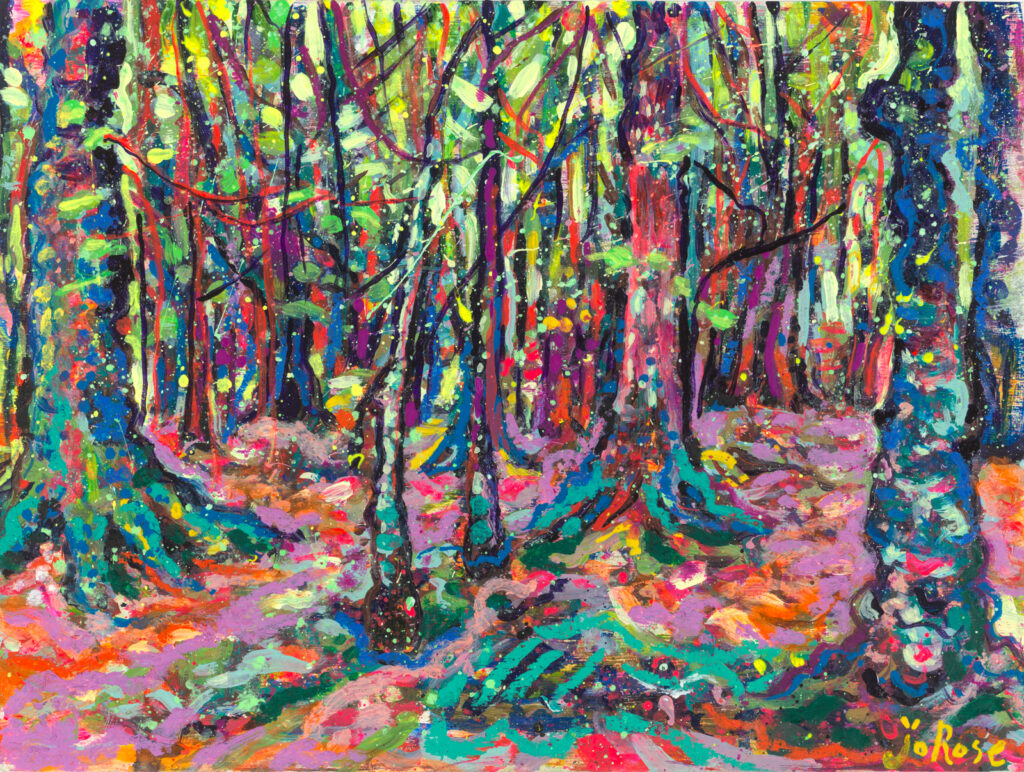
If you’ve wandered past Plots 3 and 4 recently, you might have noticed someone with a camera in hand, quietly observing or capturing the gentle ebb and flow of life on Highbridge Community Farm. That’s me – Jo Rose. I’m a full-time artist based in Winchester, where I work from my studio on Jewry Street.
Photo: Jo Rose
Rooted in the natural world
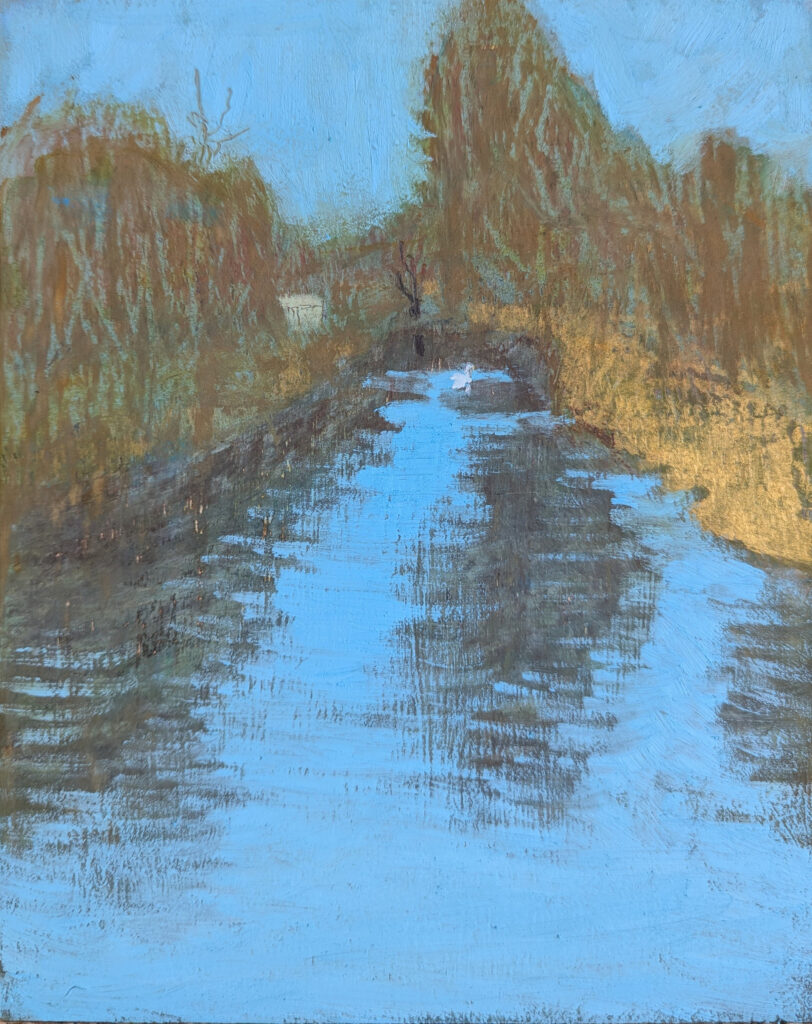
My artistic practice is is deeply rooted in the natural world. I paint and illustrate abstract impressionist landscapes using oils and mixed media, drawing inspiration from the beauty of the New Forest and the River Itchen. My work often features the wildlife I encounter on my walks and I’m especially inspired by the shifting colours and textures of the seasons, and the changing light on the river.
Photo: Jo Rose
This year is shaping up to be both busy and exciting. I’m currently preparing for several exhibitions, starting with a group show with the Artful Collective at the beautiful Hillier Gardens this July. In August, I’ll be exhibiting a solo collection in Falmouth, and in October, I’m curating an immersive group show in Winchester city centre, all inspired by nature.
My Highbridge project
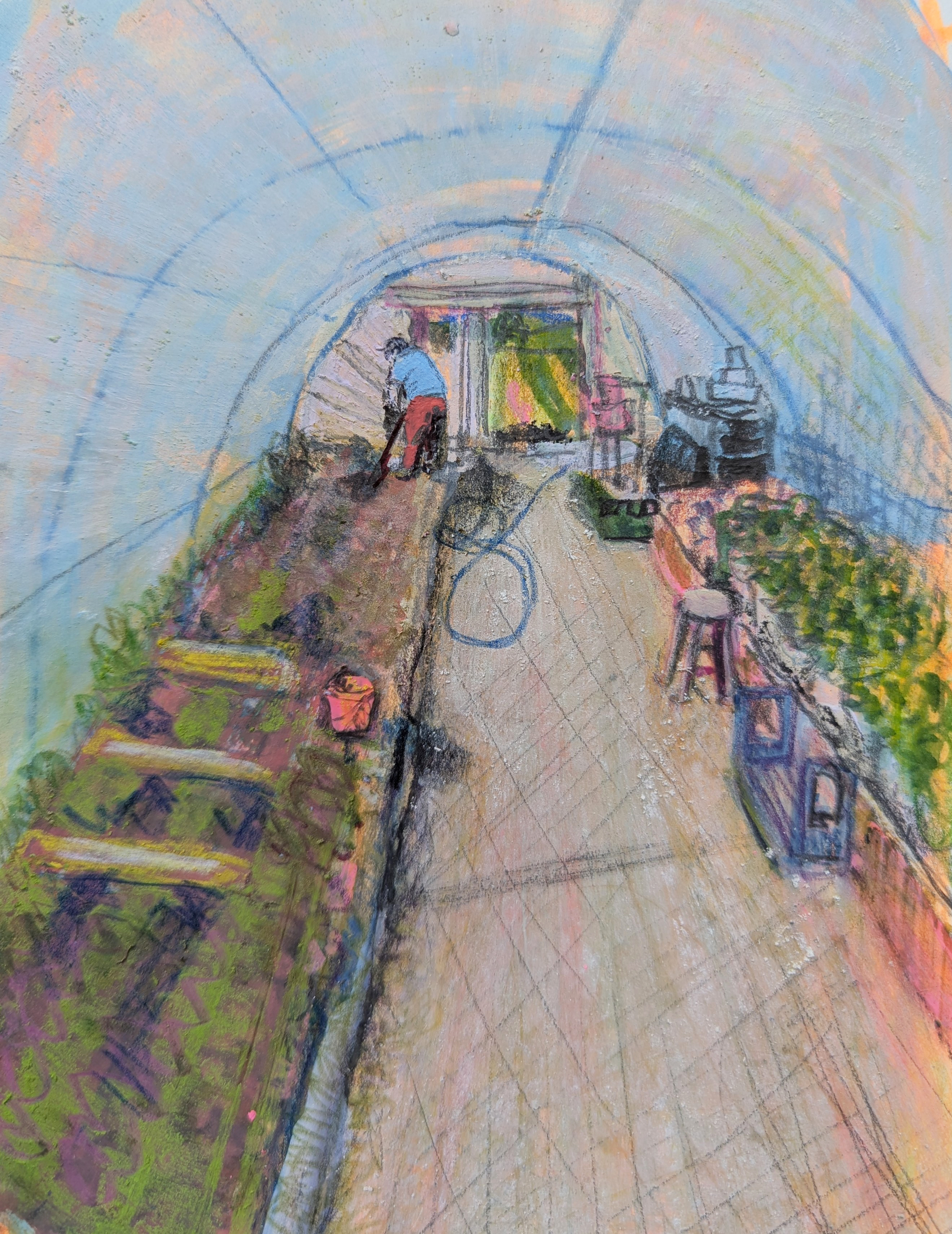
Amid all this, I’m embarking on a personal project: a sketchbook series that documents my time here at Highbridge Community Farm. The photographs I take often evolve into illustrated journal entries—more than just drawings, they become a visual diary of our shared work, quiet moments of connection, and the stories that make this place so special. This project is also pushing me out of my comfort zone as I begin to illustrate people more often, helping me to expand and develop my practice in new directions.
Photo: Jo Rose
Having been a member of the farm for many years, I’ve come to see it as much more than just a place to grow fruit and vegetables. It has offered me friendship, peace, and a sense of grounding through difficult times. The Farm is a wonderfully inspiring community—one that nurtures both the land and the people who care for it. My sketchbooks aim to celebrate this spirit: the collaboration, the care, and the joy that comes from growing together.
If you and your team are working on something interesting and wouldn’t mind being photographed, I’d love to hear from you. This is a collaborative journal, and I’d be delighted to include more of our collective story. And if you’re curious about my work, feel free to stop by Plots 3 and 4 for a chat.
You can find out more about my work at www.jorosestudio.co.uk or on Instagram @jo_rose_studio.
We use the money from stakeholder subscriptions and the sale of produce to buy most of what the Farm needs. We usually plan infrastructure projects in stages, according to what we can afford . This year, one of our projects is getting a boost from a local grant.
Southampton Airport Spitfire Wellbeing Fund
The recently-established Southampton Airport Community Health and Wellbeing Fund provides financial support to certain types of local community organisation, charities and groups. These groups must support initiatives that reduce health inequalities and improve health and wellbeing. The fund focuses on three areas:
Physical activity
Mental wellbeing
Access to open spaces, including green space.
Highbridge Community Farm meets the criteria. We’re just a few miles from Southampton Airport and we aim to give our members benefits in all three of the Fund focus areas. So, a small group of HCF members put together an application for funding to upgrade our irrigation system .
Our watering challenge
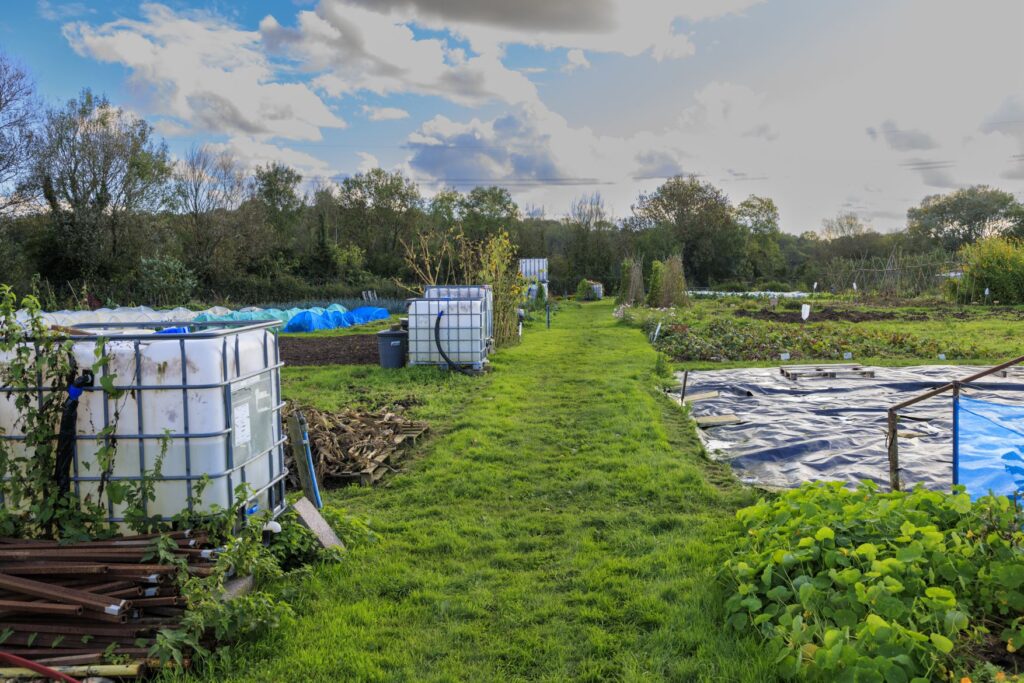
We have 20 vegetable plots, four orchards, and a Soft Fruit area – and they all need water for the crops to thrive. We’re lucky to have access to a balancing pond on site but getting the water from there to the plots has been a long-standing challenge. Any HCF member with at least one summer of experience will recognise the work involved!
When the Farm project first started, the team had to lug watering cans from the pond to the plots. The first evolution of our system brought a petrol pump in the pond to pump water through donated fire hoses into ten Intermediate Bulk Containers (IBCs) situated at each pair of plots. This made water accessible to the plots without the long trek to the pond for each watering can – but it was still tough. Some areas were still a fair way from an IBC and, without careful coordination, teams could find the IBCs empty of water.
In line with our commitment to reduce chemical and fossil fuel use, in 2022, we installed an electric pump in the pond. The pump is powered by two second-hand batteries and charged by a second-hand solar system. This drip-fills the 10 IBCs through permanent, underground piping.
In mid-2023, the irrigation system was expanded to include additional IBCs and to reach the tree orchards and the Soft Fruit area, bringing the total number of IBCs to 21. The Soft Fruit area is furthest from the pond so we installed a separate drip feed system with an independent solar panel and battery kit.
While we’ve made great strides from those early days of lugging individual watering cans from the pond, it’s become clear that the our current pumps, batteries, and solar panels are struggling.
IBCs on the Farm today (photo credit: Steve Grundy)
Our grant
Our application to the Airport Community Health and Wellbeing Fund to upgrade our irrigation system was successful. We’ll be able to purchase new batteries, solar panels, and cabling for the pond and the Soft Fruit area extension. New IBCs will bring water even closer to the plots. Our Infrastructure (“A’) Team will do the installation, meaning that our application maximised our needs for equipment instead of labour.
The next phase of irrigation
The upgrade will make it possible to irrigate at night and in the early morning. This prevents the rapid evaporation that is currently experienced during daytime watering, particularly during very hot weather. Climate change events cause ever-more frequent and unpredictable heat waves which stress our crops and orchard trees so it’s important that we can water when and how it’s most effective.
Using solar for the system makes us less dependable on burning fossil fuels, making it more sustainable for Highbridge Community Farm and the environment, in line with our ethos.
The upgraded irrigation system will help our members too. All teams can rely on having access to IBCs that are reliably full of water, no matter when they come to the Farm to do their watering work. We’re not hanging up our watering cans just yet but more IBCs means that we can fill them closer to where the water is needed. We won’t have to carry them as far.
It takes a village …
Thanks to the HCF members who designed the irrigation system, to those who identified the funding opportunity and put the application together, to those who will manage the funding and procurement, and those who will work on site to make it happen. We really are a community working together.
HCF is about getting to know each other as well growing. We recently held an Art, Craft, and Produce Fayre for HCF members to share their work with each other. Here are some of our inspiring creators.
Esther (Plots 3 & 4)
Basketmaking
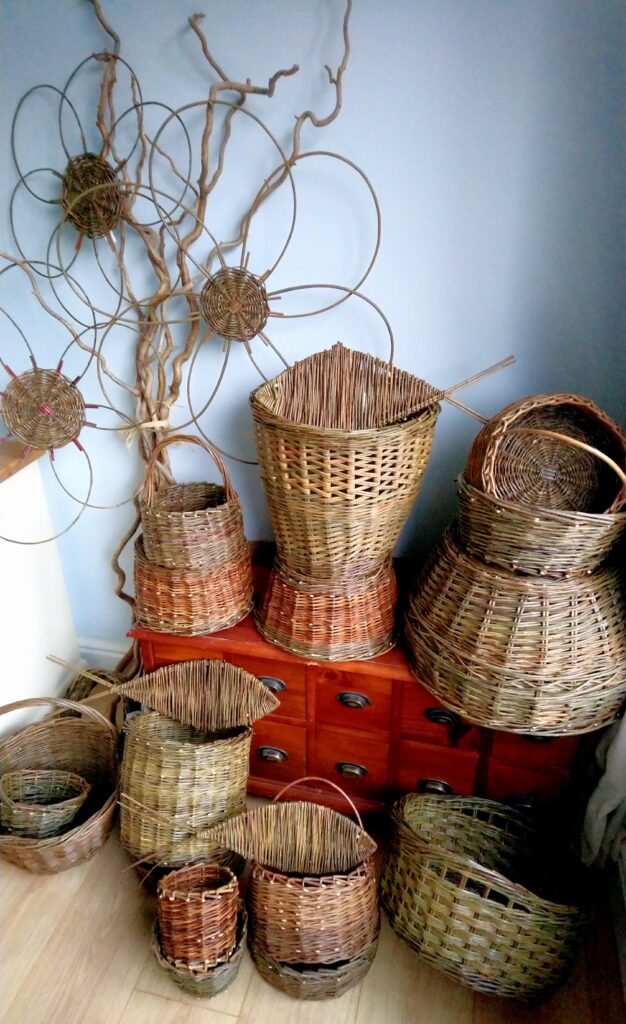
I did a couple of workshops at Hillier Gardens then embarked on a beginner’s course in willow basketry with https://www.louisebrownbasketmaker.co.uk/. I love that you can make useful objects just by bending sticks!
Photo: Esther Dovey (member)
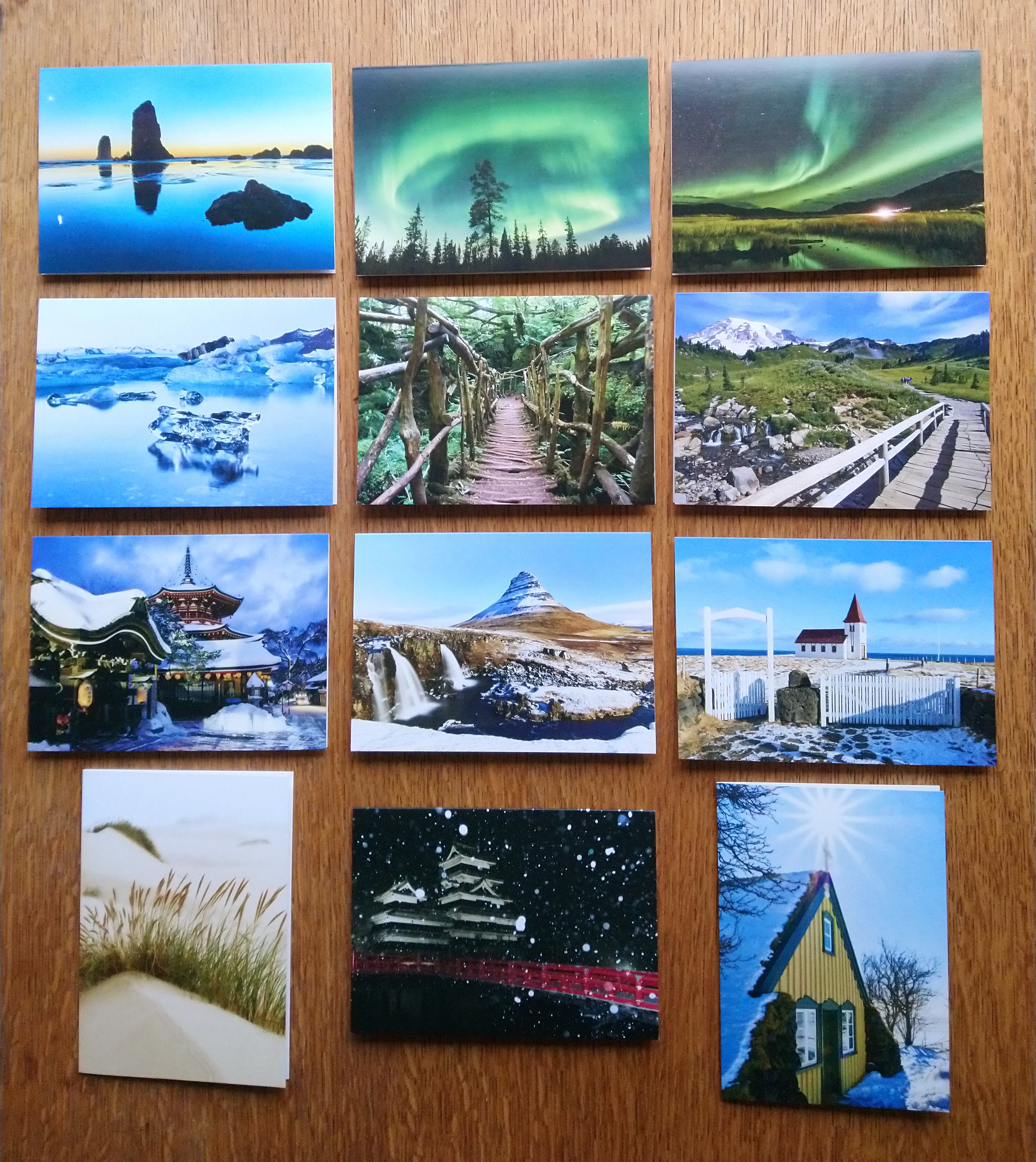
Photocards
I took up photography so I could do better justice to the places I was visiting (before I more-or-less stopped flying because of climate breakdown). Especially the aurora. If anyone wants any advice on how to spot the northern lights, just ask (if you dare – I could talk about them for some time!)
Photo: Esther Dovey (member)
Gillian (Plots 1 & 2)
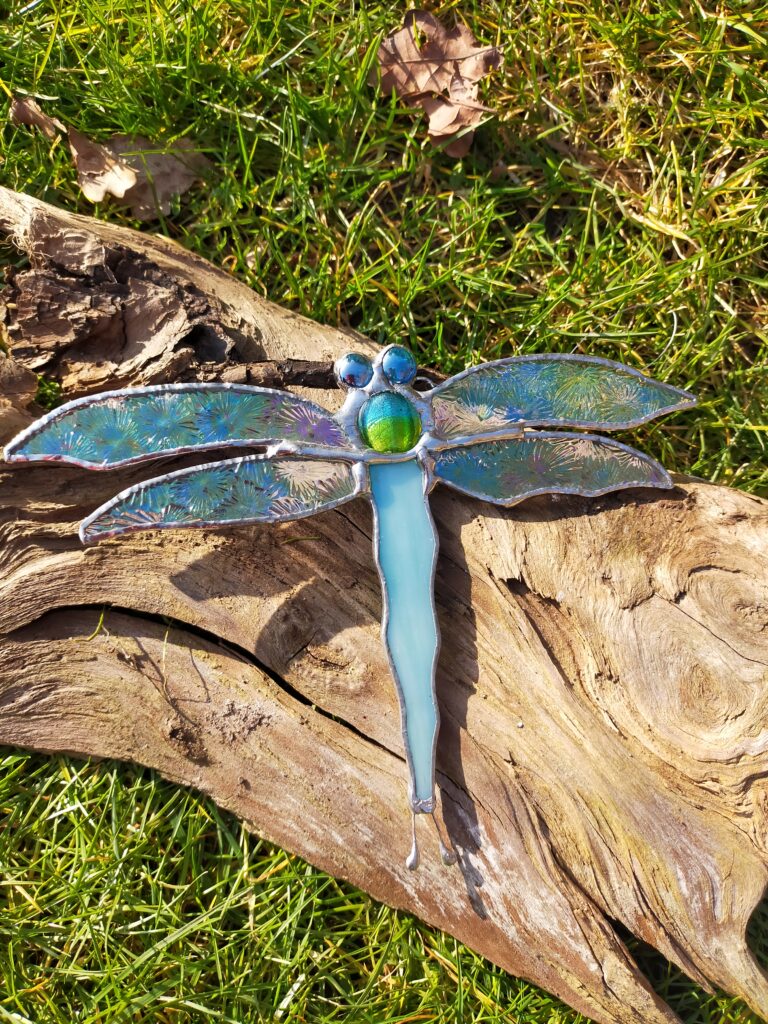
Stained glass
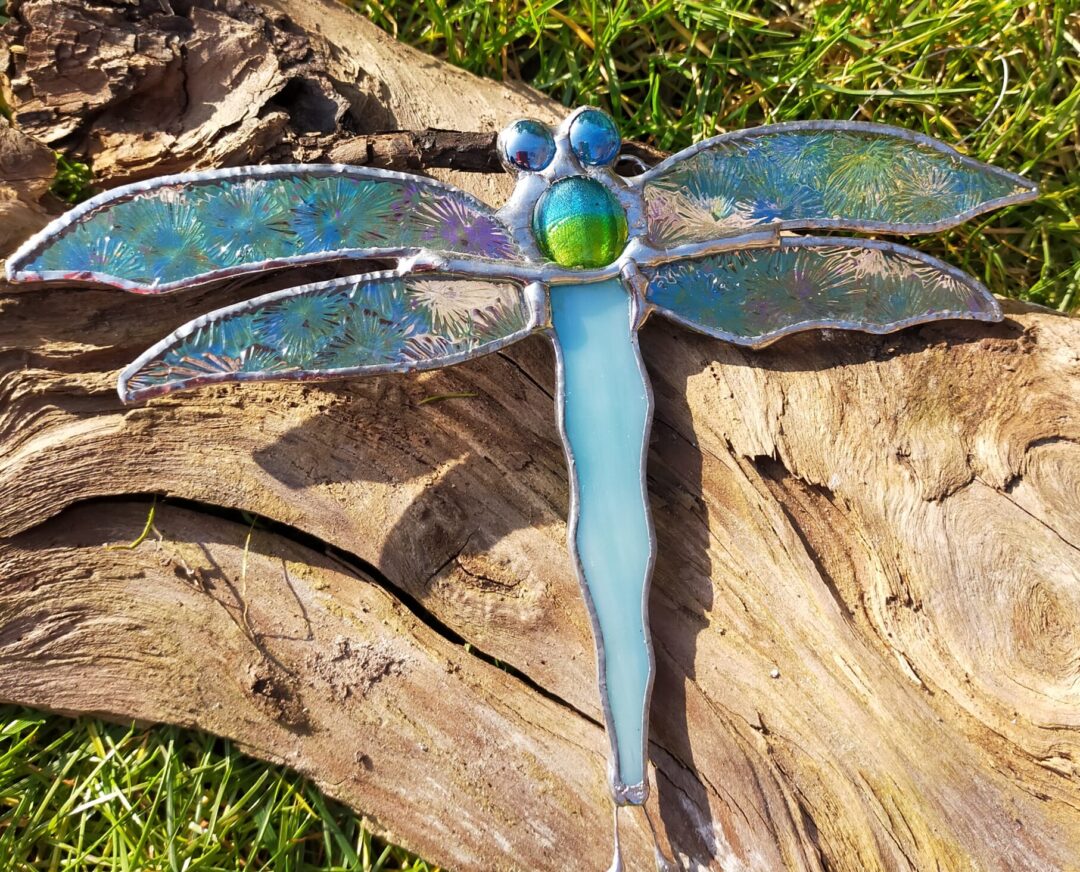
I have been producing stained glass for about twelve years. I produce colourful stained glass items mainly featuring flora and fauna alongside Christmas decorations. Outside HCF, find me at gillanddiky@aol.com.
Photo: Gillian (member)
Loki and Jo (Plots 3 & 4)
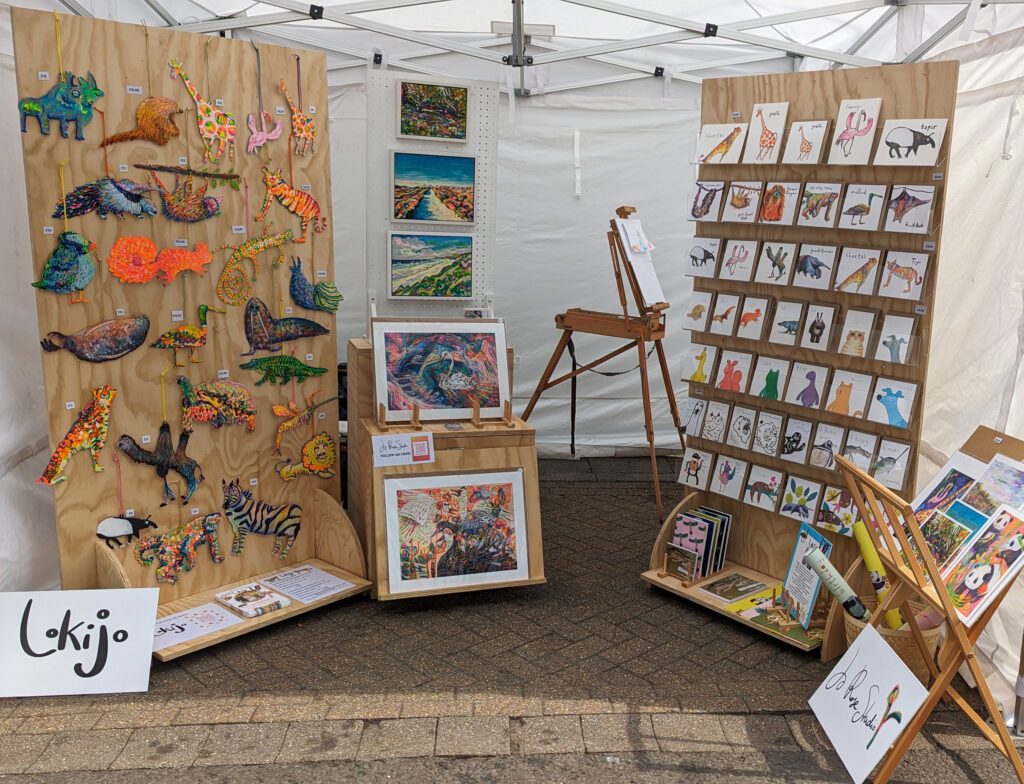
LOKIJO Greeting Cards and Handcrafted Decorations
LOKIJO is a small, family-run-business based in Winchester which was created by 12-year-old Loki and artist mum Jo in 2020. Inspired by his love of animals and his funny, fluffy whippet Wolfy, Loki illustrates his unique animal designs using pencil and ink and then Mum, Jo decorates them using colourful acrylic and gouache paint and oil pastels.
I focus on birds, mammals and insects from around the local area, the farm, Dorset and southern Scotland. Prints on high quality photographic paper, any size up to A3 (42cm X 29.7cm), can be provided to bring nature and wildlife into your home.
Wild Hive Ecological Educational Collectivegets our local schools and neighbourhoods growing. Founder Jo Hutchison shares how they’re doing this.
Find the story of Wild Hive here. Discover here how Wild Hive is helping to grow a new HCF team: GreenTeam@HCF.
Permaculture design for people & place
We were very lucky to have been joined at the start of our journey by Liz Darley (Grow South Permaculture), who brought Permaculture principles to life for our expanding network at various local educational and community garden sites, including The Outdoor Wildlife Lodge at Otterbourne School, ‘The Hive’ (College House) in Compton (then Eastleigh College’s site), and Youth Options’ Outdoor Learning Centre in Bishopstoke.
Our projects and approach have been greatly informed by Children in Permaculture, and we continue to be helped and encouraged by that team and the network of practitioners and educators from The Permaculture Association.
Last year, we trialled a bespoke, condensed Practical Permaculture Intro mini-course with Eastleigh College’s Functional Skills/Enterprise students. We also realised the benefits of offering one-off Practical Permaculture Design Tasters, helping to draw active participants together at sites that are ripe for renovation.
‘Growing to School’ pilot
With the support from four local Primary Schools, in Spring 2022 we launched our ‘Growing to School’ pilot project, which involved:
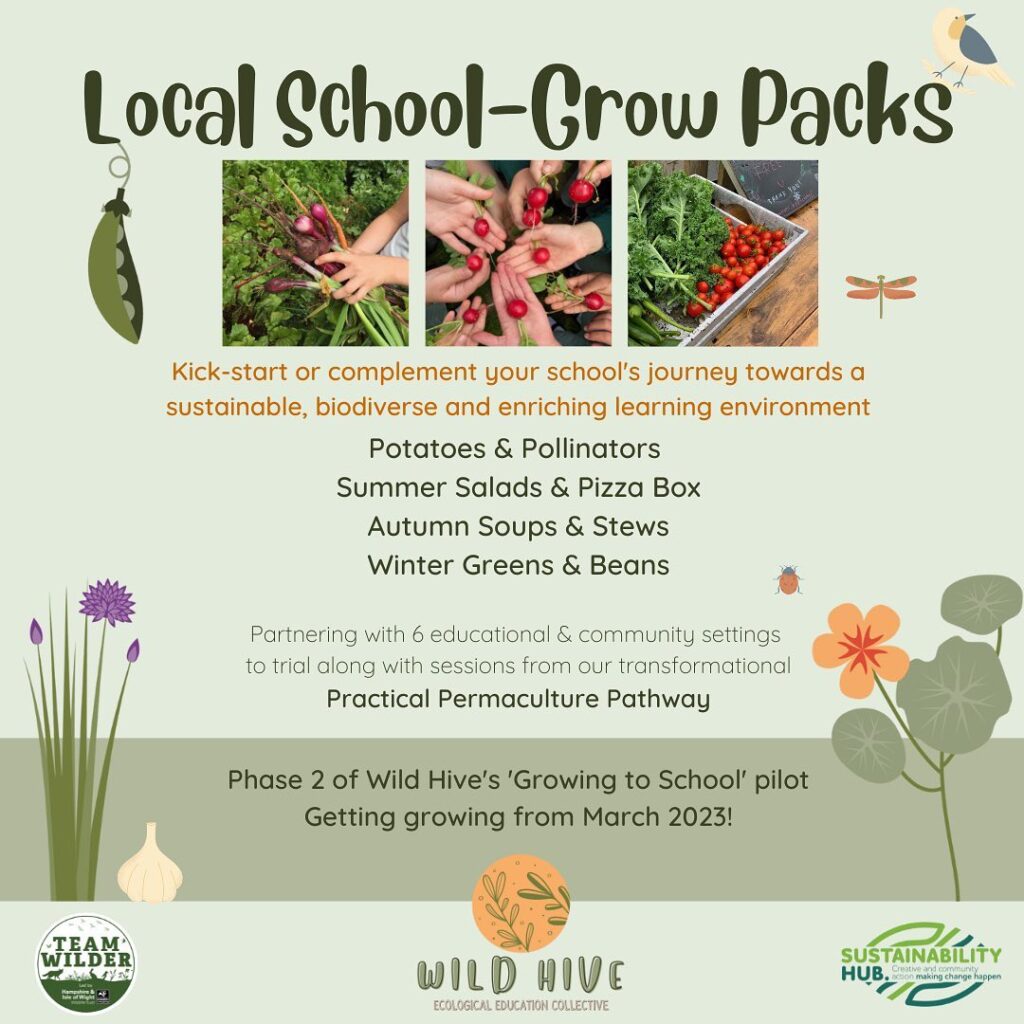
Creating 250 Little Local Grow Kits (Spring: Potatoes & Pollinators) for children to grow at home with the support of our online community (raising £550 for Save the Children’s Ukraine fund);
Developing Local Grow Packs to make immediate use of the existing beds and growing spaces in schools;
Trialling the formation of Green Teams of children and parents/carers to support growing activities; and,
Running some in-class Children in Permaculture-style growing sessions to enable more children to have the opportunity to ‘grow a meal’ and be part of the perpetual growing cycle.
Changemakers at The Point (Eastleigh’s new Sustainability Hub)
Autumn 2022 marked the start of our Changemaker residency at The Point – as part of Eastleigh’s new Sustainability Hub. This was the prompt we needed to register as a Community Interest Company in order for our enterprise to become sustainable itself.
With a little seed funding from The National Lottery’s Community Fund (via The Point), we were able to develop and run a series of nature-led “Small but Mighty” Creative Imagining sessions for families and adults in Spring ‘23, and will continue to support The Point’s Big Ideas’ events and offer more seasonal sessions throughout the year.
Our Creative Imaginings sessions are intended to invite creative responses, as we adopt new perspectives to explore nature in our urban areas, and discover ways to appreciate and revitalise our local ecosystem.
Photo: Jo Hutchison
Practical Permaculture Pathway for schools
This year, our focus for our ‘Growing to School project is on further developing a Practical Permaculture Pathway of transformative and curriculum linked sessions for children in schools.
During phase 2 of our pilot project, we will be running a series of Children in Permaculture-informed sessions at Scantabout Primary School in Chandlers Ford – aligned with our seasonal Local (School) Grow Packs that the children will be growing.
We are on the steering group for Southampton University’s Growing Wild Citizens project and considering ways that offerings such as ours could support hyper-local ‘hives’ of schools and practitioners – for sustainable school-site based growing/nature-led sessions. Also, as Community Representatives for HIWWT’s Team Wilder, we are looking into ways to develop our Practical Permaculture Pathway as a route that schools could follow to naturally be recognised as an HIWWT Wilder School: https://www.hiwwt.org.uk/Schools-groups.
Local (School) Grow Packs & Local (Home) Grow Kits
Developing and fully testing our Organic Local (School) Grow Packs is our other area of focus for 2023-24, and we are fortunate to have some excellent Seed Team advisors. Paul Dibden and Sarah Flynn are both HCF stakeholders, and Debra Cave is a Permaculture practitioner with a passion for perennials. We are also having help and advise from our friends at Aldermoor Community Farm.
Our four seasonal Local Grow Packs have been designed to grow meals that can be harvested within the school terms, but not necessarily needing to be grown in school settings. We are very grateful to the following test bed sites for allowing us to trial our Local Grow Packs with their user-groups – to see how much more ecological growing engagement, enthusiasm and enabling results from direct involvement and linked learning:
Toynbee Secondary School
Youth Options’ Outdoor Learning Centre
Aldermoor Community Farm
The Point
Highbridge Community Farm
Photo: Jo Hutchison
Growing beyond the plot
Alongside these longer term projects and activities, we’re using our Local Grow Packs and Kits for small group and one-off growing sessions, and are going to be championing the plotting of more accessible community growing spaces within our local “Good to Grow Network” – to enable more sharing of time, space, skills, resources and harvests.
From its inception in the dark days of pandemic lockdown to its current set of thriving local initiatives, Wild Hive Ecological Educational Collectiveis going from strength to strength.In the first of this series,Founder Jo Hutchison describes how she envisioned and developed Wild Hive.
Find out about the Wild Hive outreach projects here. Discover here how Wild Hive is helping to grow a new HCF team: GreenTeam@HCF.
Cast your minds back to the darker days of lockdown, and you’ll remember how fortunate many of us felt to have the sanctuary of Highbridge Community Farm; the space to draw breath while the children roamed freely; and the reassurance of knowing that we could access the food we were still growing together (albeit, at a social distance). At a time when we were learning new ways to connect with each other, many people were also finding comfort in a renewed connectedness with nature. As the pace of life slowed, and the man-made noise quietened, nature found its voice. And we started to listen.
Inspiration for a local future
Like many others, I sought to counter the troubling daily news briefings with podcasts that offered hope and inspiration. It was during one of my ‘hour-a-day’ walks around our local neighbourhood, that I heard Helena Norberg-Hodge, founder of Local Futures, sharing her thoughts about a localised future – where most of our food comes from nearby farmers to ensure food security year round; and money circulates in the local economy to grow prosperity. A localised future where, essentially, we take stock of the wealth of skills and assets we have, and connect them together to re-discover ways to live more lightly and in harmony with nature and each other.
If this interview and the Local Futures film, ‘The Economics of Happiness’ sowed the seed for a grass-roots initiative in my mind, it was the energy from Pam Warhurst (founder of Incredible Edible), the pragmatism of Transition Network (remembering how Eastleigh Transition Network had conceived Highbridge Community Farm), and ultimately, the lockdown TED talk from Transition founder, Rob Hopkins, that gave me the fresh perspectives I needed for my wilder ideas to germinate.
Time to outreach community farming?
With the clarity that came from those solitary walks, I thought hard about what it was that had enabled Highbridge Community Farm to thrive for over a decade. Struck by the abandoned school fields and empty growing beds, I contemplated how school grounds could become the sustainable and bio-diverse National Education Nature Park that the Department for Education was calling for, whilst serving the immediate needs of the children – many of whom were struggling with their mental health due to the disruption to their education. I started dreaming up various ways we could potentially take community farming to the community.
There and then.
Here and now.
Could a combination of stakeholdership rather than voluntary helpers, and time-slotted year-round access to shared ‘Education/Community Farms’ on the edge of school grounds or educational sites, enable many more members of our local community to enjoy the same benefits as our Highbridge Community Farm stakeholders do?
Why, I wondered, when so many were having to stay home to school, and too many didn’t have gardens of their own, weren’t the turfed (or plastic-grassed) school fields being transformed into educational food forests, or flourishing outdoor nature-classrooms? Surely, it was more critical then than ever to be passing on the practical growing skills our young people would need for such an uncertain future?
As pressures continued to mount to agree, let alone reach, essential Net Zero targets, wasn’t it imperative that we proactively encouraged the next generation to take one of the most positive environmental actions of all – to grow the means to capture carbon, whilst growing healthy food; increasing biodiversity; protecting nature; and helping to reduce the carbon emissions that are ‘wrapped into’ the food that is transported from further afield?
From “What if?” to “What next?”
In the spirit of Transition founder, Rob Hopkins’, profound question “From What If To What Next?”, I asked myself:
What positive social and environmental impacts would be felt if we created the conditions for climate literacy to be deeply understood through its practice, and the savouring of resulting ‘riches’; as opposed to majoring on the theory, with the risk of focussing on what we as humans might be denied if we are to live more sustainably?
What if we turned the fear and uncertainty on its head, and instead took the nourishing aspects of community farming into our schools and neighbourhood growing spaces, and encouraged more ecological and regenerative growing practices?
What if we harvested the wealth of skills and expertise accumulated in our community farm, and shared it with larger cohorts and diverse groups of people ‘on their doorsteps’?
Could we help create a cultural shift towards ‘active hope’ and optimism if we listened to, learned from and involved young people in the creation of more shared and “wildly abundant” local landscapes (“wildly abundant” being my, then 7-year old, son’s words)?
What if we simply taught more children how to grow and make a bowl of nourishing soup? What ripple effects might be felt throughout our local community?
Extending the Community Farm objectives
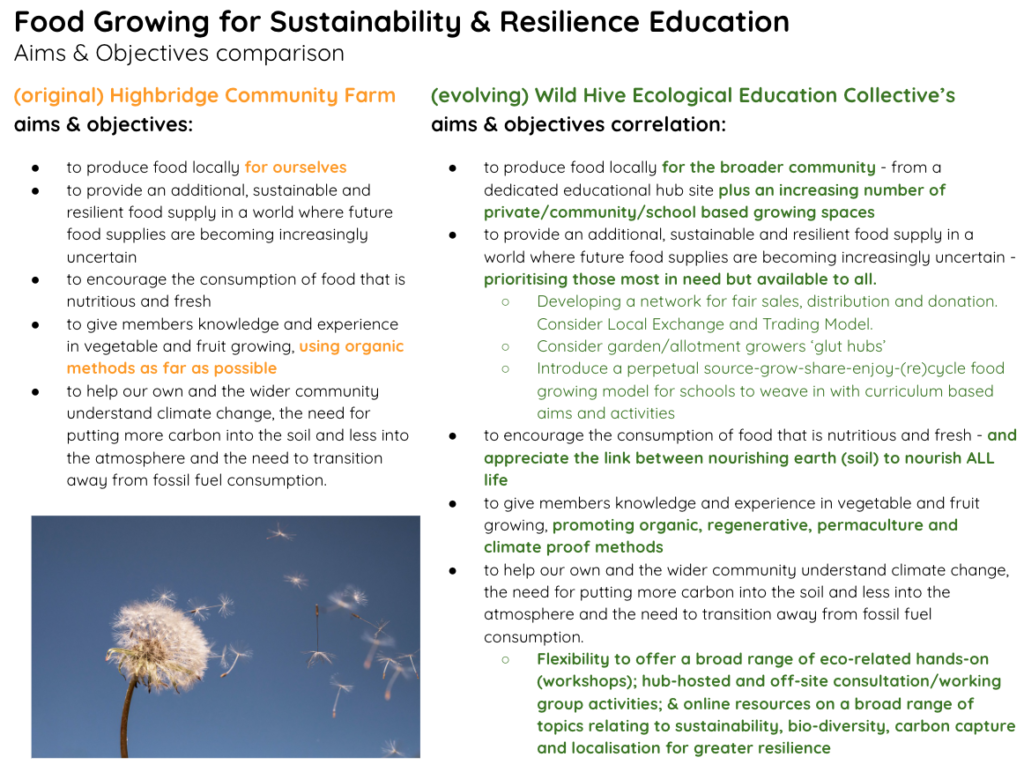
As the lockdowns of 2020 continued into 2021, and life became more precious and precarious than ever, it felt imperative that we reconsider ways to approach educational and community growing projects and efforts. With the help of HCF’s Steve Grundy, we put out a survey to all the Farm stakeholders to gauge whether they felt the Farm was still meeting its original objectives and to see what appetite there was for more educational outreach. (You can see the results of the survey here.)
Informed by some of these responses, gradually the aims of our Wild Hive Ecological Education Collective took root in my mind – to do whatever we could to engage, enthuse and enable even more local growing and/or access to locally grown food (on whatever scale) – to improve health and wellbeing; to support nature (including ourselves) and ultimately, to protect our planet. Correlating our aims and the objectives of Highbridge Community Farm led us to being an offshoot initiative rather than simply part of the farm.
Photo: Jo Hutchison
Fortunately, some other farm stakeholders shared my view and helped to get Wild Hive off the ground.
So, that was then, and this is now!
Becoming Wild Hive
Since Autumn 2021, we have grown from a handful of pioneering ‘farm-hands’ and educators, keen to develop the idea of educational outreach from Highbridge Community Farm, into a growing collective of passionate people, committed to turning our numerous ideas for a ‘greener, brighter future for all’ into reality.
Using Looby Macnamara’s ‘People in Permaculture’ design web, I started to design the Wild Hive Collective that was gradually taking shape. Here you can see the summary that I presented for my Children in Permaculture Design Certificate:
Photo: Jo Hutchison
Within our core team, we now have myself, the original Courgette Team Leader at HCF, with a background in Communications & Community Engagement; Lizzie Dunn, an RHS trained Horticulturist, Landscape Manager and School Grounds Guru; Claire Clarke, an Ecologist and fellow HCF ‘old-timer’; Dedj Liebrandt, a Medical Herbalist with a desire to educate others; and Rachel Carey, an Education Consultant and School Green Team Champion.
In Autumn 2022, we registered as a Community Interest Company in order for our enterprise itself to become sustainable.
Since then, we’ve been working hard to build a network of collaborators, supporters, and local educational and community garden sites and to develop our educational outreach initiative.
Discover our projects
Find out more about our Wild Hive projects in the next blog in this series. Discover here how Wild Hive is going back where it all started to grow a new team at Highbridge Community Farm – the Green Team@HCF.
On a recent trip to New Zealand, Julie and Andrew visited some local community gardens. Read what they found – and how much connects us from one side of the world to another.
Waimarama Community Gardens, Nelson, South Island, New Zealand
In January – February this year, we took a trip to South Island, New Zealand. It was a long-held ambition to see this country, but also, we had a standing invite to stay with some old friends, now resident in Nelson, at the northern end of South Island.
After a few days being shown around the Nelson area, which includes amazing beaches, and several national Parks, most notably Abel Tasman National Park, we were let loose and paid a casual visit to Waimarama Community Gardens, which we had seen signposted in Nelson town.
Photo: Andrew Quayle (HCF)
Established 23 years ago – the gardens were quite a hotchpotch on first sight, set just below the hills above Nelson and at the start of the 175kms-long Great Taste Trail, a food and drink walking/cycling trail, presumably for wobbly cyclists. (One for next time!). The edges of the site were more overgrown, blending into the local vegetation, and a sort of organised chaos reigned.
Photo: Andrew Quayle (HCF)
During our visit to the Nelson area, we were lucky with warm and sunny weather, with lots of birds singing, and cicadas chirruping as soon as the day warmed up.
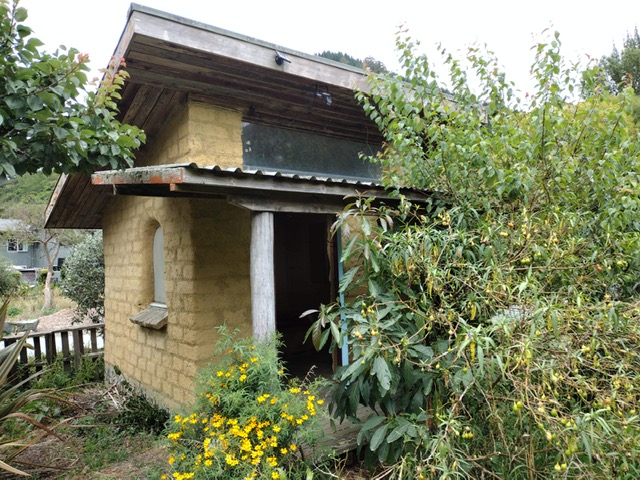
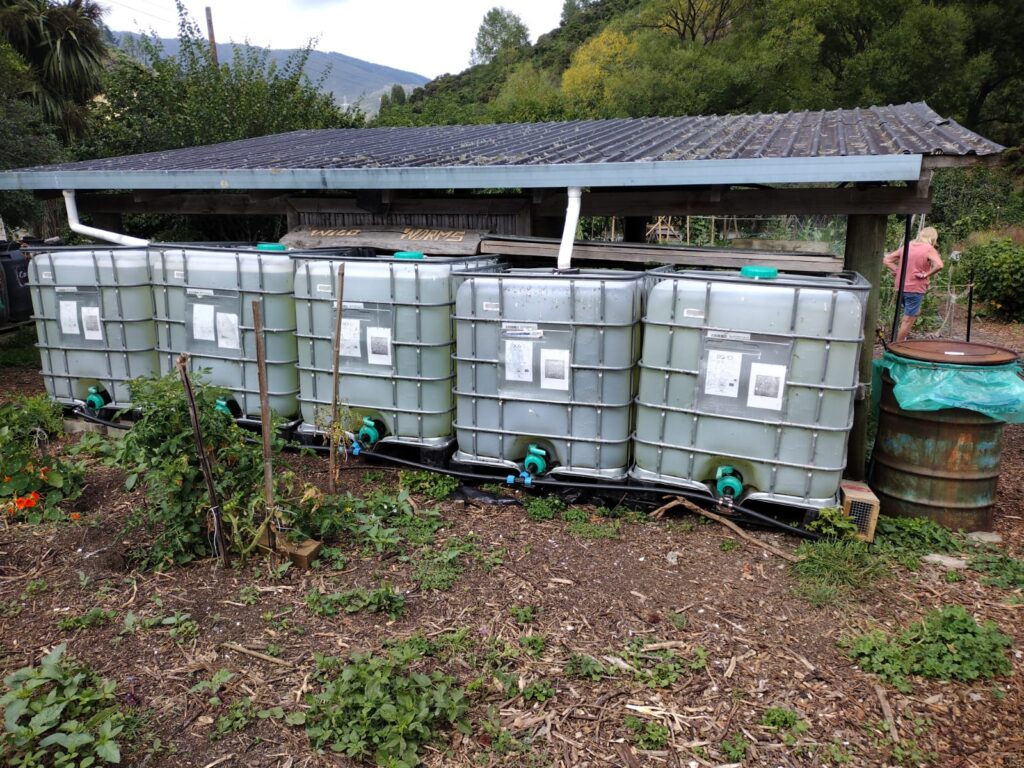
There was a huge amount that was very familiar at Waimarama: various huts and sheds consisting of a seed shed, a sales area, wormery, a posh clay-brick compost toilet (very envious of this!) and community shed; IBCs (yes, they are everywhere) taking rain from shed roofs; a Rota Board of tasks – advising volunteers of Wednesday and Saturday tasks; and numerous individual small plots being tended by plot-holders busily watering.
Photo: Andrew Quayle (HCF)
Seemingly, IBCs are the solution where ever you go. Collecting rainwater for the plants is even more critical in Nelson than the UK because the South Island of New Zealand is in its third year of drought.
Photo: Andrew Quayle (HCF)
Although we had turned up unannounced, we were lucky to be pointed in the direction of Sally (family from Somerset originally), who was about to show round a potential new recruit, an amazingly knowledgeable teenage girl who was very keen to learn and hoped to become a regular volunteer. Her family home had only a yard for the dog and no plants.
Sally showed us some experimental Three Sisters Companion Planting which was thriving. If you haven’t heard of this, it seems to be a native American idea starting with sweetcorn, which provides the support for beans twining up the corn stems, with beans providing soil nitrate, surrounded by a ground layer of squash and courgettes suppressing weeds. We only knew of the Three Sisters idea after reading Braiding Sweet Grass, a book by American writer Robin Wall Kimmerer. Wonderful to see being put into practise – would it work in our rather cooler climate?
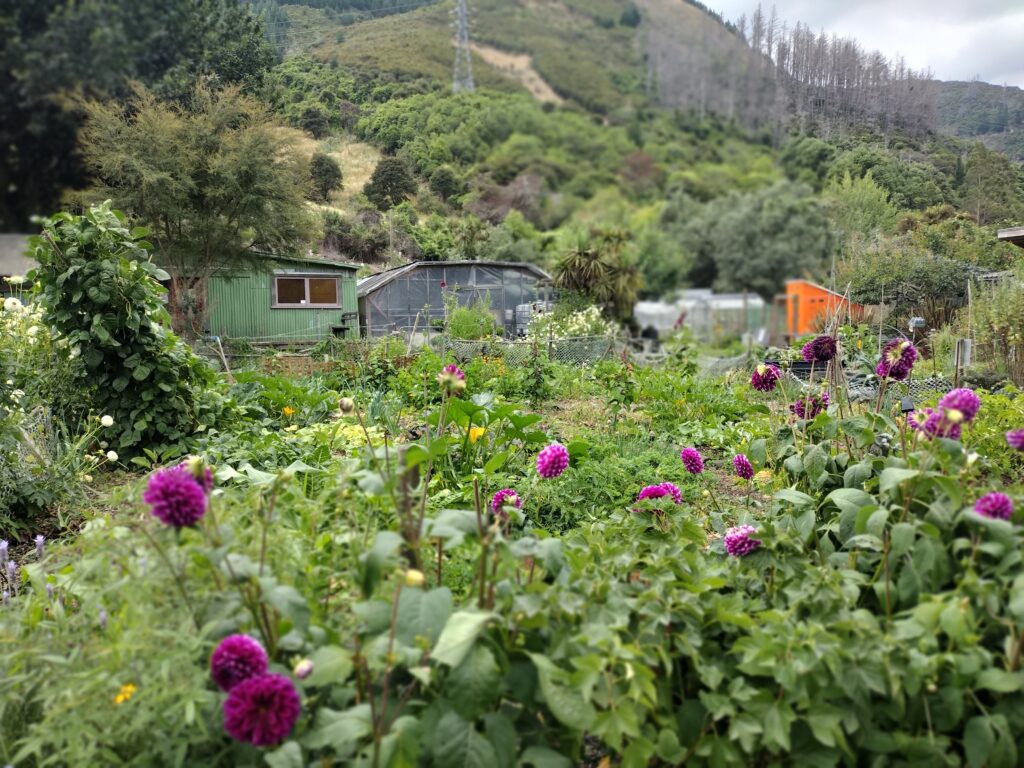
We also loved the individual chaotic plots which didn’t appear too rigidly planned but so good to see in their full summer glory. We were staggered by the flowers (lots of dahlias), herbs and vegetables, having left a cold English January.
Photo: Andrew Quayle (HCF)
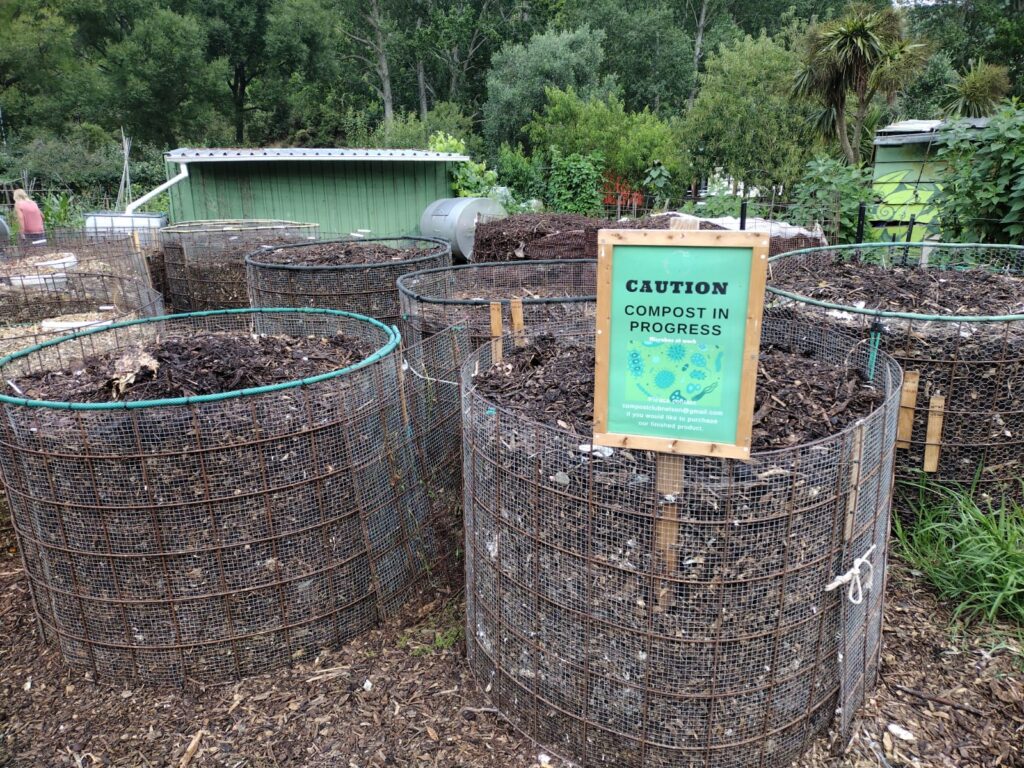
Their Compost Club met on Saturdays and were making so much compost they had spread some surplus on adjacent waste ground and were growing squash.
Photo: Andrew Quayle (HCF)
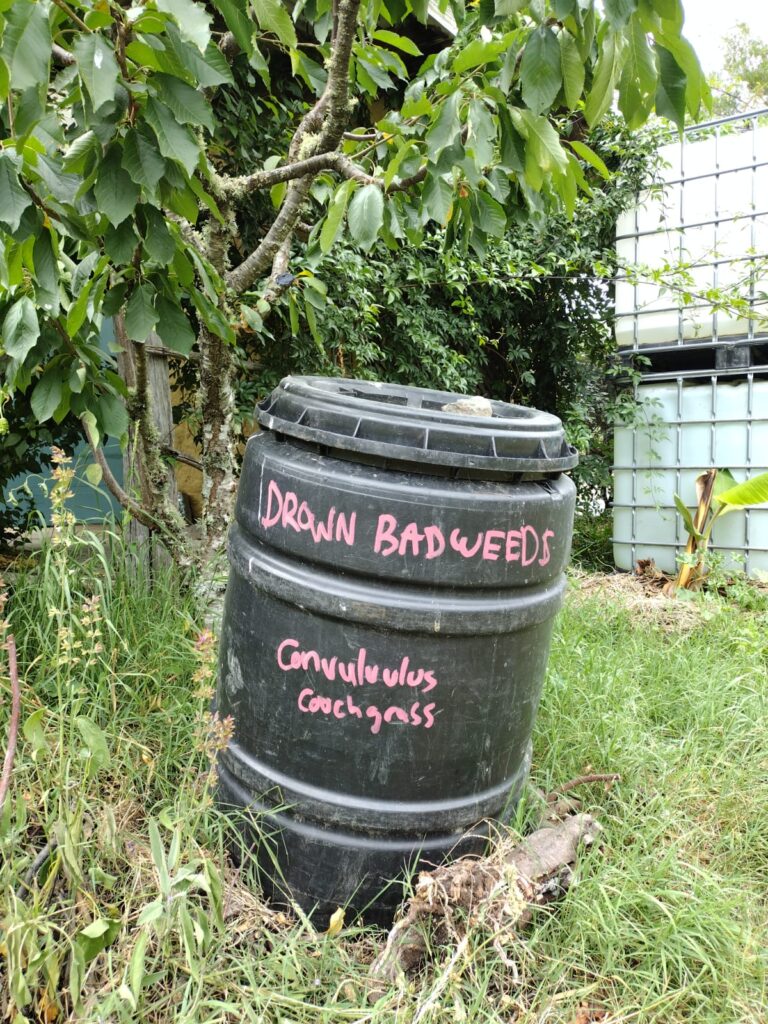
Drowning pernicious weeds seems universal. Unfortunately, the worst weeds in New Zealand all seem to be from the UK!
Photo: Andrew Quayle (HCF)
We took their Facebook details and took our hasty leave of the community garden as the sandflies started to find us.
(Incidentally, a great Saturday event in Nelson is the Farmers market – stalls full of blueberries, raspberries and lots of produce grown nearby by small producers.)
Have you visited community growers elsewhere? Let us know what you found.
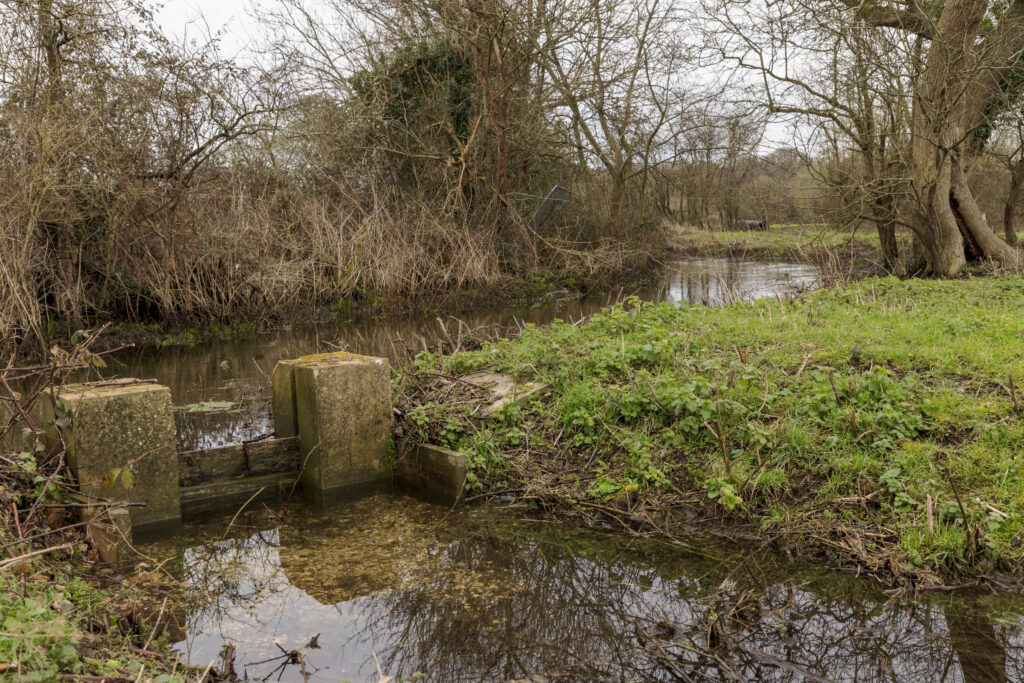
We were delighted to be invited by Highbridge Conservation Group to see them removing the boards to divert water onto the meadows. This is another step in the restoration of this scientifically-important water meadow.
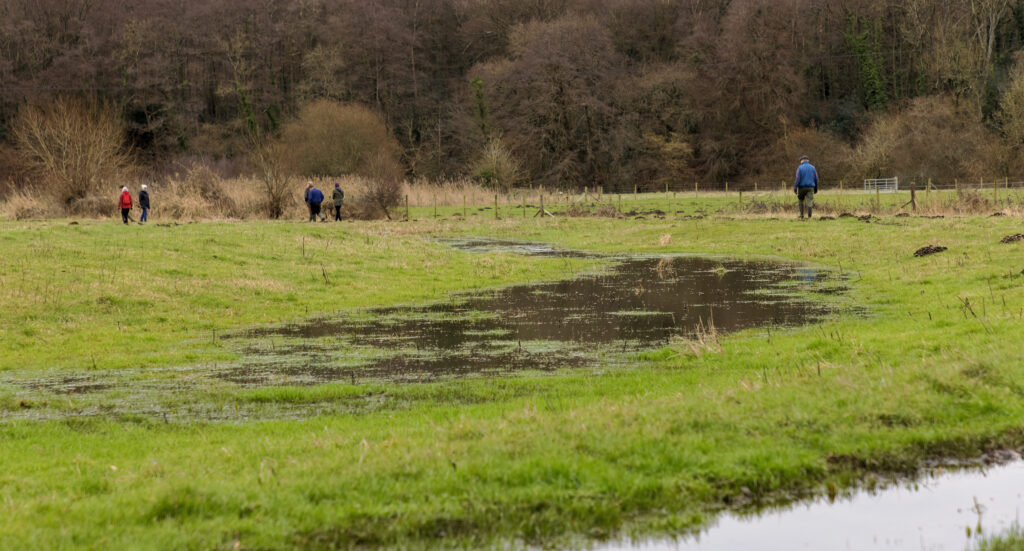
Water meadows are areas of land that used to be flooded deliberately, under carefully controlled conditions, the timing being at the discretion of the farmer or landowner. They have been described as “one of the greatest achievements of English agriculture” so it’s wonderful to see Highbridge Conservation Group helping to preserve the land for future generations.
Historic England explains that water meadows had three main purposes: to force early growth of grass in the Spring, to improve the quality of the grass sward and to increase the summer hay crop. Controlled flooding, known as “drowning”, moves water across the surface of the meadow.
As well as being important for wildlife and the historic environment, water meadows provide even wider environmental benefits. They can contain flood water, trap silt and help to reduce the nutrient load in water that is returned to rivers.
Find out more about Highbridge Community Group in this post. Steve Grundy from HCF photographed the work on the water meadows:
Photo: Steve GrundyPhoto: Steve GrundyPhoto: Steve GrundyHighbridge Conservation Group helping to preserve the historic water meadows.
The fields that we use for Highbridge Community Farm are next to some historic water meadows and a Site of Special Scientific Interest, also owned by our landlord, Mr Henry Russell. Lyndsey runs Highbridge Conservation Group. Here, she explains how it came about and how you can find out more.
By Lyndsey Rowe
I run Highbridge Conservation Group. I ran the Legacy Festival at the farm from 2016 to 2021. (Sorry for all the noise and disruption but we raised 40 thousand pounds to support people with brain cancer!) Henry was so kind and helpful and over that time and I saw how much he does for so many people as well as running the farm.
Late in 2021, we were chatting and he told me about the meadows and the SSSI and that he didn’t have the time to maintain it as he would like and that other similar sites have groups of volunteers to help. He had been so kind helping me raise funds for my late son’s charity that I thought I would do something to help and say thank you and Highbridge Conservation Group was started in January 2022.
We started by clearing the banks of the stream to provide better habitat for the endangered Southern Damsel Fly, the reason that the meadows are designated as a Site of Special Scientific Interest (SSSI), and began work on the 17th century water meadows clearing channels and flooding them to provide early grass for the cattle and a better habitat for wetland birds. You may have also seen us conducting surveys of the flora and fauna, working in the woodland and in January 2023 we planted a British native hedgerow of one thousand trees across the river.
We have some great plans for the future including a visitor centre, facilities for local school groups, bird watching and day workshops. I hope you can join us.