Good health!

By Roberta Beer

For many centuries, it has been traditional for country folk in Britain to light fires, sing songs and drink cider in the orchards on the Twelfth Night after Christmas, to wish the apple trees Good Health and New Year, as well as to each other. This ancient tradition is called wassailing.

Wassail means ” Good Health”. (The response, by the way, to the toast of “Wassail!” is “Drink Hail!” ). There was much merriment and cider drinking on Twelfth Night, as villagers lit fires in the orchards, sang traditional songs, and toasted the trees.

On this day, villagers also anointed with cider their chickens and other animals and brought the village plough into the church to be blessed by the priest. Peasants visited “the big house” to toast the landowner and his family. In return, servants filled the large two-handled “wassail cup” with cider and distributed food to the singers. 

The wassail typically starts with a procession to the orchard, led by a wassail King or Queen. Pieces of toast are placed in the branches to attract robins, which are believed to be guardians of the orchard. The revellers bang pots and pans to wake the tree spirits and to drive away any bad spirits from the land and they enjoy a wassail drink of spiced cider or ale.

Wassailing at HCF

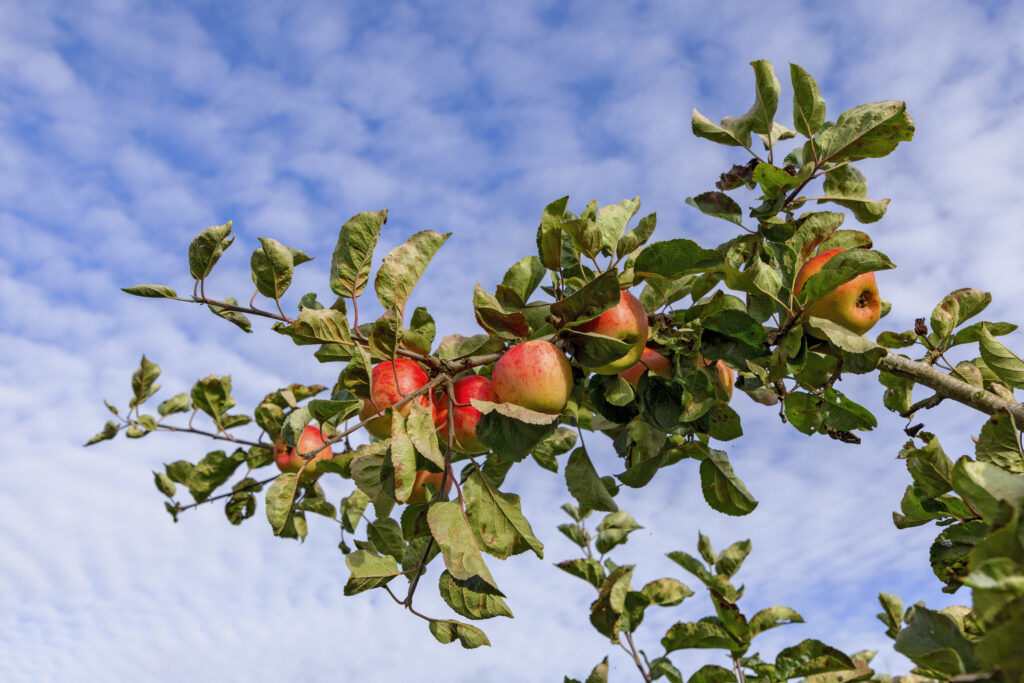
We have three orchards at Highbridge Community Farm and we’ve honoured this ancient tradition of blessing the trees with singing and food and drink. For the wassail, the team nominated one tree in each of our orchards to represent The Green Man, to bring fertility and good harvests to the whole Farm.

Photo: Highbridge Community Farm

Beating the bounds

This is another ancient custom. When maps were rare, a community would periodically walk around its boundaries, beating the boundary markers with a pole as a way of maintaining the memory of the location of these boundaries. We combine this into our wassail ceremony by walking around our three orchards, “beating” the trees with a bean pole.

Wassail songs

Here are a couple of the traditional songs for the wassail. The first is more general for the celebration. The second is specifically for the apple trees.

Here we come a-wassailing

Here we come a-wassailing, among the trees so green.
Here we come a-wandering so fair to be seen.

Chorus
Love and joy come to you
And to your Wassail too.
And God bless you and send you a Happy New Year,
And God send you a Happy New Year.


We are not daily beggars that beg from door to door,
But we are your neighbours children, whom you have seen before.

Chorus

Good Master and good mistress too, às you sit beside the fire,
Pray think of us poor children, who wander in the mire.

Chorus

Bring us a table and spread it with a cloth.
Bring us out, some mouldy cheese and some of your Christmas Loaf.

Chorus

God Bless the Master of this house likewise his mistress too
And all the little children that round the table go.

Chorus

Apple tree wassail

Old apple tree, we wassail thee
Hoping that thou will bear
For the Lord know where we shall be
To be merry another year

Chorus
For to bloom well and to bear well
And merrily shall we be.
Let everyone drink up their glass
And health to the apple tree
For to bloom well and to bear well
And merrily shall we be.
Let everyone one drink up their glass
And health to the apple trees, brave boys
Here’s health to the apple tree

Oh, apple tree, we Wassail thee,
Hoping thou wilt bear
Hatfuls, cap-fuls, three bushel bag-fulls
Many more under the stairs.

Chorus
Is it an eater or a cooker? (And can I have some of the red apples, please?)

We are now entering the peak season for top fruit, and for the next two months, we’ll be harvesting loads of delicious apples and pears in dozens of varieties. As we lay out the trays, the most common question we get is, “Are they eaters or cookers?” Traditionally, people think of apples as either sweet, crisp, and juicy for eating or fluffy and somewhat bitter for baking.

But are we trapped into thinking inside the box?

Thanks to our orchards, you can explore beyond this Victorian reduction of apples into just two categories. Many of our cultivars serve both purposes, and in my opinion, an apple bake greatly benefits from a mix of many flavours.

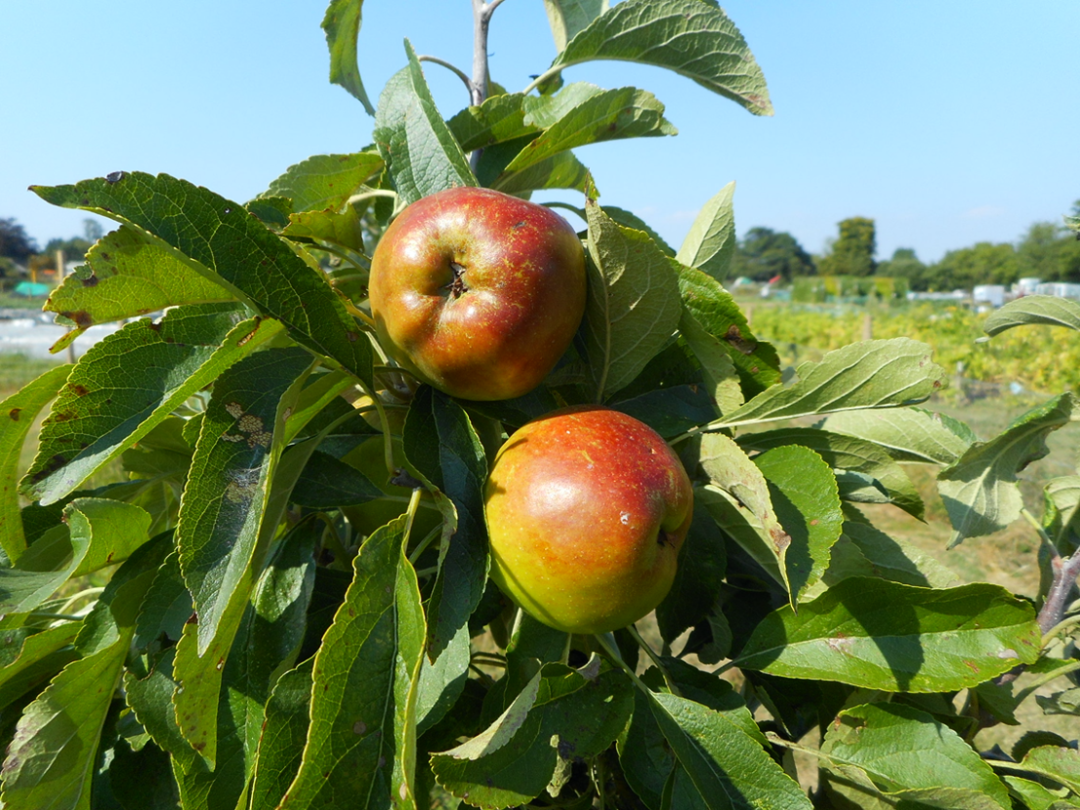
Even more surprising is our persistent craving for any apple to be big and red. They are the first to go, and sometimes the only tray to go, on any market display while superior apples that don’t conform to this stereotype go untried. This expectation of our harvest to resemble highstreet market apples stops you from exploring and enjoying one of the biggest perks of our orchards: the sheer variety of cultivars and types at your fingertips. 

While I get the crunchy sweetness of a red Braeburn, my personal favourites are our russet apples for their nutty flavours and rugged texture. St Edmunds Pippins, Egremont Russet, or Cornish Gillyflower have the most amazing and complex tastes of the season. Others delight in the punch of the small Pitmanston Pineapples, the Pixies, or the lemony hints of the heritage Bardsey Island. The list is long!

So why not embrace the treat and privilege of having all these types to explore? 

Pick and mix your weekly share of apples from all that is on offer. The price of a mixed bag is the same per weight, but it’s so much more rewarding.

Photo: HCF apples (Steve Grundy)

Last chance for summer pruning

For all the backyard growers who have a fruit tree in a pot or a border, with the autumn solstice a few days away and frosts on the horizon, these are the last weeks to complete your summer pruning.  Alex, HCF Orchard Team Leader, shares his tips.

Why now?

Summer pruning is best done after Summer has peaked in late July and dormancy starts to kick in. Once the tree has detected that the days are getting shorter and it gets an ever-smaller return investing in new leaves, it will switch from producing green to enlarging its fruit. It’s at this moment that, if you prune back any branch, there will be little attempt to regrow. If you want to check the size of the tree, you have to prune it in summer, never at winter. 

Other side effects of pruning at summer is letting the sun in, ripening the fruit. The sun, coupled with the hormone change in the branches, will also accelerate the formation of fruit buds for the next season, and mature and thicken the remaining branch.

Use sharp, clean tools

When pruning, always use a sharp pair of secateurs that won’t tear or crush the wood but will make neat cuts. If the wood is too thick for secateurs, use a different tool like a saw.  Make sure that you clean them well to avoid diseases entering the trees core: a domestic tabletop disinfectant spray will work to wipe down the blades. If your tree has grown tall, or has some areas difficult to reach, consider buying yourself some pole pruners. They do a quick and efficient job.

Work in stages

First, check the tree for any broken, damaged, dead, or diseased branches and thin them out or cut them back first. Then thin out any branches that are growing inwards to the tree, or simply look out of place, sagging badly or crossing any other main branch. You can thin them down to one or two leaves.

On the remaining branches, look for this year’s growth: it will look distinctively shinier, with a glossier finish on the wood and more flexible than last year’s growth, which will look darker and feel stiff. Find the node where the new growth has started from. If the new growth is longer than a palm’s length (20cm+), then count three leaves up from the base of the growth. Cut the branch here or in the closest leaf that points outwards of the tree, be it the second or the fourth leaf. This is called the “Lorette method”.

Think in terms of negative space too, considering the void that you want to leave in the centre of the tree and between main branches.

If there is a branch loaded with fruit that is not quite ripe yet to harvest, you can prune the tree in two goes. Do some now and another go after you’ve taken that fruit off the tree.

Summer pruning is more dramatic than winter pruning because of all the canopy you drop but try not to shave off more than 25% of a tree in one go. Don’t cover the wounds from your cuts because they will heal worse and risk trapping any disease inside.

Don’t hesitate now

Whichever type of apple tree you grow, regular pruning is important if you want it to stay healthy and produce lots of fruit. Your last date for summer pruning is at least two weeks before the first winter frost to allow the tree to heal itself. Sharp weather will soon be upon us so, if you have fruit trees, don’t wait to get that summer pruning done.

Let us know if you have any questions about summer pruning.