The power of seaweed

UK coastal communities have a long tradition of wild harvesting of seaweed for food. But its potential reaches far further than this.

The World Wildlife Fund supports a project of regenerative ocean farming. Regenerative ocean farming is a climate-friendly model where seaweeds and shellfish grow in a way that doesn’t require fresh water, feed, or fertilizer.

This ocean farming involves the growing and harvesting of kelp, which requires none of the chemical inputs of farming on land. Seaweed farming has been done off the coast of the UK for hundreds of years. In Wales, it is made into laverbread and in Scotland, it is made into dulse.

But farming of kelp has way more potential than this. For example, it has been proved that if cattle are fed feed made from kelp, it reduces significantly their production of methane.

Instead of stripping habitats of nutrients and biodiversity, seaweed farms have the power to sequester carbon on land and sea and produce livestock feed and fertiliser that can enrich the soil. Seaweed farms also create water conditions that allow marine ecosystems to thrive.

WWF is working with ocean farms to explore the exciting role that seaweed can play in helping us to tackle the crises in climate and nature. To find out more about this project, click here.

There is a short YouTube video showing a regenerative ocean farm in action which you can watch if you click here.

With thanks to Martin Benning

Drowning the Highbridge water meadows

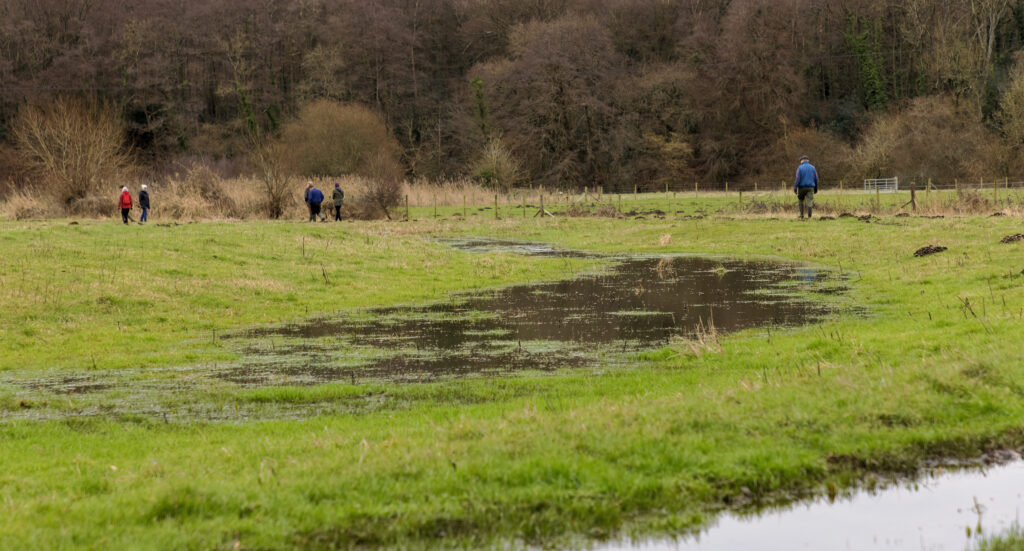
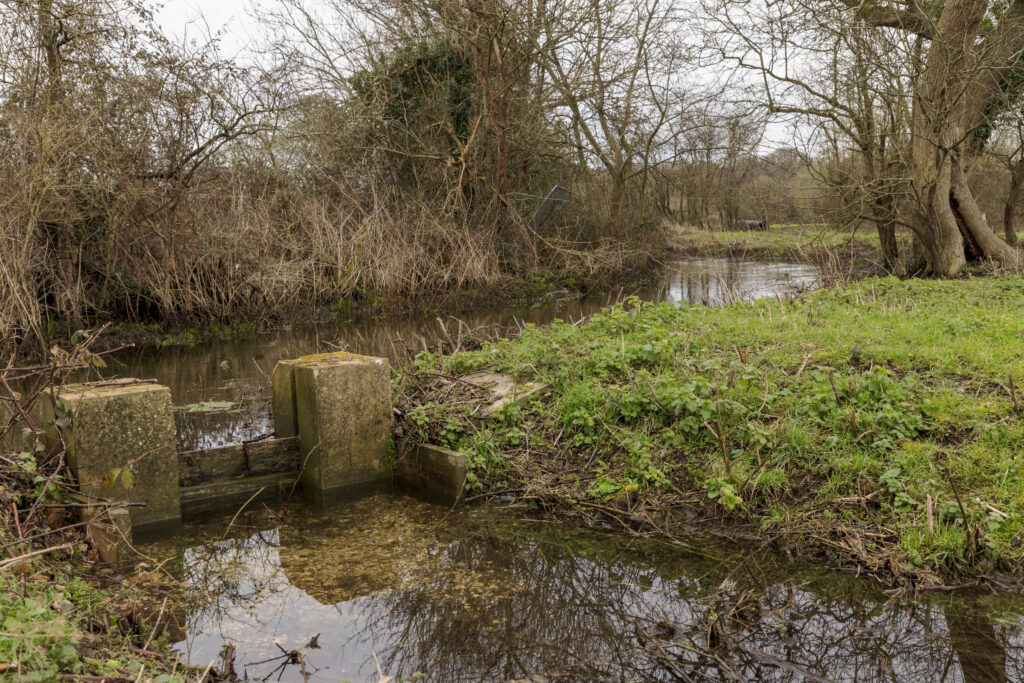
We were delighted to be invited by Highbridge Conservation Group to see them removing the boards to divert water onto the meadows. This is another step in the restoration of this scientifically-important water meadow.

Water meadows are areas of land that used to be flooded deliberately, under carefully controlled conditions, the timing being at the discretion of the farmer or landowner. They have been described as “one of the greatest achievements of English agriculture” so it’s wonderful to see Highbridge Conservation Group helping to preserve the land for future generations.

Historic England explains that water meadows had three main purposes: to force early growth of grass in the Spring, to improve the quality of the grass sward and to increase the summer hay crop. Controlled flooding, known as “drowning”, moves water across the surface of the meadow.

As well as being important for wildlife and the historic environment, water meadows provide even wider environmental benefits. They can contain flood water, trap silt and help to reduce the nutrient load in water that is returned to rivers.

Find out more about Highbridge Community Group in this post. Steve Grundy from HCF photographed the work on the water meadows:

HCF soil carbon

This article was written by Andrew Ross.

Recently we had two Highbridge Community Farm soil samples analysed by the Soil Association. The samples came from plots 3&4 which have been practicing minimum dig and planting winter cover crops for two years now, so the soil here should be among the best on the farm.

What was in the samples?

The samples showed that soil organic matter was 11.2% on plot 3 and 12.6% on plot 4.

Soil organic matter is a complex mixture of all organic material found in the soil including living components (plant roots and microorganisms) and dead components (leaf litter and humic substances). It increases the soil water-holding capacity and provides a slow release source of energy for microorganisms which increases the cycling of nutrients within the soil.

These samples suggested that the total organic carbon stock in tonnes of carbon per hectare of land to a depth of 30 cm would be in the range of 199-212 tonnes for this part of the farm.

More Soil organic matter means better growing conditions

The implication of this analysis is that our soil organic matter has risen from around 4% when we took on the land in 2010 to 12% in 2021.

This organic matter acts like a sponge and the top 30 cm of our soil now holds around 90 litres of water per square metre when it is at field capacity (full of water- but not waterlogged) instead of about 45 litres if there was no organic matter present. There are also many more nutrients available for our crops to grow well.  

Photo credit: Steve Grundy

Plus, OUR plants REMOVEd carbon dioxide from the atmosphere

As well as improving our soil considerably we have effectively removed carbon dioxide from the atmosphere as the plants photosynthesised and made the atmospheric carbon dioxide into plant biomass which was then recycled and added to the soil as compost (along with manure). This is known as soil carbon sequestration.

beware of short cuts

Recently I attended an online Soil Association Symposium where I learned that companies are concerned about their contributions of carbon dioxide to the atmosphere because this is promoting global warming.

In their desire to appear “green” or environmentally-friendly, some companies are offsetting their CO2 (carbon dioxide) production by paying others to plant trees, restore wetland peat bogs (which are great for sequestering carbon) and even paying farmers to sequester carbon in their fields. One figure quoted was a payment to a farmer of £23 a ton for each ton of carbon sequestered.

The danger of this system of carbon offsetting is that it can become like the selling of Indulgences by the Roman Catholic church during the Middle Ages which allowed sinners to go on sinning. We don’t want to see companies paying money for carbon sequestration but being allowed to go on polluting the environment with chemicals or even carbon dioxide. Nor do we want to see woodland owners taking the money to plant trees or farmers taking the money to sequester soil, only for them to plough up the land again in 10 years time! 

We live in a complicated world.

Scouts visits to HCF

HCF is pleased to say that few days ago we were visited by a couple of local scouts groups. Education activities are a core purpose of the farm and we were delighted in receiving and spending an afternoon with these young children introducing them to a range of farm based activities.

To accomplish this we raised a call for volunteers, who then gathered on Saturday to brainstorm four activities, each one of a duration of about 15/20’. We decided upon making the following four:

A seed sowing station where they could investigate what a big seed looks like, and then pot one themselves by preparing a pot (drainage holes), filling it with soil, sowing a seed and watering it. Accompanied by questions and answers regarding the seeds needs.

A compost activity, where they could add green and brown materials to the compost, plus a bit of manure, and help turn it over. All accompanied with explanations and questions about how it works and a visit to the final result, good black soil. (magic!)

A harvesting activity in the soft fruit cage, where they had a walk around ID and then got a punnet each and could harvest a selection of fruit for themselves

A vegetable hunt, where they were given a map of the farm and they had to find a total of 10 crops, two of them flowers, one herb and seven vegetables from the more usual ones to the more unusual

Last we gathered by the social area and had a round of questions and answers putting in common all that we had done during the afternoon, before breaking ranks and going home. As farm members leading the activity, we found that the duration 15-20 minutes per station worked really well, and that rotating them from one to another helped them stay focused and note get bored. We also found that groups of 6 were very manageable and we were very lucky with a sunny glorious afternoon weather after some very recent thunderstorms.

We also found that a crop treasure hunt was great fun and a much better way to help them zoom in and observe the crops, than pointing them out to them.

We encouraged everyone to bring their own trowel and gloves, and we kept common tools to a bare minimum while disinfecting the handles from one user to another.

The total cost of the activity was under 5GBP for 24 participants, namely some recyclable pots and a bag of seed soil. We also made an activity sheet for the scouts to print and bring for the afternoon, which many of them had.

Any new ideas and feedback for future visits is most welcome! You can also drop your name to volunteer leading any activity station in the future.

Improving the soil with leaf-mould

This article is written by Andrew Ross.

Many people recognise the problems created by leaves at this time of year. Yet they can be of great value if used as leaf-mould for the soil in your garden or allotment. We make great use of them at Highbridge Community Farm. Find out how to make and use this rich ingredient.

Why is leaf-mould useful?

It’s not that leaves have great nutritional value. The tree tends to suck the nutrients out of the leaves before they drop them. Well-rotted leaf-mould greatest benefit is as a soil conditioner, improving the structure of a soil, rather like peat, but without the damaging environmental costs of extracting peat. Leaves tend to have a high Carbon:Nitrogen ratio, averaging around 50:1 and low levels of essential nutrients: Nitrogen 0.66-1.62%, Phosphorus 0.02-0.29%, Potassium 0.09-0.88%. Leaves also contain useful amounts of Calcium and Magnesium.

How do you make leaf-mould?

First brush up your leaves or rake them off a lawn. We actually collect several wheel-barrow loads from our road. Then there are several options for making use of it:

1. Store leaves in bin liners. Moisten the leaves if they are dry and prick holes in the bag. Tie loosely, pile up the bags and leave in a quiet spot for up to two years.

2. Build a chicken wire frame in a hidden corner of the garden about 1m3 and pile up with leaves. Turn the pile occasionally. This is what we do at Highbridge Community Farm.

3. Store in an open topped barrel or compost bin with drainage holes at the bottom for up to 2 years.

4. Put layers of leaves as your brown material in a compost bin and alternate with green material such as grass clippings, weeds or food waste.

5. Cover frost sensitive plants which die back in the autumn to protect the plants from winter rain and frosts. You can make a wire frame around a plant such as a banana after the trunk has been cut off, then pack and insulating layer leaves around the stump and cover the stump with a plastic bag.

Which leaves are best to use?

Leaves that will quickly break down include: ash, beech, birch, cherry, elm, hazel, lime, hornbeam, and willow.

Leaves that slowly break down include: hawthorn, maple, magnolia, oak, sycamore and horse chestnut.

The best leaves to use are oak, beech and hornbeam.

Evergreen leaves should be shredded first as they take a very long time to break down. They include: holly, bay, rhododendron, photinia and skimmia. Conifer needles take a very long time to break down even if moistened and turned every few weeks, so they are best used as a mulch over acid-loving plants such as blueberries and azaleas.

How do you use leaf-mould?

Some plants such as vegetables, annuals and grasses prefer soils dominated by bacteria so it is best to use compost or well-rotted manure as soil conditioners for these groups. The bacteria quickly break down the organic material which generally has a higher level of nutrients and a lower Carbon:Nitrogen ratio.

Leaf mould contains lower nutrient levels plus lots more carbon locked up in complex substances like starch, lignin and cellulose which fungi tend to slowly break down. So, leaf-mould is better used on trees, fruit bushes, shrubs and perennials which prefer soils dominated by fungi. Well rotted leaf-mould should be added to the soil surface of these groups as a mulch in the autumn or spring to help build the soil mycorrhizal fungi. The mycorrhiza will bring more water and nutrients to the plant roots and so help to create stronger, healthier plants.

An alternative use of leaf-mould is to dig it into the soil when it has been partially broken down to raise the humus content of the soil. This is especially useful for heavy clay soils or light sandy soils. As well as improving soil structure by providing more food for soil living organisms it will help the soil to hold more water to enable the plants to tolerate drought better and hold more nutrients bound onto the humus.

Finally, leaf-mould can be mixed with sharp sand, garden compost and soil and used as a potting compost.

Inspired? Let us know if you use Andrew’s advice to improve your soil with this free, natural material.
Corvus corax makes a comeback

Dave Hubble looks at the raven.

Ravens were once widespread in Hampshire, especially in the New Forest, but by the mid 19th
century were almost extinct in the area, mainly due to persecution by gamekeepers and egg collecting. When gamekeeping activity dropped during the 20th century, ravens started to recolonise parts of the country, but a breeding pair wasn’t recorded in Hampshire until 2003. So, it was good to see, or more often hear, a pair in the riverside treeline by HCF during March and April, the middle of their breeding period. They are the largest of the crow family and can be identified by their shaggy throat-feathers, heavy beak and distinctive ‘kronking’ call. Their size isn’t always easy to gauge until they are seen next to other species such as carrion crows which often mob ravens.

They are opportunistic and omnivorous; they scavenge, hunt and forage – anything from grains and berries to invertebrates, larger prey and carrion. They are excellent problem-solvers and their seemingly high intelligence is an area of active research. In the US, they have even been recorded leading wolves and coyotes to large carcasses so they can be opened (ravens’ beaks aren’t strong enough to tear through large mammal hides); the ravens can then also feed on the remains. Their intelligence has been known, if not understood, for many centuries. In Norse mythology, Huginn (thought) and Muninn (memory or mind) are a pair of ravens that fly off to bring Odin information. In the Tlingit and Haida cultures of the Pacific Northwest, and on Kamchatka, ravens are both creator gods and tricksters. Closer to home, it is said that “if the Tower of London ravens are lost or fly away, the Crown will fall and Britain with it”. This is often thought to be an ancient superstition, but is likely to be a Victorian invention – even the current Ravenmaster thinks so (and yes, that’s a real job).

At HCF, we are lucky to host a raven territory, so they may have raised young – something to
celebrate. In any case, ravens are bright, playful, evocative… and back. The raven pictured is in flight at the farm.

If you enjoyed this, read more from Dave Hubble:

Wasps – what are they good for?

…rather a lot as it happens. Wasps get a bad press but are actually an interesting, beneficial and ecologically important group of insects.

This article from Dave Hubble is a great look at these unsung heroes and cultural references to them. You’ll never look at a wasp in the same way again!

Wasps get a bad press because they can sting, buzz around us when we have sugary food, and are poorly understood, but are actually an interesting, beneficial and ecologically important group of insects. There are about ten species of ‘typical’ wasps, including the hornet, in Britain, but depending on how ‘wasp’ is defined, there are something like 250 – 300 species, not including the 1,000-plus species of parasitic ichneumons which are related but aren’t really ‘wasps’. A few dozen of these are black-and-yellow to some extent, but most are not, and many are small. The more familiar species are social, much like honey bees, living in a nest with an egg-laying queen and sterile workers – sometimes you might see them scraping at wood to form pulp which they use to make the paper of their nest. Others are very different such as the bright metallic green, blue or red ‘jewel wasps’ which are tiny and beautiful – and may well be found in your garden. Others, like the potters and masons, make small mud turrets over the entrance to their burrows, or small mud ‘pots’ as nests.

However, although they can damage fruit crops, this is massively outweighed by their benefits as
important (if under-appreciated) pollinators as they collect nectar (hence being attracted by our
food and drink), and predators and parasites of more troublesome invertebrates, including a lot of larvae and flies that are considered crop pests. They are also food for a lot of other animals including many bird species.

There are many cultural references to wasps, from Aristophanes’ 422 BC play The Wasps, (referring to a chorus of old men), to science-fiction (H.G. Wells wrote about giant wasps), animation (Chip and Muffin in Antz), sport (Wasps rugby union team), wasps-waists produced by terrifying levels of corsetry, and the term ‘waspish’ meaning ‘easily angered’… talking of which, let’s finish with stings.

As we know, the familiar species can sting, but only do so if threatened. Most commonly this means approaching a nest too closely or swatting at them; this happens most in late summer as colonies stop producing new workers and the existing ones search for sugary foods (which we have with us in the sunny outdoors). It hurts, but unless you have a serious allergy to them, which is quite rare, isn’t harmful. Unlike honey bees, they can sting repeatedly, but venom takes a lot of energy to produce so they don’t use it unless necessary. Hornets in particular are quite docile despite their large size; ironically, wasps aren’t particularly waspish. So, if a wasp crawls on you or is flying around you, don’t swat at it. If you are near a nest and they appear aggressive, simply move away – if there’s a nest somewhere you can’t avoid, call a specialist to remove it. Other than that, watch them, enjoy them, and see how many species you can spot.

If you enjoyed this, read more from Dave Hubble:

A round up of eco tips

The HCF Plastics group provide regular tips to help us all to live more sustainably. Here’s a round-up of the tips from 2020. For a list of businesses that help us reduce, reuse, and recycle, see Related Organisations.

Remembering what you have before you shop

This was on the BBC Good Food website, in an article about reducing food waste. It suggested taking photos of your fridge and food cupboard contents before you go shopping, to remind yourself of what you already have. This is particularly useful for foods that don’t have a long shelf life.

Avoid peat

Peatlands are endangered habitats that absorb greenhouse gases and support plants and animals that can’t survive elsewhere. It makes no sense to destroy them just so people can use peat in the garden. Public concern about peat loss led to government action: in 2011 the UK government set voluntary targets to phase out peat use in gardens by 2020 and by the professional horticulture industry by 2030.

Since 2012, however, progress on ending peat use has stalled. Peat consumption has been rising despite government targets to phase it out.

When you are buying compost, make sure that it really is peat free – even if it costs a bit more.

Sign to stop deforestation

Have a look at Greenpeace’s website. They have started an important petition to try to get Tesco and other mainstream supermarkets to stop buying meat that is linked to the deforestation on rain forests.

A plastic-free business

One of our HCF members has a friend who has started an online business selling plastic-free products. Do have a look: https://www.lifeunplastic.co.uk/

Avoid acrylic

Following on from last week about washing clothes, recent research from Plymouth University has shown that pure acrylic clothing releases the most microfibres compared to other fabrics. Researchers found that an average washing load could release approximately 14,000 fibres from polyester-cotton blend fabric, 500,000 fibres from polyester and 730,000 from acrylic.

It appears from this research that avoiding acrylic is good but if it is washed, it is best to wash the clothes in a special bag to catch the fibres.

(For those interested, acrylic is a plastic made from acetylene (from oil) and cyanide. These react to make acrylonitrile, an extremely poisonous liquid linked to birth defects. Acrylonitrile is then polymerised to make acrylic. Cotton, on the other hand, is grown in a field – although there are environmental concerns around cotton.)

Prevent the release of microfibres during washing

Did you know that a normal washing machine wash can release a massive 700,000 microfibres of synthetic material?

Here are 8 easy ways to reduce microfibre pollution:

  • Wash less
  • Fill your machine
  • Wash at 30 degrees
  • Ditch the tumbledryer
  • Choose natural fibres
  • Avoid microfibre cleaning cloths
  • Avoid using the delicate wash
  • Investigate microfibre capture. There are special bags on the market that you can use to contain synthetic clothes in a washing machine and stop microfibres leaving the washing machine.

Watch out for plastic in teabags

Are you aware that some tea bags actually contain plastic? Several tea bag brands use polypropolene, a sealing plastic, to keep their bags from falling apart. This plastic is not recyclable or biodegradable. There is also research that has found that tea bags contain plastic release millions of microbits when used to make a nice cup of tea.

Tea bags from these manufacturers contain plastic:

  • ❗️PG Tips
  • ❗️Tetley
  • ❗️Twinings ‘heat-sealed’ and ‘string and tag’ ranges
  • ❗️Yorkshire Tea
  • ❗️Lidl own brand

 These do not:

  • ✅ Abel & Cole
  • ✅ Clipper
  • ✅ Co-op own brand 99
  • ✅ Pukka Herbs
  • ✅ Teapigs
  • ✅ Twinings pyramid range
  • ✅ Waitrose Duchy range

This information came from an article written in July 2019.

Calculate and adjust your carbon footprint

You can calculate your carbon footprint by doing the survey at https://footprint.wwf.org.uk/#/. It offers lots of suggestions of how we can reduce our carbon footprint further. 

Support your local greengrocer

Your local greengrocer usually sells fruit and veg loose and often uses paper bags in place of plastic. You also have the bonus of supporting a local business.

Only flush when it’s really needed

Only flush toilets if really needed. The Australians have a characteristically down-to-earth maxim for this: “if it’s yellow, that’s mellow. If it’s brown, flush it down.”

The Forager’s Hedge

This article is written by Andrew Ross.

Anyone who has been out and about in the last two months can’t have failed to notice the abundance of blackberries in the hedgerows and the number of people picking them! Blackberries and most soft fruit at the farm are over now. At home we’ve just been picking our olives, but the medlars will remain on our tree for several more weeks yet.

However the Forager’s hedge is looking wonderful at present and all its produce is available for free to HCF members. It was planted by our members in November 2010 after gifts of 450 40 cm tall whips by the Woodland Trust and some recently grafted apple trees from my allotment. It is on your left as you come into HCF, behind the pond and the Pondside orchard.  

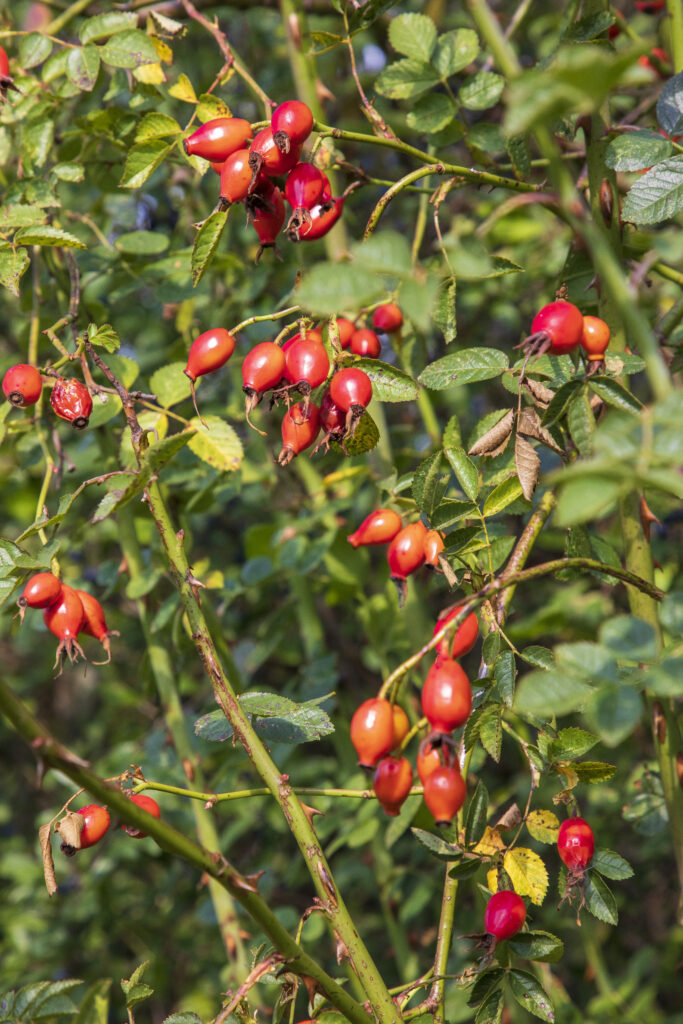
This year Kate has already made four bottles of rose hip syrup which apparently contains 65 mg Vitamin C per fluid ounce, four times as much as blackcurrants and 20 times as much as oranges (Richard Mabey: Food for Free). Rose hips were collected by school children during WW2 who were paid 2p a pound for their efforts! By 1943 the harvest averaged 450 tons.  If you might need a Vitamin C tonic this winter you know where to look. 

If you need something stronger how about Sloe Gin? Sloes are mixed with gin and sugar and shaken or stirred every two days for 3 months until it becomes sloe gin.

There are several different types of crab apples and apples abundantly available at present.  I believe Kate has scheduled me to make Apple Pie Curd later this afternoon.

The power of soil organic carbon

This is the first in a series of articles written by Andrew Ross to get us thinking about the quality and impact of the soil at Highbridge Community Farm.

Soil with high organic carbon isn’t just a good growing medium. It can help reduce atmospheric CO2 on a worldwide basis – a win for farming and a win for the planet. So, is there more we can do to increase the organic carbon levels of the soil at HCF? 

Most of us are familiar with the broad issues of climate change:

  • An increase in atmospheric carbon dioxide (CO2) concentration from 278 ppm in the pre-Industrial period (circa 1750) to 405.5 ppm in 2017
  • An increase of the greenhouse gas, methane, from 722 ppb to 1859 ppb in the same period.
  • An increase in nitrous oxide from 270 ppb to 330 ppb in the same period. (Lal, 2019)

This has already raised global temperatures by over 1⁰C since the Industrial Revolution with dire consequences, as exemplified by the increase in frequency of extreme events throughout the world. Furthermore there is the real likelihood that we will miss the target set at the Paris Climate Conference (COP21) in 2015 of limiting global warming to 1.5⁰C. (IPCC (Intergovernmental Panel on Climate Change, 2018).

The Highbridge Community Farm ethos statement says “We have evolved from the Transition Movement and retain their founding principles – a community-led response to the pressures of fossil fuel depletion and climate change, supporting local economies and moving towards a more viable and sustainable future. Now a mutual benefit co-operative society in our own right, we work together to produce food for ourselves with minimum use of fossil fuels and chemicals. We support growing techniques that maintain the natural balance of the soil, preserve wildlife and their habitats, and encourage biodiversity.”

Over our time as a community, our aim has been to grow good organic food. We have managed the soil to obtain good crops, without ever really addressing the issue of how to improve the health, fertility and productivity of our soil in an environmentally sustainable way. Ideally, this soil should be resilient to be able to cope with whatever crop is planted in it and cope with whatever combination of weather events that is thrown at it. Probably the best measure of soil health and resilience is one with a high organic carbon content.

Farmers Weekly provides a simple chart for farmers to score the quality of their soil according to the percentage of organic carbon that it contains:

  • Less than 1% – very low
  • Less than 2% – low
  • Less than 4% – medium
  • Less than 8% – high
  • Over 8% – very high

The IPCC Climate Accord, proposed in Paris in 2015, initiated the “4 per 1000 programme“. This aims to raise Soil organic carbon in world soils to a depth of 40 cm at the annual rate of 0.4% per year. The UK signed up to this initiative and Environment Secretary Michael Gove has undertaken to deliver on this ambitious goal by supporting soil health improvements in the UK.

Natural soils in Britain once contained 30-40% more organic matter than they now contain under cultivation. Most farmed soils in southern England now have less than 2% organic matter, but in the rest of the British Isles 2-6% may be found. Once organic matter levels fall to below 2% the impact can be severe. A fall in soil organic matter of 0.5% can reduce nutrient holding capacity by 4% of even fertile soils. Growers manage the levels of soil organic matter to get acceptable plant growth, which will typically mean that organic matter levels should be 3-6%. For us it should be at least 6%, preferably 8%.

There is an added benefit of raising soil organic carbon (SOC); the potential lowering of atmospheric CO2 on a worldwide basis by raising SOC is approximately 84 ppm of CO2. This burying of SOC in the soil in the form of humus is called sequestration.

So, raising SOC at Highbridge Community Farm will be a win:win. We can play our part at HCF to produce a better, more resilient and productive soil and our efforts will benefit everyone if global CO2 levels fall!